 bluename
How to Give Nepenthes Proper Light for US Window Sill Growth: My 2-Week Experiment
You’ve brought home a stunning Nepenthes, dreaming of those elegant, glistening pitchers dangling from your window. But weeks go by, and instead of new traps, you see dull leaves, weak growth, or worse—pitchers drying up one by one. You’re giving it what you think is “bright, indirect light,” so what’s going wrong? I’ve been there. The frustrating truth is that providing the proper light for Nepenthes on a typical US window sill is a nuanced art. It’s not just about brightness; it’s about duration, quality, and understanding the subtle signs your plant gives you. After years of trial and error, I decided to conduct a focused, two-week experiment to crack the code for US window sill growth specifically. Here’s exactly what I did, what I learned the hard way, and how you can achieve pitcher-perfect results.
Understanding Nepenthes Light Needs: It’s More Than Just “Bright”
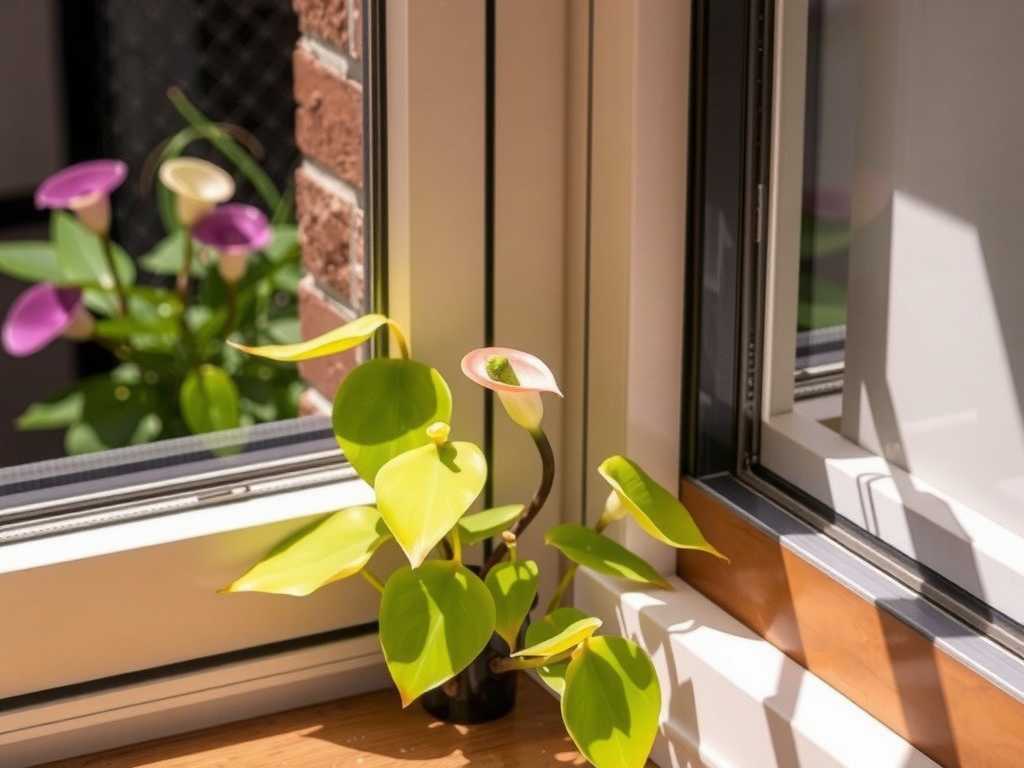
Most care guides will vaguely say “bright, indirect light,” but that’s where the trouble starts for indoor growers. In their natural habitat, Nepenthes experience dappled sunlight filtering through forest canopies. They don’t want the scorching, midday desert sun, but they absolutely crave prolonged, high-quality illumination to fuel the energetically expensive process of pitcher production. According to the Carnivorous Plant Society, light is the primary driver of pitcher formation, even more critical than humidity for many common hybrids. My goal was to translate this need into a practical, replicable setup for a standard double-hung window in my home.
My Experimental Setup: The Variables I Tracked
For this experiment, I chose a mature Nepenthes x ‘Ventrata’, a common and resilient hybrid ideal for beginners, known to adapt to window sill growing conditions. I cleared a south-east facing window sill—a prime real estate spot in my Pennsylvania home. This was my baseline.
- Tool 1: The Light Meter. Guessing was over. I used a simple digital lux meter (readily available online) to move beyond subjective terms like “bright.” At noon on a clear day, the center of the sill measured 12,000 lux. The edges dropped to 6,000 lux.
- Tool 2: A Journal. I committed to recording observations every morning and evening for 14 days, noting leaf color, any new growth (tiny bumps called “buds”), and pitcher condition.
- The Hypothesis: I believed the plant was not getting enough duration of peak light, even if the intensity was occasionally sufficient.
Week 1: The Pitfalls of Assumption and Immediate Correction
Day 1-3 started with confidence. The plant sat proudly in the center of the sill, bathing in morning sun. By Day 3, I noticed the first red flag: the newest, still-developing pitcher at the tip of a leaf was browning at the tendril tip. This was classic low-humidity shock, exacerbated by strong morning light hitting it directly. I had made my first critical error: not acclimating the plant. It came from a shaded nursery shelf and was thrust into several hours of direct sun.
- The Fix: I immediately moved the plant about 18 inches back from the window, onto a side table still in the bright room but without direct beams. I also placed a shallow tray of water with pebbles beneath the pot (a classic humidity tray). Within 48 hours, the browning halted. The lesson? Proper light for Nepenthes must be introduced gradually, especially for new acquisitions.
Day 4-7 involved careful observation. From its new spot, the light meter now read a steady 4,000-5,000 lux for most of the day—consistent bright indirect light. The existing pitchers looked fine, but there was zero new activity. The plant was stable but not thriving. It was, as I call it, in “survival mode.” I realized my sill might not provide the 6+ hours of strong light these plants truly desire, especially with the weak light of early spring.
Week 2: Implementing the Strategic Boost and Seeing Results
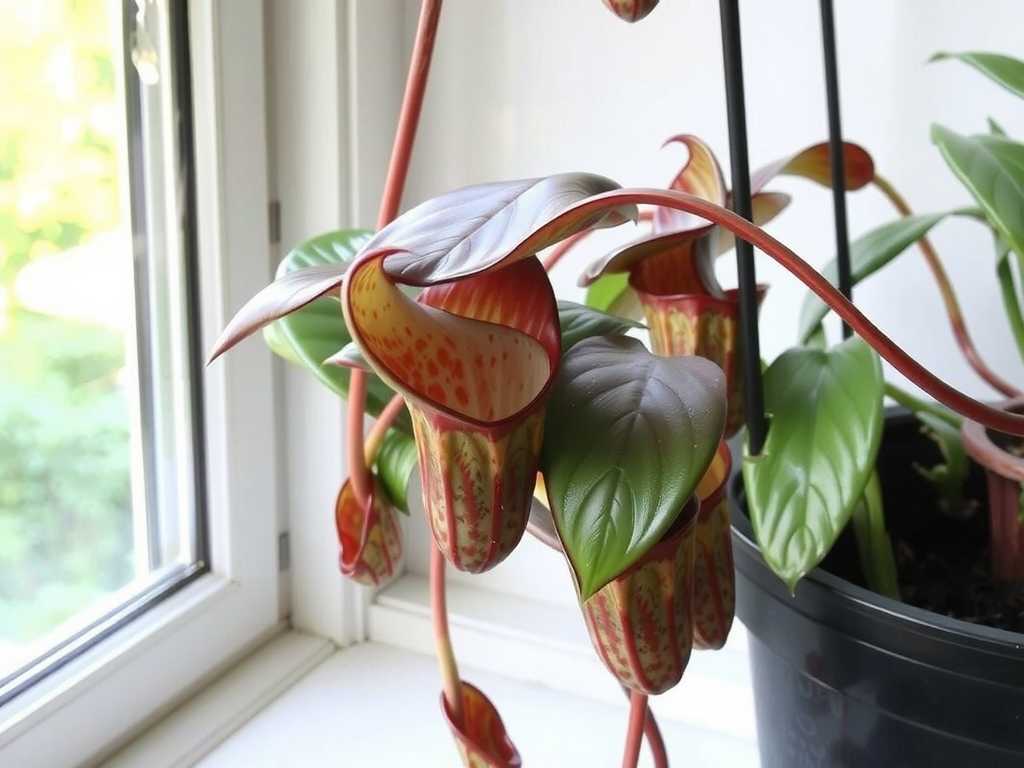
By the start of Week 2, I knew I needed to supplement. I purchased a compact, full-spectrum LED grow light panel designed for succulents and herbs. My aim wasn’t to replace sunlight but to extend the photoperiod, mimicking the long tropical days.
- The Strategy: I mounted the light above the plant, now returned to the sill’s edge (not the center), where it received gentle morning direct sun until about 10 AM (~8,000 lux). From 10 AM until 4 PM, it got ambient sill light (~5,000 lux). Then, from 4 PM until 8 PM, I switched on the LED panel, adding 4 hours of consistent, gentle supplemental light (~3,000 lux at leaf level). This gave the plant a total of 10+ hours of quality light.
- The Transformation (Days 8-14): The change wasn’t overnight, but the directional growth became obvious. By Day 10, I spotted a new, tiny leaf bud emerging from the growth point. Crucially, the tendril extending from the tip of a recently matured leaf began to swell slightly—the very first sign of pitcher initiation! The existing pitchers took on a more robust, turgid appearance. The leaves, which had a slightly yellowish tinge, deepened to a healthier medium green with a hint of red blush on the sun-exposed edges—a sign of perfect light saturation, not stress.
Key Takeaways for Your Window Sill Success
- Measure, Don’t Guess: A light meter app or physical meter removes the mystery. Aim for a minimum of 2-3 hours of direct morning sun (east-facing is ideal) or very bright indirect light (8,000+ lux) for 6-8 hours total. Supplementation is often necessary, especially in northern states or during winter.
- Acclimate Slowly: Always transition your Nepenthes to a brighter spot over 7-10 days. A sudden move can scorch leaves and abort pitchers.
- Prioritize Light Duration: A long “day” of 12-14 hours of moderate light is often better than 4 hours of blistering sun. Use a timer for supplemental lights to ensure consistency, which is key for healthy pitcher development on windowsills.
- Observe the Plant’s Language: Dark green, leggy growth means not enough light. Yellow or bleached leaves mean too much direct, harsh light. A reddish blush and steady pitcher production mean you’ve nailed it.
Addressing Your Top Questions
Can a north-facing window ever work? It’s very challenging. In the US, a north-facing window provides low light levels, rarely exceeding 2,000-3,000 lux. While a Nepenthes might survive there, it will almost certainly not pitcher. Supplemental lighting would be mandatory, essentially making the window just a placement for the plant, not its primary light source.
My plant gets hours of afternoon sun from a west window. Is that okay? Proceed with extreme caution. Hot afternoon sun (from a south-west or west exposure) can easily fry leaves and overheat the pot and roots. If this is your only option, use a sheer curtain to diffuse the strongest rays and monitor soil temperature closely. An east-facing window is universally preferred for US window sill growth.
What’s the best supplemental light for a single plant? A small, white full-spectrum LED panel or bulb (like a PAR38 grow bulb in a desk lamp) is perfect. Place it 12-18 inches above the plant and run it on a timer for 4-6 hours to extend the natural day. Avoid blurple (red/blue) lights for a windowsill; the white light is more pleasant and effectively supports overall growth.
Finding the sweet spot of light for your Nepenthes is the most rewarding step in its care. It transforms a struggling leafy vine into a vigorous, trapping marvel. By mimicking the long, dappled days of its origins—through strategic window placement and mindful supplementation—you can turn your American window sill into a thriving outpost for these extraordinary carnivores. The journey from my initial failing pitcher to the sight of that swelling tendril proved that with precise adjustments, consistent observation, and a willingness to learn from mistakes, spectacular growth is not just possible; it’s inevitable.





