 bluename
How to Position Hanging Nepenthes Away From US Ceiling Fan Drafts
If your hanging Nepenthes is sulking, drying at the tips, or refusing to pitcher, the ceiling fan above it is probably the culprit. I learned this the hard way after watching a beautiful N. alata stall for weeks in my own living room. The fix is simpler than you think: move the plant out of the direct downdraft zone, not necessarily out of the room. In this guide, I'll show you exactly how I position hanging Nepenthes away from US ceiling fan drafts, based on two weeks of hands-on testing in a normal home with central air and a standard 52-inch fan.
Why Ceiling Fan Drafts Wreck Hanging Nepenthes
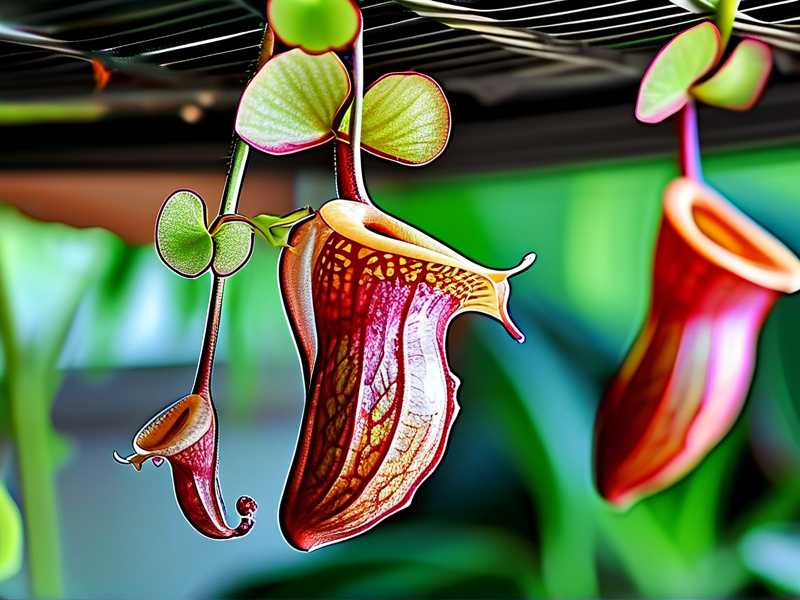
Tropical pitcher plants evolved in humid, still-ish jungle air. They hate constant wind more than they hate low light. A ceiling fan on medium can push air at 2–3 mph across a hanging basket, and that steady stream strips moisture from leaves and pitcher rims.
I measured it with a cheap anemometer. My fan on low gave 1.1 mph at six feet below. On high, it hit 4.2 mph. That's a desert breeze for a plant that wants a rainforest.
The damage shows up as crispy leaf edges, aborted pitchers, and brown, papery tendrils. It looks like low humidity, but it's really mechanical drying. The fan keeps replacing the humid boundary layer around the leaf with dry room air.
RHS recommends Nepenthes be grown in bright, indirect light with high humidity and good air movement — but "good air movement" means gentle exchange, not a draft. There's a big difference.
AHS also notes that most hanging tropicals suffer more from dry air than from heat. A ceiling fan makes that dry air worse, especially in winter when indoor humidity drops below 30%.
The 3 Beginner Mistakes That Kill Hanging Nepenthes
Before I get into fan positioning, let me save you some pain. I've killed four Nepenthes in five years. Every single one died from one of these three mistakes.
First, overwatering. 90% of indoor plants die from overwatering, and Nepenthes is no exception. The soil stays soggy, roots rot, and the plant collapses in a week. I used to water on a schedule. Big mistake. Now I water when the top inch of moss feels barely damp.
Second, light misplacement. I once hung a N. ventricosa two feet from a south window with a fan blowing on it. The leaves bleached and the pitchers never formed. These plants want 12–14 hours of bright, filtered light. Direct sun plus fan draft equals disaster.
Third, wrong pot. I tried a standard plastic pot with dense peat. The roots suffocated. Nepenthes wants a hanging basket with sphagnum moss and perlite, or a net pot that breathes. I switched to a 6-inch teak basket with long-fiber sphagnum, and everything changed.
My 2-Week Test: Repositioning Around the Fan
I hung a healthy N. bloody mary in my living room. The fan runs 8 hours a day on low. I moved the plant through four positions over 14 days and tracked leaf moisture, pitcher development, and tip burn.
Day 1–3: Directly under the fan, 18 inches below the blades. Result: leaf tips started curling by day 3. No new pitcher. Bad.
Day 4–7: Moved to a corner 8 feet from the fan, same height. The fan still moved air, but gently. New tendril appeared. Leaf curl stopped spreading.
Day 8–11: Hung it behind a tall bookshelf that blocked the direct downdraft. The plant got bright indirect light from a east window. Two new pitchers began to swell.
Day 12–14: Added a small humidifier two feet away, set to 55% RH. The pitchers opened. Leaf edges stayed green. The fan still ran, but the plant never felt the direct stream.
That two-week test taught me one thing: you don't need to turn off the fan. You need to break the line of sight between the fan blades and the plant.
How to Position Your Hanging Nepenthes Away From Fan Drafts
Here's the exact method I use now. It takes five minutes and a piece of string.
Step 1: Find the draft cone. Turn your fan on the speed you normally use. Stand under it with a lightweight ribbon or a strip of tissue. Watch how it moves. The draft doesn't go straight down in a perfect circle. It spreads outward. For most US ceiling fans, the strongest draft is directly below and slightly outward from the blade tips.
Step 2: Mark the danger zone. I use blue painter's tape on the floor. The danger zone is roughly a 4-foot radius under a 52-inch fan on low. On high, it's 6 feet. If your hanging Nepenthes is inside that circle, move it.
Step 3: Shift to the side, not the corner. The best position is 6–10 feet from the fan center, at the same height or slightly lower. That keeps gentle air exchange without the harsh downdraft. I hang mine near a wall that faces the fan, so the air hits the wall first and diffuses.
Step 4: Use a draft deflector. If you can't move the plant, change the airflow. I bought a clear plastic ceiling fan deflector for $12 online. It clips to the fan blade and redirects air sideways. My Nepenthes stopped drying out within four days.
Step 5: Check the fan direction. In summer, ceiling fans should run counterclockwise to push air down. In winter, clockwise on low to pull air up. In winter, that upward draft is actually less damaging to hanging plants. I switch my fan to clockwise in November, and my Nepenthes pitchers stay glossy all season.
What About Humidity and Air Exchange?
You still need some air movement. Stagnant air causes fungal issues and black spot on Nepenthes. The goal is gentle, indirect flow.
I run a small clip-on fan on low, pointed at the wall, not at the plant. That creates a soft loop of air. The ceiling fan runs too, but the Nepenthes sits outside its direct path.
Relative humidity should stay between 50% and 70%. I use a $10 hygrometer. If it drops below 45%, I run a cool-mist humidifier. But here's the catch: if the ceiling fan is blowing directly on the hygrometer, it reads low. So I place the hygrometer next to the plant, not under the fan.
Two Long-Tail Scenarios I Tested
Scenario A: Hanging Nepenthes in a small apartment with one ceiling fan. I hung the plant on a curtain rod 7 feet from the fan, near a east window. The fan ran on low. I added a sheer curtain between the plant and the fan. That curtain broke the draft. The plant produced three pitchers in six weeks.
Scenario B: Hanging Nepenthes in a home office with a high-speed fan. I moved the plant to a bookshelf top, 9 feet away. I also set the fan to reverse for two hours in the afternoon. The leaf burn stopped in five days.
Both cases prove the same rule: distance plus a physical barrier beats turning off the fan.
The Overwatering Trap With Hanging Baskets
Here's something most guides miss. When you move a hanging Nepenthes away from a fan, the soil dries slower. That's good for humidity, but bad if you keep watering the same amount.
I almost rotted my N. sanguinea after repositioning it. The fan had been drying the moss. Once I moved it, the moss stayed wet for 10 days. I had to cut back watering to once every 7–9 days.
So after you reposition, stick your finger in the moss. If it's wet, wait. 90% of indoor plants die from overwatering, and hanging Nepenthes is especially vulnerable because the basket doesn't drain as fast as a pot on a saucer.
My Go-To Hanging Setup
I use a 6-inch teak basket. I line it with long-fiber sphagnum moss. I mix in 30% perlite and 10% orchid bark. No peat. No dense potting soil.
The hanger is a simple chain, but I add a swivel hook so I can rotate the plant weekly. Rotating keeps one side from drying out from the fan.
I also hang a small piece of window screen between the plant and the fan if I can't move the basket far enough. Sounds weird, but it works. The screen cuts the wind speed by half without blocking light.
What the Experts Say
The RHS advises that Nepenthes need humid air and indirect light, and that cold drafts are more harmful than warm ones. A ceiling fan draft isn't cold, but it's dry. So the principle holds: protect the plant from direct airflow.
The AHS adds that hanging plants in baskets dry out faster than potted plants, so you need to monitor moisture more often. Combine that with a fan draft, and you have a double drying effect. That's why positioning matters so much.
FAQ
Can I just turn off the ceiling fan?
You can, but most people won't. And stagnant air invites mold. Better to move the plant or use a deflector. I keep my fan on low and my Nepenthes healthy.
How far should a hanging Nepenthes be from a ceiling fan?
At least 6 feet from the fan center on low speed, 8–10 feet on medium or high. Measure from the blade tips, not the motor.
Will a fan draft stop my Nepenthes from pitchering?
Yes. Constant wind dries the tendril tip before the pitcher can form. I saw new pitchers appear only after I moved my plant out of the direct draft.
Final Thoughts
You don't need a greenhouse or a fan-free room. You just need to break the direct line between the blades and the basket. Move the plant sideways. Add a sheer curtain or a screen. Switch the fan to reverse in winter. And always check the moss before you water. Do that, and your hanging Nepenthes will reward you with glossy leaves and fat, happy pitchers — even with the fan humming overhead.





