 bluename
How to Care for Nepenthes Indoors in US Low Light Homes: A Real-World Survival Guide
Let’s be honest. If you’re reading this, you’ve probably fallen for the otherworldly beauty of a Nepenthes, or tropical pitcher plant, only to be met with a harsh reality. Your home doesn’t resemble the bright, steamy jungles of Southeast Asia. Instead, you face the common American indoor dilemma: limited, often indirect light from north-facing windows or shaded apartments. I was in your exact shoes, convinced I could never keep these exotic beauties alive. The term “low light” felt like a death sentence for a plant famed for its carnivorous appetite. But through trial, error, and a two-week experiment that changed everything, I discovered that nurturing a Nepenthes in a low-light home is not only possible but deeply rewarding. This guide is my firsthand account of making it work, focusing on the specific challenges of US low light homes.
My Starting Point: The Challenge of Dim Interiors
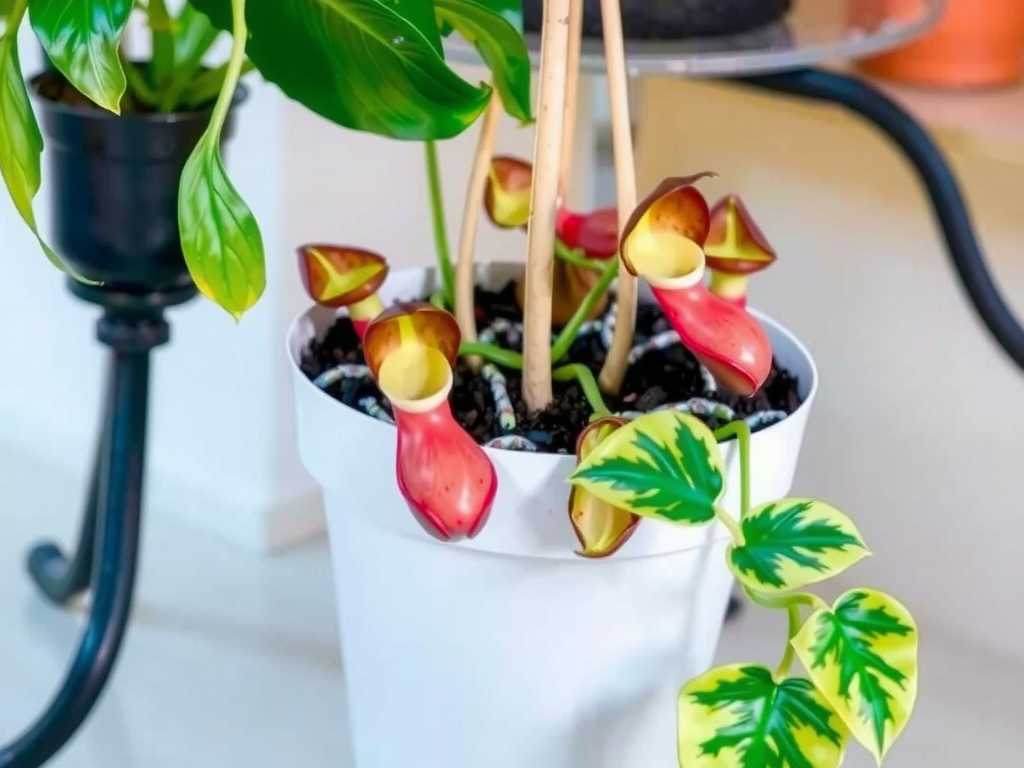
My journey began with a healthy Nepenthes ventrata, a common hybrid praised for its adaptability. My home has large north and east-facing windows—great for many houseplants, but traditionally considered insufficient for high-light lovers like Nepenthes. The core pain point was clear: how to provide enough energy for growth and, crucially, pitcher production in low light conditions, without resorting to expensive, complex setups. I refused to believe my only option was a barren, pitcher-less vine. So, I devised a plan, documenting every step and its effect over a critical 14-day period.
The Foundation: Rethinking “Low Light” for Nepenthes
First, a crucial distinction. “Low light” for a Nepenthes doesn’t mean dark. It means no direct, scorching sun, but abundant bright, indirect light. In a US home, this typically translates to placement right against a north or east-facing window, or a few feet back from a south or west window with a sheer curtain. The American Horticultural Society’s (AHS) Light Scale is helpful here: Nepenthes generally need “Filtered Light” (bright light but no direct midday sun) to “Partial Sun.” My north window provided “Filtered Light” at best.
I invested in a simple, affordable lux meter app (note: not lab-grade, but good for trends). My north window sill measured a consistent 200-400 foot-candles (fc) on a bright day—the very bottom threshold for Nepenthes. This was my low light environment for Nepenthes. The goal wasn’t to mimic equatorial sun, but to maximize every photon available and adjust everything else to match.
Week 1: The Adjustment Protocol – Water, Humidity, and Patience
I knew light drove photosynthesis, but in lower energy conditions, every other stress factor needed to be minimized. Here was my Week 1 protocol:
1. Watering with Surgical Precision: Overwatering is the fastest killer in low light. Metabolism slows, so the plant uses less water. I used the “tray method” with a critical twist. I placed the pot (always in a mix of long-fiber sphagnum moss and perlite) on a shallow tray. Each morning, I would pour about 1/2 inch of distilled or rainwater into the tray, allowing the medium to wick it up. By evening, the tray was dry. This created a cycle of moist-but-not-soggy conditions, perfect for preventing root rot in a cooler, slower-growing environment. Tap water, with its minerals, is a major pitfall. It slowly toxifies the soil. I learned this the hard way with brown leaf tips on a previous plant.
2. Humidity: The Localized Microclimate: While many guides insist on 60%+ humidity, I found consistency more important than a high number. My room humidity hovered around 45-50%. To create a microclimate, I placed my Nepenthes on a pebble tray filled with water and grouped it with other plants. Transpiration from the group raised the immediate humidity around the leaves. A small, quiet humidifier placed nearby during the day boosted it further. The key was avoiding wide swings. The Royal Horticultural Society (RHS) notes that while high humidity aids pitcher initiation, stable humidity prevents stress, which is paramount when light is limited.
3. The Feeding Conundrum: No direct sun meant fewer insects, and a slower plant might struggle to digest large prey. I avoided fertilizing the soil, as Nepenthes roots are extremely fertilizer-sensitive. Instead, once every 4-6 weeks, I would drop a single, tiny (1/4 size) dried bloodworm (sold for fish) into one or two existing pitchers. This provided a minuscule nitrogen boost without risk of burn. In low light, the mantra is “feed sparingly or not at all.”
Initial Observations (Days 1-7): The plant showed no new growth, but crucially, no decline. The existing pitchers remained plump. The growing tip was firm and green. This was a win—stability in a new environment.
Week 2: Introducing Supplemental Lighting – The Game Changer
After a week of stable baseline care, I introduced a single, 20-watt full-spectrum LED grow light bulb in a desk lamp. This wasn’t a high-intensity setup, but a targeted supplement. I positioned it 18 inches above the plant, running it for 12 hours a day, supplementing the natural north light. This aimed to solve the core issue of growing Nepenthes in shaded apartments.
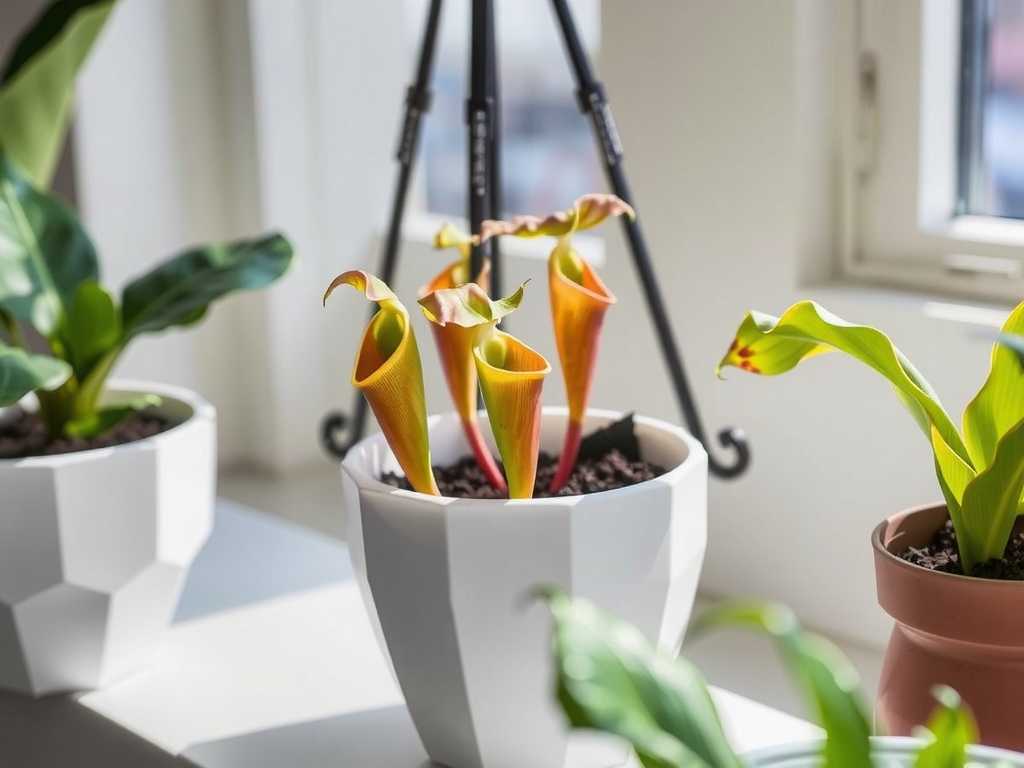
The effect was not instantaneous, but by Day 10, I noticed a change. The newest, small leaf at the tip began to darken to a richer green. By Day 14, it was visibly larger and unfurling. Most excitingly, at the tip of this new leaf, a tiny, fuzzy “nub” had formed—the very beginning of a pitcher tendril. The plant was committing energy to pitcher development, a direct response to the increased, consistent light energy.
Pitfalls I Encountered and How I Fixed Them
- The “Dormancy” Misconception: I initially thought my plant was dormant. In reality, Nepenthes don’t have a true dormancy. It was simply in a holding pattern due to insufficient light. The supplemental LED proved this.
- The Temptation to Over-Mist: Misting leaves can lead to fungal spots in stagnant, low-light air. I shifted focus to root zone moisture and ambient humidity via the pebble tray, which was safer.
- Ignoring Airflow: Stagnant air fosters disease. I ensured a gentle ceiling fan was always on low in the room, providing imperceptible but constant air movement. This strengthened the plant and prevented pathogens.
Long-Term Care and Seasonal Adjustments
Success in low light is about marathon, not sprint. My ongoing care looks like this:
- Lighting: The supplemental LED stays year-round. In summer, when the north window is brighter for longer, I may reduce it to 8 hours.
- Watering: I reduce the tray watering frequency slightly in winter, when both natural light and indoor temperatures drop.
- Potting: I repot only when the moss breaks down (every 1.5-2 years), always in spring when light increases. Disturbing the roots in low-light periods is too stressful.
Addressing Your Top Concerns
Will my Nepenthes ever produce large, colorful pitchers in low light? It will produce functional pitchers, but they may be smaller and greener than those on a sun-drenched plant. The priority is healthy growth. The pitchers it produces will be a badge of honor, proof you’ve mastered its care in a challenging environment.
Can I use a regular LED bulb instead of a “grow light”? Yes, but with managed expectations. A bright, cool-white LED bulb can provide useful supplemental light. However, full-spectrum grow lights are optimized with more red and blue wavelengths that plants use most efficiently. For a single plant, a purpose-built bulb is a worthwhile small investment.
My plant has a long vine but no pitchers. What should I do? This is classic symptom of insufficient light. The plant stretches (etiolates) seeking more. First, increase light as described. You can also consider a careful pruning in spring. Cutting back the vine encourages bushier growth from the base, and the new growth points, under better light, are more likely to produce pitchers.
Caring for a Nepenthes in a low-light home is an exercise in balance and observation. It teaches you to read your plant’s subtle signals and to work with your environment, not against it. By focusing on pure water, stable humidity, and most importantly, maximizing every bit of light—whether from a perfect window or a simple supplemental bulb—you can witness the incredible adaptation of these carnivorous wonders. The sight of that first new pitcher forming in your modest light conditions is a triumph, proving that even in the shade, a little piece of the jungle can thrive.





