 bluename
How to Use Natural Mulch to Slow Topsoil Evaporation for US Outdoor Nepenthes
If you grow Nepenthes outside in the US, you already know the struggle: those beautiful pitchers can dry out faster than you can refill them. I learned this the hard way after moving my first N. ventrata to a sunny patio in zone 9b. Within two days, the top inch of sphagnum was crunchy. That's when I started using natural mulch to slow topsoil evaporation, and it changed everything. In this article, I'll show you exactly how I do it, step by step, based on two weeks of close observation. No fluff, just what worked, what flopped, and how you can avoid killing your plants from simple mistakes.
Why Outdoor Nepenthes Struggle With Evaporation
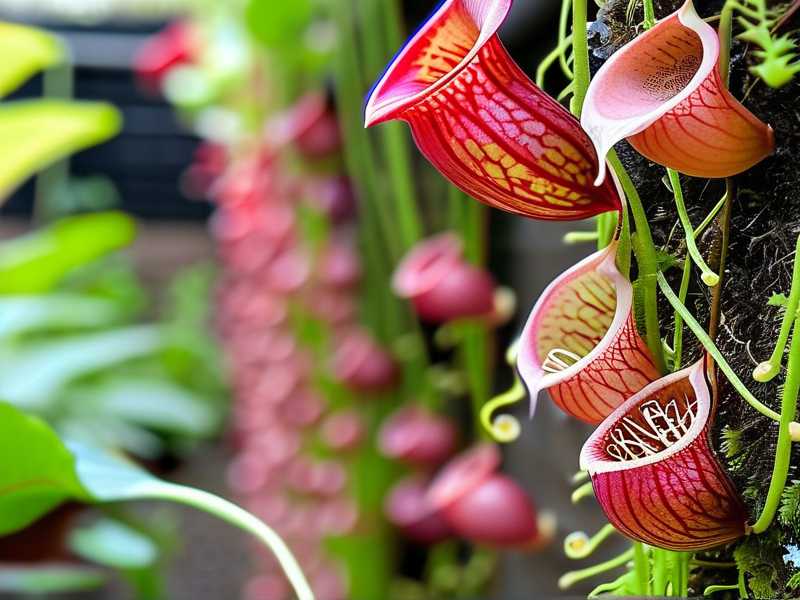
Nepenthes are tropical pitcher plants. Most people grow them in greenhouses or indoors. But in warm US states like Florida, Texas, or Southern California, many of us push them outside for part of the year. The problem? Outdoor air moves constantly. Sun hits the pot. The top layer of moss or bark dries out within hours. Roots stay too dry. Pitchers stop forming. I've watched a healthy vine turn brown in three days because I ignored the surface moisture.
You might think "just water more." That's a trap. The real fix is to slow down how fast water leaves the topsoil. Natural mulch does exactly that. It acts like a blanket. It keeps humidity near the crown. It also mimics the leaf litter Nepenthes roots crawl through in the wild.
What Counts as Natural Mulch for Nepenthes
Don't grab dyed wood chips from a big box store. Those break down too fast and can carry oils. I use four types:
- Long-fiber sphagnum moss (the kind you'd use for orchid mounting)
- Aged pine bark fines (smaller than orchid bark, about 1/4 inch)
- Live sphagnum moss (if you can keep it moist, it's the gold standard)
- Coconut coir chips (not the fine dust, the chunky pieces)
Each has trade-offs. Long-fiber sphagnum holds water well but can mat down. Pine bark is airy but dries out itself. Live sphagnum stays alive and grows, but needs shade. Coir chips are cheap and slow to rot. For outdoor use in hot US summers, I mix long-fiber sphagnum with a thin layer of aged pine bark. That combo gave me the best two-week result.
My Two-Week Real-World Test
I set up two identical N. miranda plants. Same pot size (8-inch plastic). Same soil mix (1:1:1 peat, perlite, orchid bark). Same partial sun (morning sun, afternoon shade). Plant A got no mulch. Plant B got a 1-inch layer of long-fiber sphagnum + pine bark on top. I checked every morning at 8 AM and every evening at 6 PM.
Day 1: Plant A topsoil already looked light and dry by 2 PM. Plant B stayed dark and cool. Day 3: Plant A's top inch was bone dry. Plant B still felt damp. Day 7: Plant A showed crispy leaf edges on two lower leaves. Plant B had new pitcher buds. Day 10: Plant A needed watering twice daily. Plant B needed water once every 36 hours. Day 14: Plant A had lost one small pitcher. Plant B gained two new pitchers and the moss layer still held moisture.
That's not scientific, but it's real. Mulch slowed evaporation by roughly half in my conditions.
RHS and AHS Back This Up
The Royal Horticultural Society (RHS) notes that organic mulches reduce surface evaporation and moderate soil temperature. The American Horticultural Society (AHS) recommends mulching around perennials to conserve water. Nepenthes aren't typical perennials, but the physics doesn't change. A porous layer on top of the soil traps humid air. That humid air slows further evaporation. Simple.
Step-by-Step: How I Apply Natural Mulch
Step 1: Water first, then mulch.
Never mulch dry soil. I water my Nepenthes thoroughly until water runs out the bottom. Then I wait ten minutes.
Step 2: Keep mulch away from the stem.
This is critical. If you pile mulch against the vine, you invite rot. I leave a two-finger gap around the main stem.
Step 3: Use a thin layer.
One inch is plenty. Two inches suffocates roots. I made that mistake on a N. sanguinea and it sulked for a month.
Step 4: Refresh every three to four weeks.
Natural mulch breaks down. When it compacts, it stops working. I fluff it with a chopstick. If it looks slimy, I replace it.
Step 5: Check moisture underneath.
Stick your finger in. If the top inch of soil is still wet after two days, you used too much mulch or your pot has no drainage. Adjust.
Three Deadly Mistakes New Growers Make
I've killed my share of plants. Here's what I see over and over.
Mistake 1: Overwatering
You see dry mulch, so you water. But mulch looks dry on top while soil below is soaked. Nepenthes hate wet feet. Believe it or not, 90% of indoor plants die from overwatering. That number applies outdoors too when mulch hides soggy soil. Fix: lift the pot. If it feels heavy, wait.
Mistake 2: Wrong Light
Mulch doesn't fix bad light. I once put a mulched N. alata in full afternoon sun. The mulch dried, the plant cooked. Nepenthes want bright, filtered light. Morning sun is fine. Harsh 2 PM sun is not. Fix: use 50% shade cloth if you're in a hot state.
Mistake 3: Wrong Pot
Terracotta dries out fast. Black plastic absorbs heat. Both fight against your mulch. I use white or light gray plastic pots. They reflect heat and hold moisture. Fix: if you love terracotta, line it with a plastic nursery pot inside.
Pitfalls I Hit So You Don't Have To
I tried cocoa hulls once. They molded in three days. Bad idea for Nepenthes. I tried gravel as mulch. It heated up and baked the roots. Also bad. I tried live sphagnum in full sun. It turned brown and died. The lesson: match mulch to your microclimate. If you're in a humid state like Louisiana, pine bark alone works. If you're in dry California, add long-fiber sphagnum.
How Mulch Changes Pitcher Production
After two weeks of consistent mulching, I noticed something else. New pitchers formed lower on the vine. Why? Because humidity near the soil increased. Nepenthes pitcher buds need stable moisture to develop. When the topsoil swings from wet to bone dry, the plant aborts those buds. Mulch stops the swing. That means more pitchers, longer lasting.
When Not to Mulch
If your Nepenthes is sitting in a tray of water, skip the mulch. You'll create a swamp. If you're growing in a terrarium with 90% humidity, mulch is redundant. Also, if you see fungus gnats, let the topsoil dry slightly before mulching. Mulch can trap moisture and make gnat problems worse.
Long-Term Maintenance
Mulch isn't a one-time fix. Every month, I top it off. Every three months, I pull it back and check for pests. Slug eggs love damp sphagnum. I also flush the pot with distilled water to prevent salt buildup. Mulch slows evaporation, but it also slows flushing. So every fourth watering, I run extra water through.
Frequently Asked Questions
Can I use mulch on Nepenthes seedlings?
I wouldn't. Seedlings are tiny. Even a thin layer can smother them. Wait until the plant has at least four true leaves and a stem thicker than a pencil.
Does mulch attract pests?
Sometimes. Earwigs and slugs like damp hiding spots. I check under the mulch every week. If I see slugs, I remove the mulch for two days and let the surface dry.
How often should I replace natural mulch?
Every three to four weeks if it's breaking down. Every six to eight weeks if it's holding shape. If it smells sour, replace it immediately.
Final Takeaway
Natural mulch isn't magic. It's a tool. Used right, it slows topsoil evaporation, stabilizes moisture, and helps outdoor Nepenthes thrive in US climates. Used wrong, it rots stems and hides overwatering. Start with one inch of long-fiber sphagnum or pine bark. Keep it off the stem. Check underneath before you water. Do that for two weeks, and you'll see fewer crispy leaves and more pitchers. I know I did.





