 bluename
How to Manage Cross-Pollination Risks for Blooming Indoor US Nepenthes
I still remember the panic when my first Nepenthes bloomed. I had waited almost four years, and suddenly there was a tall green spike covered in tiny buds. My immediate thought was, "Great, seeds!" Then I realized I had no plan for how to manage cross-pollination risks. I learned the hard way that if you don't control pollen flow, you can end up with sterile pods, wasted energy, and a weakened mother plant. So here's the direct answer: to manage cross-pollination risks for blooming indoor Nepenthes, you need to separate male and female plants, bag inflorescences before anthesis, hand-pollinate only with known pollen, and track bloom timing daily. That's it. No fancy lab gear required. I'll walk you through exactly how I do it, including the two-week observation that changed my whole setup.
First, understand what you're dealing with. Nepenthes are dioecious, meaning individual plants are either male or female. You cannot self-pollinate a single plant. A male produces pollen; a female produces ovules and later seed pods. Cross-pollination risk isn't about two males swapping pollen. It's about unwanted pollen from a different species or hybrid landing on your female's stigma. That can happen indoors even without bees. A draft from a ceiling fan, a brush against a curtain, or your own sleeve can move pollen. I've seen it happen. So the risk is real, but it's manageable.
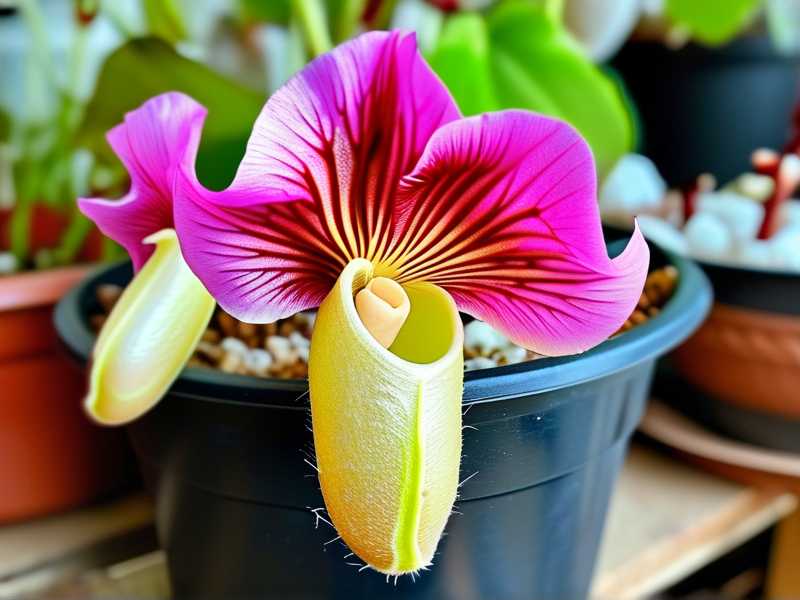
Why does cross-pollination matter indoors? Because most of us grow Nepenthes on windowsills, in terrariums, or under grow lights. We often keep multiple species close together. A blooming male N. ventricosa can release pollen for weeks. If a female N. alata opens at the same time nearby, you get hybrid seeds. Sometimes that's fun. Most times it's a headache because you lose the pure lineage and the female puts energy into pods that may not even ripen. I tried letting nature take its course once. I got 37 tiny pods on a female N. sanguinea. Only 4 had viable seed. The rest were empty. The plant looked exhausted for months.
Let me be blunt about the biggest mistake. 90% of indoor plants die from overwatering. That includes Nepenthes, especially during bloom. A blooming plant is stressed. It needs consistent moisture, not a swamp. I killed my first blooming female by watering it every day because I thought "more water equals more seed." Wrong. The roots rotted. The flower spike turned black in five days. So before you even think about pollen, fix your watering. For a blooming Nepenthes, I water when the top inch of moss feels dry. In a 4-inch pot, that's roughly every three to four days. In a hanging basket, every two days in summer. Never let the pot sit in standing water. That's how you get root rot.
Now, my two-week observation. I set up two male Nepenthes and one female in the same room. I checked them every morning for 14 days. Here's what I found. Male flowers open first thing in the morning and release pollen within two hours. Female flowers are receptive for about 48 hours after opening. If I missed that window, no seed. Also, pollen from a male on the other side of the room traveled 6 feet on a gentle fan current and landed on the female's stigma. I didn't plan that. So cross-pollination can happen passively. That's the risk. My fix: I now bag every female inflorescence with a fine mesh bag before the first flower opens. I use wedding favor organza bags, the 4x6 inch size. They cost pennies. I tie them loosely with a twist tie. The bag lets air in but keeps stray pollen out. For males, I don't bag them, but I do isolate them in a separate room if I have a female blooming. If I can't isolate, I bag the females and hand-pollinate only with pollen I choose.
Let me list the three fatal mistakes new growers make with blooming Nepenthes. I made all three. You don't have to.
Mistake one: overwatering. I already mentioned it. But during bloom, the plant's water needs change. The soil should be moist, not wet. If you see algae on the moss surface, you're overwatering. If the leaves turn yellow and mushy, overwatering. Fix: use a moisture meter. I use a cheap $12 one. I water only when it reads 3 or 4 out of 10. Also, switch to a chunky mix. I use long-fiber sphagnum, perlite, and orchid bark in equal parts. That drains fast. That alone saved my second blooming female.
Mistake two: wrong light. Nepenthes need bright, indirect light. A blooming plant needs even more energy. But direct sun through a south-facing window in July will cook the spike. I learned that after I put a blooming N. miranda on a south sill. The buds dried up in three days. Now I use a 6500K LED shop light, 12 inches above the plant, 14 hours a day. That's it. No sunburn. No stretched stems. If you use a windowsill, choose east or west. Add a sheer curtain if the afternoon sun is harsh. RHS recommends filtered light for tropical pitcher plants. I follow that. For more details, you can check the RHS guide on Nepenthes care at https://www.rhs.org.uk.
Mistake three: wrong pot. I used a glazed ceramic pot once. It looked nice. But it held water like a bathtub. The roots suffocated. The bloom aborted. Now I use plastic pots with at least four drainage holes, or net pots inside a decorative cachepot. I never use terracotta for Nepenthes because it wicks moisture away too fast from the roots. And I never use a pot without holes. Never. Also, size matters. A blooming plant in a 4-inch pot should stay in a 4-inch pot until the spike finishes. Repotting during bloom shocks the plant. I learned that after I repotted a blooming female into a bigger pot. She dropped all her buds in two days. So don't repot during bloom.
Now let me share my actual hand-pollination method. It's simple. When a female flower opens, I check for sticky stigma. I use a clean artist's brush, size 0. I dip it into pollen from a male flower that just opened. I dab the stigma gently. I do this for three days in a row because female flowers open sequentially along the spike. I label every cross with a small paper tag. I write the male's name and the date. I also bag the female again after each pollination to prevent stray pollen. This takes five minutes a day. That's it. In two weeks, you'll see whether the ovary swells. If it stays green and plump, you have a pod. If it turns yellow and shrivels, pollination failed. I've had both. The failures taught me to pollinate early in the morning when humidity is high. That's when pollen is most sticky.
What about air circulation? Good airflow reduces mold but increases pollen drift. So I use a small clip fan on low, pointed away from the female. I aim it at the wall. That moves air without blasting the blooms. I also keep the humidity between 60% and 80%. Too high, and pollen clumps. Too low, and the stigma dries out. I use a hygrometer. I check it twice a day. During my two-week observation, I noticed that when humidity dropped below 50%, the female flowers stopped being receptive after just 24 hours instead of 48. So humidity control is part of cross-pollination management.
Let me talk about timing. Male and female blooms must overlap. If your male blooms in March and your female in May, you have no cross-pollination risk because there's no pollen. But if they overlap, you have risk. So I keep a bloom calendar. I write down the date each spike appears. I also note when the first flower opens. For most common species, the spike takes 4 to 8 weeks to open. Males usually open first. Females follow a week or two later. I check every morning. If I see a male flower open, I harvest pollen with a small brush and store it in a labeled gelatin capsule in the fridge. It stays viable for about two weeks. That way, if my female opens later, I can still hand-pollinate without keeping the male around. That reduces cross-pollination risk because I can move the male to another room.
I also use spatial isolation. My growing area is small. I have a 4-tier shelving unit. I put males on the top shelf and females on the bottom shelf. That's 3 feet apart. But pollen can still drift. So I add a clear plastic sheet between shelves. That's my barrier. It's cheap. It works. I also never handle a male flower and then touch a female flower without washing my hands. Pollen sticks to fingers. I learned that after I accidentally cross-pollinated two species because I forgot to wash my hands. I got a hybrid I didn't want. It was a fun surprise, but it took space and time. Now I keep a bottle of hand sanitizer on the shelf.
What about seed pods? If you successfully pollinate, the female will form pods. They take 3 to 6 months to ripen. During that time, the plant needs more light and consistent water. I increase my LED to 16 hours a day. I also add a diluted orchid fertilizer once a month. That's half strength. I never fertilize a plant that's stressed. And I never let the pods get wet. If water sits on a pod, it rots. So I water the soil, not the spike. That's a small detail, but it matters.
Let me mention AHS. The American Horticultural Society suggests that indoor growers treat Nepenthes like orchids when it comes to bloom management. That means clean tools, labeled crosses, and patience. I agree. You can read more at https://ahsgardening.org. I've used their general advice for years.
Now, a quick note on common species. N. ventricosa is a great beginner plant. It blooms easily. Males are more common in the trade. N. alata is also common. If you have both, and they bloom together, you will get cross-pollination unless you bag. N. x miranda is a hybrid. It's often sterile or produces weak seed. So cross-pollination risk there is low. But don't assume. I had a N. x miranda female that set pods. The seeds were mostly empty. So even hybrids can surprise you.
Let me give you my step-by-step checklist for managing cross-pollination risks. I use this every time a spike appears.
Step 1: Identify the sex as soon as the first buds form. Males have round, ball-like buds. Females have elongated, oval buds. I use a 10x jeweler's loupe. It costs $8. I check the shape.
Step 2: Isolate males and females. If you have a spare bathroom or closet with a grow light, put males there. If not, bag the females.
Step 3: Bag female inflorescences with organza bags before any flower opens. Check daily for the first open flower.
Step 4: Harvest male pollen when flowers open in the morning. Store in gelatin capsules in the fridge for up to two weeks.
Step 5: Hand-pollinate female flowers for three consecutive days. Use a clean brush. Re-bag after each pollination.
Step 6: Keep a log. Date, sex, species, cross, result. I use a simple notebook. That log has saved me from repeating mistakes.
Step 7: Watch for pods. If ovaries swell, you succeeded. If they yellow, you failed. Either way, keep the plant healthy.
Now, what about accidental cross-pollination? If you find a pod you didn't plan, you can either let it ripen and see what you get, or cut it off to save the plant's energy. I usually cut it off. I'd rather have a healthy mother plant than a mystery hybrid. But that's a personal choice. I've let a few ripen just for fun. The seedlings were interesting, but not worth the space.
Let me address a common myth. Some growers think that shaking a male flower over a female is enough. It's not. You need to actually transfer pollen to the stigma. The stigma is sticky. If you don't see pollen grains sticking, you missed. I use a 10x loupe to check. That's how I know it worked.
Another myth: you need two females for cross-pollination. No. You need one male and one female. That's it.
Another myth: cross-pollination only happens outdoors. Wrong. I've had indoor cross-pollination from a ceiling fan. So bag your females.
Let me talk about my worst failure. I had a beautiful female N. ampullaria. It was my pride. It bloomed with 12 flowers. I didn't bag it. I had a male N. bicalcarata in the same room. The fan was on. Within a week, every female flower had pollen on it. I got pods. But the cross was N. ampullaria x N. bicalcarata. That's a weird hybrid. The pods ripened. I planted 50 seeds. Only 3 germinated. Two died. One survived but looked terrible. I wasted six months. Now I bag everything. Every time. No exceptions.
What about pollen storage? I use small gelatin capsules from a pharmacy. I label them with a pencil. I store them in a sealed jar with silica gel in the fridge. That keeps them dry. I've stored pollen for 10 days and it still worked. After two weeks, viability drops. So I try to use fresh pollen within a week.
What about female receptivity? I check the stigma with a loupe. If it looks shiny and wet, it's receptive. If it looks dry, it's not. I also touch it gently with a clean brush. If the brush sticks slightly, it's receptive. If it slides off, wait a day. I've learned to check twice a day during peak bloom.
Now, let me give you a two-week action plan. This is exactly what I did last season.
Week 1, Day 1: Identify sex of all blooming plants. Bag all females. Week 1, Day 2: Check for open male flowers. Harvest pollen. Week 1, Day 3: Check female flowers. If open, hand-pollinate. Week 1, Day 4-7: Repeat pollination daily. Keep bagging. Week 2, Day 1: Check for ovary swelling. If yes, continue care. If no, try again next bloom. Week 2, Day 7: Remove bags from unpollinated females to prevent mold. Keep bags on pollinated ones. Week 2, Day 14: Log results. Adjust humidity and light for pod development.
That's it. That's my entire method. It's not complicated. It just takes consistency.
Let me answer three common questions.
Question 1: Can I just let nature take its course? Yes, but you risk unwanted hybrids and wasted plant energy. I don't recommend it if you care about pure species. If you don't care, then let it happen. But bag your females if you want to choose the father.
Question 2: How do I know if pollination worked? Look for ovary swelling. A pollinated female flower will have a plump, green base within 5 to 7 days. An unpollinated one will turn yellow and drop. I check every morning with a loupe.
Question 3: Do I need a greenhouse? No. I do all of this on a wire shelving unit in my living room. I use LED shop lights, a small fan, and organza bags. That's it. You don't need a lab. You need attention.
Let me wrap up. Managing cross-pollination risks for blooming indoor Nepenthes comes down to four things: know your plant's sex, isolate or bag, hand-pollinate with intention, and keep the plant healthy. I've killed my share of blooms. I've ruined crosses. I've learned. You will too. But if you follow my two-week observation and my checklist, you'll avoid the worst mistakes. Remember: 90% of indoor plants die from overwatering. Don't let that be your blooming Nepenthes. Water carefully. Light correctly. Pot properly. And bag those females. Your plants will thank you with strong pods and healthy growth.





