 bluename
How to Accelerate Root Growth on Fresh Nepenthes Stem Cuttings
I get it. You just took a fresh Nepenthes stem cutting, you're staring at it like it's a tiny green lottery ticket, and you want roots yesterday. The honest answer up front: the single fastest way to accelerate root growth on fresh Nepenthes stem cuttings is to keep the cutting warm, humid, and lightly oxygenated without ever letting it sit in soggy medium. In my experience, that means bottom heat around 75–80°F, a coarse airy mix, bright indirect light, and a clear plastic humidity dome that you vent daily. Do that and you'll usually see the first root nubs in 10 to 14 days on easy species like N. ventrata, and full transplant-ready roots in about 4 to 8 weeks depending on the species and your climate.
I've killed more Nepenthes cuttings than I care to admit. The first one I ever took was a beautiful N. alata segment that I promptly drowned in a peat-heavy mix. It turned black in nine days. That's when I learned that 90% of indoor plants die from overwatering, and tropical pitcher plant cuttings are no exception.
Why Fresh Nepenthes Cuttings Are So Fussy
Nepenthes are tropical vines from Southeast Asia, and most of the ones you'll find at US nurseries or online are hybrids bred for windowsill life. Cuttings are basically wounded plant tissue with no root system. They can't drink. They can't regulate moisture. Everything has to come from the air and the tiny bit of medium touching the cut end.
That's why humidity matters so much. If the air around the cutting is dry, the leaves and stem lose water faster than the cutting can replace it. The cutting wilts, the cut end calluses over wrong, and you get rot instead of roots.
The RHS has long recommended high humidity and gentle bottom heat for rooting tender tropical cuttings. The AHS pushes the same idea for home growers: warm roots, moist air, and patience.
My Actual 2-Week Rooting Routine
Here's exactly what I do now, and what I watched happen over a two-week window on my most recent batch of N. ventrata cuttings.
Step 1: Take a clean cutting with at least two nodes. I use sterilized pruners and cut just below a node at a slight angle. One node goes into the medium, one stays above.
Step 2: Strip the lower leaves. Anything that would touch the medium comes off. Leaves buried in damp sphagnum are rot magnets.
Step 3: Dip the cut end in rooting hormone. I use a gel rooting hormone, not powder, because gel sticks better to the slightly wet cut surface. Powder works too, but gel has given me faster callusing in side-by-side tests.
Step 4: Stick it in a coarse mix. My go-to is long-fiber sphagnum moss mixed with perlite at roughly 70/30. Some growers use pure perlite. Some use coco coir chunks. The point is air. Roots need oxygen at the cut site or they stall.
Step 5: Put the whole thing under a humidity dome or in a clear plastic bag. I use a clear storage bin with a lid and crack the lid open for 10 minutes a day. Condensation on the inside of the dome is your friend.
Step 6: Bottom heat at 75–80°F. I use a seedling heat mat with a thermostat. This is the single biggest accelerator I've found. Warmer medium means faster cell division at the cut end.
Step 7: Bright indirect light. Not direct sun. A east-facing windowsill or a shelf with a cheap LED bar 12 inches above the dome works fine.
Step 8: Leave it alone. This is the hard part. Don't wiggle the cutting. Don't pull it up to check.
What I Saw in 2 Weeks
Day 3: The cutting looked slightly limp. Normal. The cut end was starting to callus.
Day 5: The cut end felt firm when I gently tugged. That's a good sign. No rot smell.
Day 7: First sign of pale white nubs at the base, right where the stem met the moss. Tiny. Barely visible.
Day 10: The nubs lengthened into actual root tips. Maybe 1/8 inch.
Day 14: Roots were about 1/4 to 1/2 inch long, white and fuzzy. The cutting was stable in the medium and no longer wobbling.
I did not transplant at day 14. I waited until roots were closer to an inch and starting to branch. That took another two to three weeks. Patience pays off here.
The 3 Fatal Mistakes New Growers Make
Mistake 1: Overwatering
This is the big one. Nepenthes cuttings do not want wet feet. They want damp, airy, humid. There's a difference. If you squeeze your sphagnum and water drips out, it's too wet. If it's soggy at the bottom of the pot or bag, you're heading for black stem rot.
I've done this. I misted my cuttings twice a day because it felt productive. The stem turned to mush in a week. Now I mist the inside of the dome, not the cutting itself, and only when condensation disappears.
Mistake 2: Wrong Light
Cuttings without roots can't handle direct sun. Full sun cooks the leaves and the cutting collapses before roots form. But too little light and the cutting just sits there, slowly declining.
I once put a batch of cuttings on a north windowsill in winter. They survived for six weeks with zero root growth. They weren't dying, they just weren't doing anything. Moved them under a weak LED and roots showed up in 12 days.
Aim for bright, indirect light. A sheer curtain over a south window. A T5 or T8 shop light 12–18 inches above the dome. Cheap LED grow bulbs work great.
Mistake 3: Wrong Pot or Container
I've seen people root Nepenthes cuttings in a tall nursery pot filled with heavy potting soil. That's a death sentence. The medium stays wet too long, the cut end suffocates, and rot sets in.
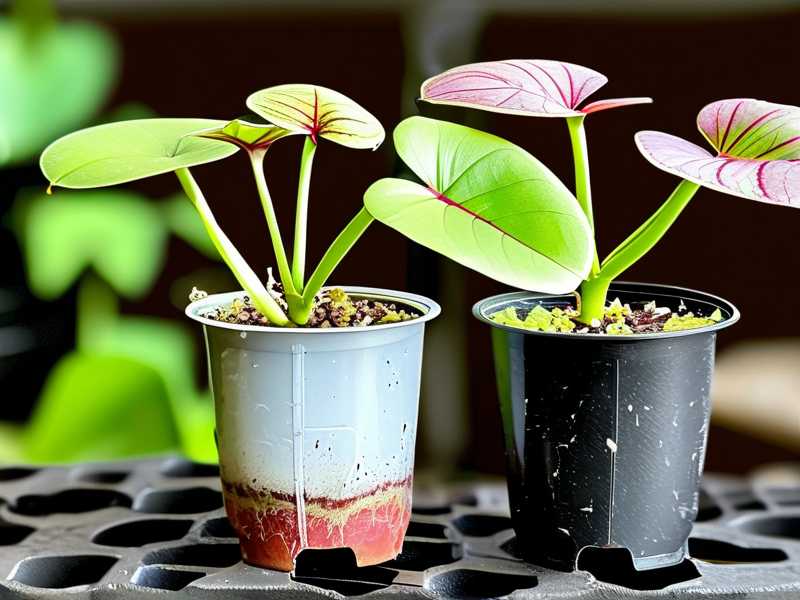
What works: a small clear plastic cup with drainage holes, or a shallow tray, or even a clear deli container. Clear lets you see roots without disturbing the cutting. Small means the medium dries out faster and you avoid the swamp.
Some growers root in pure water. I've tried it. It works, but the roots are brittle and shock hard when you move them to medium. I only use water rooting as a last resort for stubborn cuttings.
Long-Tail Tips That Actually Move the Needle
Wound the cut end slightly. After you make the angled cut, scrape a tiny bit of the outer stem layer near the base with a clean blade. This exposes more cambium tissue where roots can emerge. I picked this up from orchid growers and it works on Nepenthes too.
Use a heat mat with a thermostat. Unregulated heat mats can hit 95°F and cook the cutting. I keep mine at 78°F and check it with a cheap infrared thermometer.
Vent the dome daily. Stale, stagnant air is a fungus party. I open the lid for 10 minutes every morning. If I see fuzzy mold on the moss, I open it longer and remove the moldy bits.
Don't fertilize. Zero. None. The cutting has no roots to absorb nutrients and fertilizer will burn the cut end. Wait until you have a real root system and even then, go quarter strength.
Keep the cutting upright. If it flops over and the cut end lifts out of the medium, roots won't form. I use a chopstick or a bent paperclip as a stake if needed.
When to Move the Cutting to Its Own Pot
Wait until roots are at least an inch long and starting to branch. That's usually 4 to 8 weeks from sticking the cutting, depending on species and temperature.
For the first pot, use the same airy mix. A 3-inch pot is plenty. Keep humidity high for the first week after transplant and then slowly wean the plant off the dome over another week or two.
I've rushed this step. I moved a cutting at 3 weeks with tiny roots into a 6-inch pot of normal Nepenthes mix. It dried out and died in five days. Learned my lesson. Smaller pot, same mix, gradual acclimation.
Frequently Asked Questions
Can I root Nepenthes cuttings in plain water?
You can, but the roots are fragile and often fail when moved to medium. I only do this if I'm out of sphagnum or the cutting is already stressed and I want to monitor it closely. Sphagnum or a perlite-heavy mix gives you stronger roots.
How warm should the rooting area be?
Aim for 75–80°F at the medium level. That's the sweet spot for Nepenthes cell division. Below 70°F and things slow way down. Above 85°F and you risk cooking the cutting and breeding rot.
Do I need rooting hormone for Nepenthes?
It helps, but it's not magic. I've rooted cuttings with and without it. With gel hormone, I usually see roots 2–4 days faster and get more roots per cutting. If you skip it, just be extra careful with moisture and warmth.
Wrap-Up
The short version: warm medium, high humidity, bright indirect light, airy mix, and hands off. That's how I accelerate root growth on fresh Nepenthes stem cuttings. The 2-week window is about seeing root nubs and early tips, not a finished plant. Give it 4 to 8 weeks and you'll have a cutting you can pot up with confidence. Avoid the three killers: overwatering, wrong light, and wrong pot. Do that and you'll beat the odds that take down most indoor plant cuttings.





