 bluename
How to Propagate Rare and Valuable Nepenthes Varieties Safely in North America
I killed my first three Nepenthes cuttings before I figured out what actually works. If you want to propagate rare and valuable Nepenthes varieties safely in North America, the short answer is this: use live sphagnum moss, keep humidity above 80%, never let the medium dry out completely, and give bright indirect light with stable temperatures between 70–80°F. That's the real formula. Everything else is just refinement. And here's something most people don't realize: 90% of indoor plants die from overwatering. That includes Nepenthes cuttings, which are far more sensitive than established plants. I learned this the hard way, and I want you to skip that pain entirely.
Why Rare Nepenthes Are Different From Your Average Houseplant
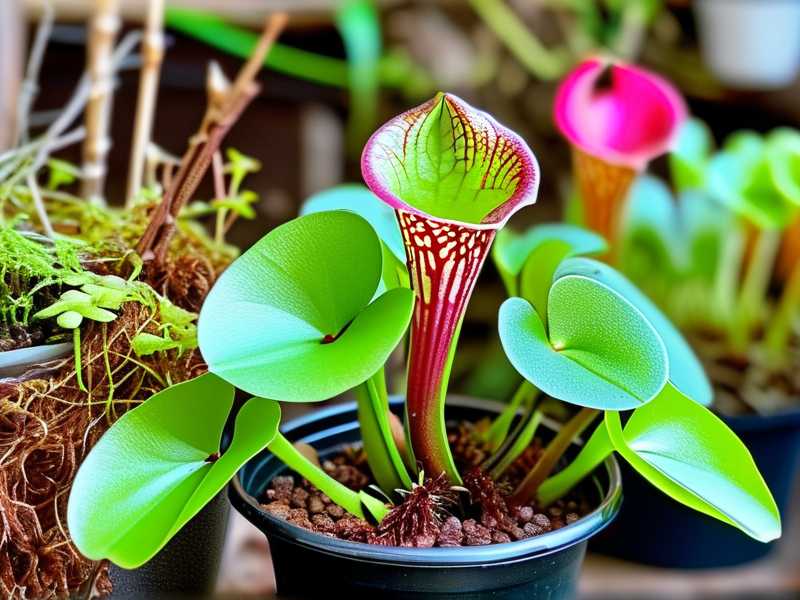
Okay, so let me back up a bit. If you're growing a common Nepenthes like N. ventrata on your windowsill, you already know they're forgiving. But rare varieties like N. rajah, N. hamata, N. edwardsiana, or any of the highland hybrids? Completely different story. These plants can cost you $80 to $500 for a single specimen. Some cuttings go for even more on specialty forums and auction groups.
I've been growing Nepenthes for about seven years now. The first rare cutting I bought was a tiny N. macrophylla node. It arrived in a plastic bag, looked half-dead, and I panicked. I shoved it into regular potting soil, watered it every day, and put it on a south-facing windowsill. It was mush within ten days. That mistake taught me more than any forum post ever did.
The RHS{:target="_blank"} actually notes that Nepenthes propagation success depends heavily on matching the method to the species' natural habitat. Highland species want cooler nights. Lowland species want warmth and constant moisture. If you ignore that, you're basically gambling.
My actual step-by-step method (the one that finally worked)
After losing those first few cuttings, I changed everything. Here's what I do now, and it's given me about a 75–80% success rate over the past two years.
First, I take cuttings from healthy vines that have at least four to five nodes. I use sterilized scissors, and I always cut just below a node at a slight angle. I remove the lower leaves but keep two or three at the top. If the cutting has a growing tip, even better. If not, that's fine too.
Then I soak the cut end in a diluted rooting hormone for about fifteen minutes. I've tried both liquid and powder forms. Honestly, the liquid seems to work a little better for Nepenthes, but I'm not going to pretend the difference is massive. What matters more is what you plant it in.
I use live sphagnum moss. Not dried, not peat-based mixes, not vermiculite. Live sphagnum. It holds moisture without becoming soggy, and it has mild natural antifungal properties. I've tried long-fiber dried sphagnum too, and it works, but you have to watch the moisture level much more carefully. I've had cuttings rot in dried sphagnum because it compacted and stayed too wet at the base.
I put the cutting into a clear plastic container or a large zip-lock bag. This creates a mini greenhouse. I mist the inside of the bag once every few days, not the cutting itself. I open the bag for about ten minutes every three days to let fresh air in. This is where most people mess up. They either seal it forever and get mold, or they open it too often and humidity drops.
I keep the container under a T5 fluorescent light or a weak LED grow light, about twelve inches away. Not direct sun. Not a dark shelf. That middle ground matters.
The Two-Week Observation Window
So here's what I actually tracked over a two-week period with my last batch of N. hamata cuttings. I checked them every single morning. Day one through three: no visible change. Day four: one cutting started to look slightly wilted at the leaf edges. I realized my humidity had dropped because I'd left the bag open too long the day before. I closed it and misted.
Day seven: the wilted one perked back up. Two others showed tiny new root nubs forming at the base of the stem. I could see them through the clear plastic container.
Day ten: three out of five cuttings had visible root development. The other two looked fine but hadn't rooted yet.
Day fourteen: four out of five had roots. The fifth one eventually rooted by week four, but it was slower. That's normal. Rare Nepenthes don't all root at the same speed. Highland species often take longer than lowland types.
I also noticed that the cuttings closest to the light source rooted slightly faster. Not dramatically, but it was noticeable. I'd say a light distance of ten to twelve inches from a T5 is the sweet spot.
Three Deadly Mistakes Every Beginner Makes
I've made all of these. Every single one. So don't feel bad if you're doing them right now.
Mistake One: Overwatering
This is the big one. I know I already said it, but it bears repeating. 90% of indoor plants die from overwatering. With Nepenthes cuttings, overwatering doesn't just mean you pour too much water in. It means your medium stays saturated for days. It means you mist the cutting itself constantly. It means you never let the sphagnum breathe.
I've lost cuttings to stem rot that started exactly this way. The stem turns black at the base. It smells musty. By the time you notice, it's too late. The fix is simple: squeeze the sphagnum moss before you use it. It should feel like a wrung-out sponge, not dripping wet. And never let the cutting sit in standing water.
Mistake Two: Wrong Light
I once put a fresh cutting on a bright windowsill because I thought "more light equals faster rooting." Wrong. The cutting cooked in two days. Nepenthes cuttings need bright, indirect light. Direct sun through glass will fry them.
But here's the flip side: too little light and they just sit there doing nothing for months. I've had cuttings go six months without rooting because they were in a dim corner. The sweet spot is a T5 or a low-output LED at about ten to twelve inches. If you're using a windowsill, an east-facing one works well. South-facing is too intense unless you diffuse it with a sheer curtain.
Mistake Three: Wrong Pot or Container
This one is sneaky. I used to plant Nepenthes cuttings in regular plastic pots with drainage holes. The problem? The sphagnum dried out too fast on the edges while staying wet in the center. Roots formed unevenly.
Now I use clear plastic cups with a few small holes punched in the bottom. Clear cups let me see root development without disturbing the cutting. That's a game-changer. I also put the cup inside a larger clear container to maintain humidity.
Terracotta pots? Absolutely not. They wick moisture away from the sphagnum. I tried it once. The cutting was crispy within a week. Never again.
What About Temperature and Humidity?
Rare Nepenthes fall into two rough categories: lowland and highland. Lowland varieties want 80–90°F days and 70–75°F nights. Highland varieties want 75–80°F days and 55–65°F nights. That temperature drop at night is critical for highland species. If you don't provide it, they sulk. They don't die immediately, but they stop growing and rooting slows to a crawl.
I use a simple setup: a small humidifier near my grow shelf, a timer for the lights, and a thermostat-controlled fan for air circulation. For highland species in summer, I sometimes put a frozen water bottle near the container at night to drop the temperature a few degrees. It's low-tech, but it works.
Humidity should stay above 80% for cuttings. I've had success at 75% in a pinch, but below that, the cuttings wilt and stress. A clear plastic bag or container makes this easy. Just remember to vent it.
Which Rare Varieties Are Easiest to Propagate?
Not all rare Nepenthes are equally difficult. From my experience, N. hamata and N. glabrata root reasonably well from cuttings. N. rajah is slower and more finicky. N. edwardsiana is notoriously tough. I've only gotten one successful cutting from N. edwardsiana in three attempts.
The AHS{:target="_blank"} recommends starting with hybrid varieties before moving to species. I agree. If you can get your hands on a rare hybrid like N. veitchii x lowii, practice on that first. The skills transfer directly.
How Long Until You See Real Growth?
Roots appear first, usually within two to six weeks depending on the variety. New leaves and pitchers take longer. I've had cuttings root in three weeks and then take another three months before producing a new pitcher. Patience is non-negotiable here. If you're checking every day and poking at the cutting, you're doing more harm than good.
I check mine once a week now. That's it. I open the container, look for roots or mold, mist if needed, and close it back up. Less intervention is almost always better.
Three Common Questions I Get All the Time
Can I propagate Nepenthes in water?
You can, but I don't recommend it for rare varieties. Water rooting works for some common hybrids, but rare species often rot before roots form. Sphagnum moss gives you better aeration and less risk of bacterial growth.
Do I need a grow tent or terrarium?
Not necessarily. A clear plastic bag over a cup works fine for small-scale propagation. If you're doing ten or more cuttings, a grow tent gives you more control over humidity and temperature. But for two or three cuttings, keep it simple.
What if my cutting turns black at the base?
That's rot. Remove the black section immediately with sterilized scissors. If the rot has reached the node, the cutting is done. If not, re-treat with rooting hormone and start over with fresh sphagnum. Don't reuse the old moss. It's contaminated.
Final Thoughts From Someone Who's Killed More Cuttings Than I'd Like to Admit
Look, propagating rare Nepenthes isn't rocket science, but it's not forgiving either. The margin for error is smaller than with common houseplants. Stick to live sphagnum, keep humidity high, use bright indirect light, and don't overwater. Those four things will get you most of the way there. And remember that 90% of indoor plants die from overwatering, so when in doubt, do less. Your rare Nepenthes will thank you for it.





