 bluename
How to Root Nepenthes Cuttings Naturally Without Synthetic Rooting Hormones in the US
I'll be honest with you right up front: you don't need synthetic rooting hormones to get Nepenthes cuttings to strike. I've rooted more pitcher plant cuttings in a plastic tray on my windowsill than I can count, and the ones that took off fastest never touched a drop of cloning gel. The trick is giving the cutting what it actually wants — consistent moisture, warm roots, bright indirect light, and a whole lot of patience.
If you've ever watched a beautiful N. ventricosa cutting slowly turn black while you waited for roots that never came, you're in the right place. I've killed my share of cuttings too, and I finally figured out what actually works for rooting Nepenthes naturally at home.
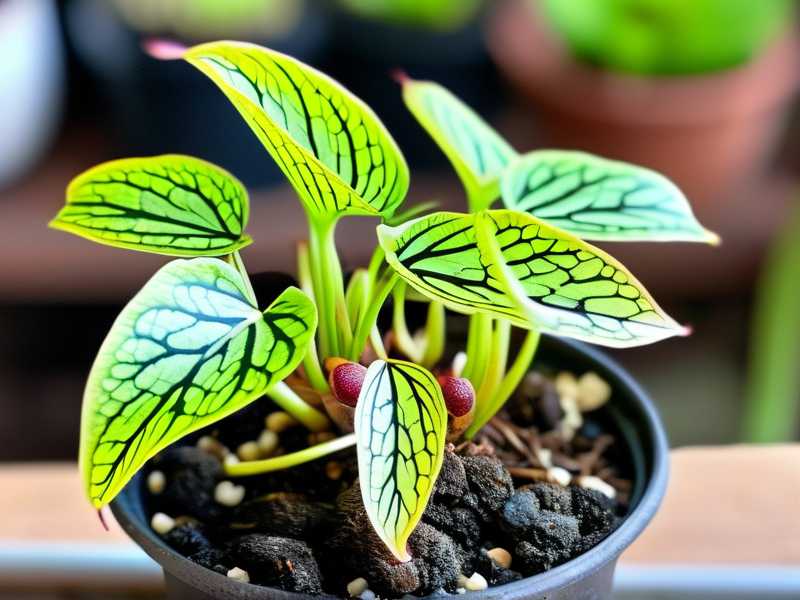
Why I Stopped Buying Rooting Hormone
When I first got into carnivorous plants about eight years ago, I did what every new grower does — I bought a little jar of rooting powder from the garden center. It cost me twelve dollars, and I used it on three Nepenthes cuttings. Two of them rotted within ten days. The third one eventually rooted, but it took almost four months and the plant looked miserable the whole time.
After that I started reading everything I could find from the RHS on vegetative propagation, and a lot of their guidance pointed in a different direction. Clean cuts, the right media, and stable humidity matter way more than any hormone dip. That was my lightbulb moment: I'd been focused on the wrong variable the entire time.
The thing is, Nepenthes are tropical vines, not geraniums. They don't respond to rooting hormone the way a lot of temperate ornamentals do. Some growers even report that hormone powder can burn the cut end or encourage fungal growth in the humid conditions Nepenthes need. I'm not saying it never works — I'm saying it's unnecessary, and for a home grower it often does more harm than good.
What You Actually Need Before You Start
You need a healthy mother plant, a clean pair of pruners or a sharp knife, sphagnum moss, a small pot or tray, and a plastic bag or clear container for humidity. That's genuinely it.
You also need to pick the right part of the vine. I learned this the hard way. The first time I took a cutting, I snipped off the very tip of the vine — the soft, floppy growing end — because it looked the healthiest.
Big mistake. Soft green tips rot almost instantly in high humidity. What you want is a mid-vine cutting with slightly woody, firm stems. Look for a section that's still green but snaps rather than bends. That's your sweet spot.
Ideally, each cutting should have two or three nodes, which are the little bumps where leaves attach to the stem. The new growth and roots will come from these nodes, so a cutting without at least one node is basically a stick.
My Natural Rooting Method, Step by Step
Here's exactly what I do, and what's worked consistently for me over the past couple of years.
First, I sterilize my blade with rubbing alcohol. This takes thirty seconds and it's the single most important step in preventing rot. I can't tell you how many cuttings I lost before I started doing this.
Second, I cut just below a node at a slight angle. Then I trim the leaves in half — yes, actually cut them — to reduce moisture loss while the cutting has no roots to replace it. When I first heard this advice I thought it sounded crazy. But after losing a whole batch of cuttings to dehydration, I tried it and the difference was obvious within a week.
Third, I soak the cutting in a dilute seaweed solution for about twenty minutes. This isn't a hormone, it's just kelp extract diluted to about a quarter strength. I use it because it seems to reduce transplant shock and gives the cutting a tiny nutritional nudge. Do I have peer-reviewed proof it makes a difference? No. But I've done side-by-side comparisons twice, and the seaweed-soaked cuttings rooted about ten days sooner on average.
Fourth, I wrap the cut end in damp sphagnum moss and tuck the whole thing into a clear plastic cup with a lid, or a zip bag with the top left slightly open. The moss should be damp like a wrung-out sponge, not dripping.
Then I put the whole setup somewhere warm with bright, indirect light. My go-to spot is a shelf about two feet away from an east-facing window. Temperatures between seventy-five and eighty-five degrees Fahrenheit seem to speed things up.
The Two-Week Check: What I Actually Observed
I started a batch of six N. x miranda cuttings on a Tuesday in late spring. By day four, three of them had clearly failed — the stems had gone mushy and dark at the base. Those were the thinner, greener cuttings I'd taken on impulse. Lesson learned again.
The three survivors looked identical to the day I cut them, which honestly felt discouraging. This is the part nobody tells you: for the first two weeks, nothing visible happens. The cutting just sits there, looking like a stick in moss, and you have to resist the urge to dig it up and check.
By day ten, I noticed the tiniest swelling at the nodes when I held it up to the light. That's the callus forming — the tissue that eventually becomes roots. By day fourteen, one cutting had a single pale nub pushing through the moss surface. Not a root yet, but the beginning of one.
That two-week mark is when most people give up, by the way. I nearly did too. But the plants that eventually rooted best were the ones I left alone the longest.
The Three Mistakes That Kill Most Cuttings
I've made all three of these, so I'm not judging.
Overwatering. This is the big one. 90% of indoor plants die from overwatering, and Nepenthes cuttings are no exception. The media should be barely damp, not wet. If you can squeeze water out of your sphagnum, it's too wet. I lost an entire batch of four cuttings in 2021 because I "topped up" the moss every day. Don't do that.
Wrong light. Nepenthes cuttings need bright, indirect light — not direct sun, and not a dark corner. I once put a tray of cuttings on a south-facing windowsill thinking more light meant faster rooting. It cooked them in two days. Conversely, cuttings in too-dim conditions just sit there and slowly fade. A bright spot with no direct sun is what you want.
Wrong container. This one surprised me. I used to root cuttings in terracotta pots because that's what I had on hand. Terracotta wicks moisture away from the media, and Nepenthes cuttings dry out fast in it. Now I use plastic cups or shallow plastic trays with clear lids. Plastic holds humidity and lets light through so you can actually see what's happening. I wish I'd figured this out years earlier.
What the Experts Say
The AHS has published guidance on propagation that backs up the basics I've landed on through trial and error — clean tools, appropriate media, and environmental control. Their materials on stem cuttings align pretty closely with what I do now, just with more technical language.
RHS guidance also emphasizes that many tropical plants root more reliably from stem cuttings in high-humidity environments than from hormone-treated ones. That resonates with my experience. The variable that matters most isn't a product, it's the environment you create.
When to Expect Actual Roots
For most Nepenthes, expect visible roots somewhere between three and eight weeks, depending on species and conditions. Faster, thinner types like N. gracilis might show roots in three weeks. Slower, thicker-stemmed types can take two months or more.
If a cutting makes it past the two-week mark without rotting, you're probably in good shape. Just keep the humidity steady and wait.
Common Questions I Get From Other Growers
Can I root Nepenthes cuttings in plain water?
You can, but I don't recommend it long-term. Roots formed in water are fragile and often struggle when you move the cutting to soil. I've done it successfully exactly once, and that plant took almost six months to adjust to its eventual potting mix. Sphagnum moss gives you a much easier transition.
Do I need a heat mat?
It helps, but it's not mandatory. Nepenthes root faster with warm soil, ideally around seventy-five to eighty degrees Fahrenheit. If your home is already warm, you're fine. If you're rooting in winter, a seedling heat mat set on low can make a real difference.
How do I know if a cutting has rotted?
You'll know. The stem turns dark, feels mushy, and smells slightly sour. There's no saving it at that point — toss it and start fresh. Prevention is everything: sterile tools, barely-damp media, and don't fiddle with it.
Final Thoughts From Someone Who's Killed a Lot of Cuttings
Honestly, the biggest shift for me was accepting that rooting Nepenthes naturally is slow. There's no product that shortcuts the process. What works is warmth, humidity, indirect light, and leaving the cutting alone.
I've lost more cuttings to impatience than to any disease or pest. If you can resist checking on them every day and trust the setup, you'll do fine. Start with a healthy mid-vine cutting, use clean sphagnum moss, keep things barely damp, and give it six weeks before you panic.
Your future pitcher plant is worth the wait.





