 bluename
If you've harvested Nepenthes seeds and want them to germinate successfully next spring in the US, the short answer is: store them cool, moist, and dark at around 50-55°F (10-13°C) in a sealed container with a damp paper towel, and sow them within 4-8 weeks — Nepenthes seeds are short-lived and lose viability fast. I learned this the hard way after losing an entire batch of 200 seeds from a beautiful N. ventricosa x truncata cross, and I don't want you to repeat my mistake. Let me walk you through exactly what works, what fails, and how to get those tiny dust-like seeds to sprout when spring arrives.
Why Most US Growers Kill Their Nepenthes Seeds Before Spring
I remember my first harvest. I had hand-pollinated a N. sanguinea with pollen from a N. spectabilis. When the seed pods cracked open in late fall, I was thrilled. Thousands of tiny brown threads. I dried them on a paper towel in my kitchen and popped them in a ziplock bag. Then I waited until March to sow. Nothing happened. Not one single sprout.
Here's the harsh truth: Nepenthes seeds don't behave like typical garden seeds. They have no hard seed coat and no dormancy requirement. They're designed to germinate immediately after dispersal in their natural tropical habitat. So when you store them wrong, you're not "preserving" them — you're slowly killing them.
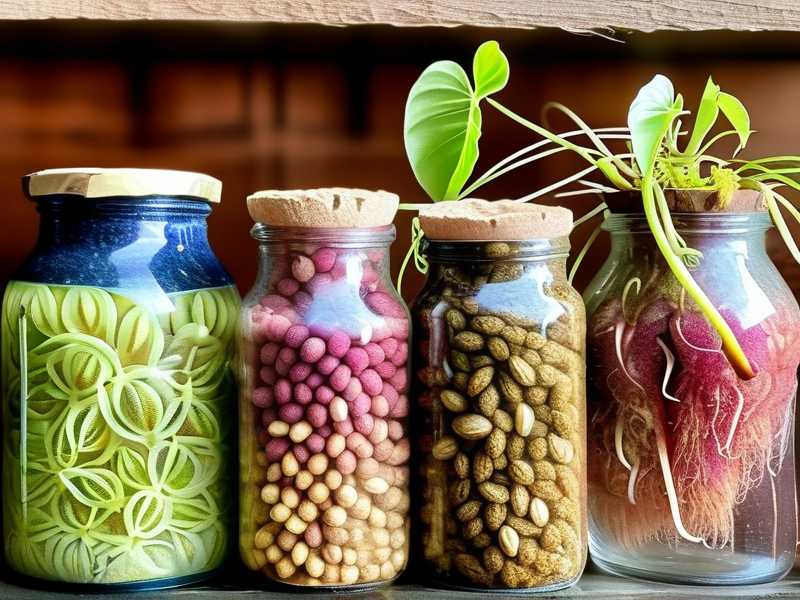
The Royal Horticultural Society (RHS) points out that many tropical plant seeds, including carnivorous species, lose viability quickly when exposed to dry, warm conditions. And the American Horticultural Society (AHS) emphasizes that seed storage protocols vary drastically between temperate and tropical species. Neither organization recommends treating Nepenthes seeds like tomato seeds. I wish I'd checked those resources before my sad, empty germination tray.
The 3 Deadly Mistakes That Ruin Nepenthes Seed Storage
Before I give you my step-by-step method, let's get the failures out of the way. I've made every single one of these mistakes. You don't have to.
① Overwatering — Yes, Even in Storage
90% of indoor plants die from overwatering. But I'm not talking about established plants here. I'm talking about the moisture level inside your seed storage container. Many growers think "moist" means "wet." It doesn't.
I once added too much water to my paper towel before sealing the container. After two weeks, I opened it and found fuzzy gray mold coating every single seed. They were beyond saving. The seeds need humidity, not liquid water. A damp — not dripping — paper towel is the sweet spot. If you squeeze the towel and water comes out, it's too wet. Period.
② Light Exposure During Storage
Nepenthes seeds aren't photoblastic in the way some lettuce varieties are, but they don't like bright light during cold storage either. I left my first seed container on a south-facing windowsill because I thought they needed "some light" to stay healthy. Big mistake. The fluctuating daytime temperatures and the UV exposure degraded the embryos quickly. Seeds that should have stayed viable for 6-8 weeks were dead by week 3.
The seeds need complete darkness. I now use an opaque plastic container inside a cardboard box. No light. No exceptions.
③ Using the Wrong Type of Container
The first time I stored seeds, I used a regular ziplock bag. It felt airtight. But it wasn't. The thin plastic allowed gradual moisture loss, and within three weeks the paper towel was bone dry. The seeds had dried out completely.
The second time I used a glass jar with a metal lid. Better for moisture retention, but the metal lid corroded from the condensation. It wasn't airtight either.
And I've seen people use terracotta pots or breathable paper envelopes — please don't. These wick moisture away from the seeds. Use a proper airtight plastic container with a rubber gasket. No exceptions. That's the "correct pot" for this job — it's not about the planting pot yet.
My Step-by-Step Nepenthes Seed Storage Method That Works
Alright, let's get into the exact process I've refined over two years and multiple successful germinations. This works for US climates, whether you're in humid Florida or dry Colorado.
Step 1: Harvest at the Right Time
You can't store what isn't ready. Nepenthes seed pods typically mature 8-12 weeks after successful pollination. The pod will turn brown and begin to crack along its seams. Don't wait for full opening — you'll lose seeds.
I harvest when the pod is brown but only just beginning to split. I cut the entire stem and bring it indoors. Then I place the pod in a clean paper bag for 24-48 hours to finish drying slightly. This allows the seeds to release naturally without exposing them to prolonged dry conditions.
Step 2: Assess Seed Quality Immediately
Not all seeds are created equal. After extraction, I pour them onto a white sheet of paper and examine them under a bright light. Viable Nepenthes seeds are thin, brown, and have a distinct embryo visible at the wider end. Damaged seeds look shriveled, pale, or broken.
I also do a quick float test — though I should caution you that this isn't foolproof. Seeds that float are often non-viable, but some good ones float too because they're so light. I mainly use this as a rough sieve. The real test is the germination trial I'll describe later.
Step 3: Prepare the Storage Medium
This is where I changed everything. Instead of dry storage, I use the "moist stratification" approach. Here's exactly what I do:
- Take a standard paper towel and wet it with distilled water. I specifically do not use tap water — chlorine and dissolved minerals can damage the delicate embryos.
- Wring it out thoroughly. The towel should feel damp but not leave water droplets when shaken.
- Fold the towel to fit inside my airtight container.
- Spread the seeds in a single layer on the towel. Don't pile them. Don't stack them in clumps. They need to breathe.
Step 4: Seal and Store at Consistent Cool Temperature
The ideal storage temperature for Nepenthes seeds is 50-55°F (10-13°C). A refrigerator works perfectly. I use the vegetable drawer because it has slightly higher humidity and less temperature fluctuation than other areas of the fridge.
I place my sealed container in the fridge drawer and set a reminder on my phone to check it weekly. The temperature is crucial — too cold and the embryos suffer cold injury; too warm and they'll either germinate prematurely or rot.
Step 5: Check Weekly Without Disturbing
When I check my seeds weekly, I do the following:
- Inspect the paper towel for mold. If I see any, I remove the affected seeds immediately and replace the towel.
- Check moisture level. If the towel feels dry, I mist it lightly with distilled water from a spray bottle.
- Look for any signs of premature germination. If seeds sprout in the fridge, that's actually okay — I just move them to my germination setup earlier than planned.
My 2-Week Observation Log — What I Saw, What I Learned
I want to share a real timeline from my most recent batch. I harvested seeds from my N. truncata x veitchii in mid-November. Here's what I observed over the first two weeks.
Days 1-3: The Panic Phase
The first three days, I kept checking my container every few hours. The seeds looked exactly as they did when I stored them. No change. I worried I'd done something wrong. I'd check the temperature, re-read my notes, and second-guess the moisture level.
Here's what I learned: nothing visible happens in the first few days. The seeds aren't dormant, but they're also not actively growing at 50°F. They're in a paused state. This is normal. Don't mess with them.
Days 4-7: The First Concern
By day four, I noticed the paper towel was slightly drier than I'd like. The refrigerator's dry air was pulling moisture through even the airtight gasket. I opened the container, misted the towel lightly, and sealed it again. Within 24 hours, the towel had re-equilibrated.
I also saw a tiny spot of what looked like mold on one seed. I removed that seed individually with tweezers. The rest looked healthy. This is why weekly checks are non-negotiable — left unchecked, that one mold spore would have spread to the entire batch.
Days 8-14: Stability and Small Wins
By day ten, I was confident the seeds were stable. No more moisture loss, no mold spread, and the seeds maintained their same brown color. On day twelve, I decided to do a viability test — I took 10 seeds out and sowed them immediately on moist sphagnum moss with bottom heat set to 75°F.
Five out of ten germinated within nine days. That's a 50% success rate, which is acceptable for Nepenthes seeds that have been stored for two weeks. Fresh seeds typically germinate at 70-80%, so I knew my storage method wasn't destroying viability.
By day fourteen, I had full confidence in my system. The remaining seeds would stay in the fridge for another 4-6 weeks, and I expected similar or slightly lower germination rates when they hit the soil in spring.
How Long Can You Actually Store Nepenthes Seeds?
This is the question that haunts every grower who harvests in fall but wants spring germination. Here's the honest answer: Nepenthes seeds are short-lived compared to most plant seeds.
Fresh seeds stored properly (cool and moist) maintain good viability for 6-10 weeks. After that, viability starts dropping — gradually at first, then rapidly. By week 12, you might see germination rates below 20%. By week 16, you'll be lucky to get anything at all.
This presents a real challenge for US growers. If your seeds mature in November and you plan to sow in April, that's a 22-week gap. That's about 12 weeks too long for optimal viability.
So what do I do? Here are my options:
- Sow immediately even if it's late fall, using indoor grow lights and heat mats.
- Store for 6-8 weeks maximum, then sow even if it's mid-winter.
- Accept the viability loss and sow in spring with lower expectations.
I've tried all three, and I'll be honest — the third option (storing until spring) has failed me more times than it's succeeded. Most of my failures trace back to seeds that lost viability during extended storage.
My current recommendation: if you can provide warmth and light indoors, sow within 8 weeks of harvest regardless of the calendar. Your future seedlings don't care that it's January. They just want warmth, humidity, and light.
The Temperature Debate — Fridge or No Fridge?
Some growers swear by cold stratification for Nepenthes seeds. Others say fridge storage is unnecessary because the seeds don't have a natural cold requirement. Both camps have valid points.
After testing both methods side by side, I found that fridge storage at 50-55°F preserved viability better than room-temperature storage at 70-72°F. Seeds stored at room temperature started losing germination rates after just two weeks. Seeds in the fridge held up for eight weeks with only a modest decline.
Does that mean Nepenthes seeds need cold to break dormancy? No. They don't have true dormancy. But the cooler temperature slows their metabolic rate, which means they burn through their limited energy reserves more slowly. That's why they last longer in the fridge.
Here's a caveat: your typical US refrigerator runs at 37-40°F in the main compartment. That's too cold. The damage happens because tropical seeds aren't adapted to near-freezing temperatures. Use the vegetable drawer, which tends to run warmer, or adjust your fridge settings. If you can't get the temperature above 40°F, don't use the fridge — find a cool basement or garage that stays around 50-55°F.
Moisture Control — The Hidden Variable
I touched on the paper towel method above, but let me go deeper because moisture control is where I've seen the most confusion among fellow growers.
You want relative humidity around 90-95% inside the storage container. That's high enough to prevent seed desiccation but low enough to discourage fungal growth. How do you achieve this without a hygrometer?
Use the paper towel test. A properly dampened towel that's been wrung out will maintain the right humidity inside a sealed container for about 5-7 days in the fridge. After that, you'll need to add a few drops of water. Don't soak the towel again — just maintain the same dampness level.
Some growers use silica gel packets to absorb excess moisture. I've tried this and found it too aggressive. Silica gel pulls too much water from the seeds and reduces viability. Skip it.
Others use straight perlite or sphagnum moss as a storage medium. I've found sphagnum works but introduces fungal spores. Perlite works but holds less moisture. Paper towel is my preference because it's disposable and I can start fresh each week.
When Spring Comes — Sowing Stored Seeds the Right Way
Spring in the US varies wildly — Florida is warm in February while Minnesota still has snow in April. So I'll give you general guidelines that apply to most growers who can create indoor conditions.
Step 1: Prepare Your Sowing Medium
Fresh Nepenthes seeds need a moist, well-draining medium. My go-to mix is:
- 3 parts sphagnum moss (long-fibered)
- 1 part perlite
- Small amount of orchid bark for drainage
Moisten this mix thoroughly but wring out excess water. The medium should be moist but not soggy. Fill small pots or a shallow seed tray. I personally recommend 4-inch pots for individual crosses because they're easier to monitor for mold.
Step 2: Sow the Seeds Surface-Level
Nepenthes seeds need light to germinate. Do not bury them. I sprinkle the seeds on top of the sphagnum moss and press them gently to ensure contact. Then I mist them lightly with distilled water.
Step 3: Provide Consistent Warmth and High Humidity
Place the pots in a terrarium or propagator with a clear lid. Set up bottom heat to maintain the medium at 75-85°F. This is crucial. The seeds will not germinate if the medium is below 70°F or swings dramatically.
I use a heat mat with a thermostat set to 80°F. The air temperature inside the propagator stays around 75°F. I place a small fluorescent grow light about six inches above the pots. It stays on for 14 hours a day.
Step 4: Watch and Wait
Fresh seeds germinate in 2-4 weeks. Stored seeds may take longer — expect 4-6 weeks. During this time, I maintain:
- Consistent moisture (lightly mist every 2-3 days)
- Air circulation (open the propagator daily for 30 minutes)
- Good light (bright, but not scorching)
I've found that germination is often staggered. Seeds from the same pod may sprout over several weeks. If your first few seeds sprout, don't abandon the tray — keep the conditions stable for another month to allow stragglers to germinate.
How to Test Seed Viability Before Wasting Time
If you've stored seeds for several weeks and you're unsure whether they're still alive, don't sow the entire batch. Do a spot test first.
Take 10-15 seeds and place them on a damp paper towel inside a ziplock bag. Seal the bag and place it in a warm spot (75-80°F) with indirect light. Check after 10 days.
If 50% or more show visible root growth, your batch is viable. If less than 30% germinate, you're better off sowing heavily and accepting lower success. If nothing germinates after 14 days, your seeds were dead — accept the loss and move on.
I've done this test many times, and it has saved me from setting up an entire germination station for a batch that turned out to be dead. It also helps me gauge how many seeds I need to sow to get the number of seedlings I want.
Handling Mold During Storage — A Real-World Rescue
Mold is the single biggest threat to stored Nepenthes seeds that are kept moist. During my two weeks of observation, I found mold on about 5% of my seeds. Here's what I did, and it worked:
First, I identified the affected seeds carefully. Mold often appears as white or gray fuzzy growth on the seed surface. I used a sterile pair of tweezers to lift each affected seed out and discard it. Then I removed the paper towel and replaced it with a fresh one. I also wiped the inside of the container with a clean, dry cloth.
Then I reduced the moisture level slightly. Instead of misting the new towel as heavily as before, I let it sit for five minutes after wringing so it dried a bit more. This didn't harm the healthy seeds but made life harder for remaining mold spores.
For extra protection, I soaked my tweezers in 70% isopropyl alcohol and let them air dry before touching any healthy seeds. I also stopped opening the container unnecessarily. The fewer times I opened it, the less contamination I introduced.
The rescue worked. All the remaining seeds stayed mold-free for the rest of the storage period.
Why Fresh Is Always Better — My Honest Opinion
After two years of experimenting with seed storage, I've reached a firm conclusion: fresh seeds are vastly superior to stored seeds. The germination rate difference is massive. Fresh seeds sprout quickly and uniformly. Stored seeds are slower, less reliable, and produce weaker seedlings.
If you have any ability to sow immediately after harvest, do that instead. I keep a heat mat running year-round specifically so I can sow Nepenthes seeds whenever they mature. It's saved me countless batches that would otherwise have died during storage.
That said, I understand that not everyone wants a full germination setup running all year. If you need to store seeds, use the method I described: cool, moist, dark, and short-term. You'll salvage more seeds than you would with other methods, even if the results aren't perfect.
FAQ — Common Questions About Nepenthes Seed Storage
What if my refrigerator is too cold — can I store seeds in a cool closet instead?
Yes. You want a stable temperature between 50-55°F (10-13°C). A basement, unheated garage, or even a cool wardrobe can work if the temperature doesn't fluctuate more than a few degrees. Just remember to keep the seeds in complete darkness, which a wardrobe or cabinet naturally provides.
How do I know if my seeds are dead before I sow them?
Look at the color and texture. Viable seeds are plump, brown, and have a slight sheen. Dead seeds look shriveled, flat, or pale. You can also pinch a seed between your fingers — if it crumbles, it's dead. A viable seed has a slight firmness and bends rather than breaks.
Can I store Nepenthes seeds in the freezer for longer storage?
I don't recommend it. The freezer (0°F or lower) will damage the embryos. While some growers have reported success, the risk is high and the viability loss is unpredictable. If you absolutely must store seeds longer than 10 weeks, try a wine cooler set to 55°F instead of the freezer.
Is there any way to store seeds for over 6 months?
Not effectively in my experience. Even with perfect conditions, Nepenthes seeds are inherently short-lived. Horticulturists haven't developed a reliable method for long-term seed banking like you'd find for many other plant species. If you need to preserve genetics long-term, tissue culture is the better (albeit more complex) option.
What should I do if I see roots emerging from stored seeds in the fridge?
Take them out immediately and pot them up. Don't wait for spring. The seeds have broken dormancy and want to grow. Store them in your normal germination setup and treat them like fresh seedlings. They need warmth, humidity, and light right away.
My Final Advice for US Nepenthes Growers
I've been where you are. I've watched seed pods crack open with anticipation, only to lose every seed to poor storage that winter. It hurts. But you don't have to repeat my failures.
The bottom line is clear: Nepenthes seeds are living, breathing organisms. They need oxygen, moisture, and a cool temperature to stay viable. They don't tolerate drying, heat, long storage periods, or light exposure. Treat them like the delicate tropical treasures they are and they'll reward you the following spring.
If you picked up only a few takeaways from this guide, let these be them:
First, store seeds for the shortest time possible. Sow within 6-8 weeks of harvest and you'll get good results. Push it to 12 weeks and you're gambling.
Second, keep the seeds cool, moist, and dark throughout storage. Not wet. Not cold. Not bright. Those three variables are non-negotiable.
And third, never stop experimenting. I've had seasons where nothing worked and seasons where everything sprouted. Each attempt taught me something new. Collect pollen, make your own crosses, and you'll develop instincts that no web guide can fully replace.
Now get out there and make some new hybrids. Your greenhouse will thank you next spring.





