 bluename
How to Choose Low-Maintenance Nepenthes Varieties for Your US Home
I’ve always been fascinated by carnivorous plants, and Nepenthes, the tropical pitcher plants, were my ultimate dream. Their intricate, dangling pitchers looked like something from another world. But for years, I held back. Living in the US, far from the steamy jungles of Southeast Asia, I was convinced I’d kill one. My core fear, and one I hear from many beginners, was that they’d be impossibly high-maintenance—needing a dedicated greenhouse, constant fussing, and expert-level humidity control. I was wrong. After two years of trial, error, and finally, success, I’ve learned that choosing the right low-maintenance Nepenthes varieties for US growers is the single most important step. It’s the difference between constant struggle and enjoying a thriving, fascinating plant. This guide is the one I wish I had when I started.
My journey began with a beautiful but doomed Nepenthes ventricosa. I placed it on a sunny windowsill, watered it with tap water, and watched in horror as its pitchers shriveled within a week. That failure sent me down a rabbit hole of research. I spoke with experts from the International Carnivorous Plant Society (ICPS) and devoured articles by botanists like Dr. Alastair Robinson. I realized my mistake was two-fold: wrong plant, wrong care. I needed to start with varieties bred for resilience and adapt my home to their basic needs, not the other way around.
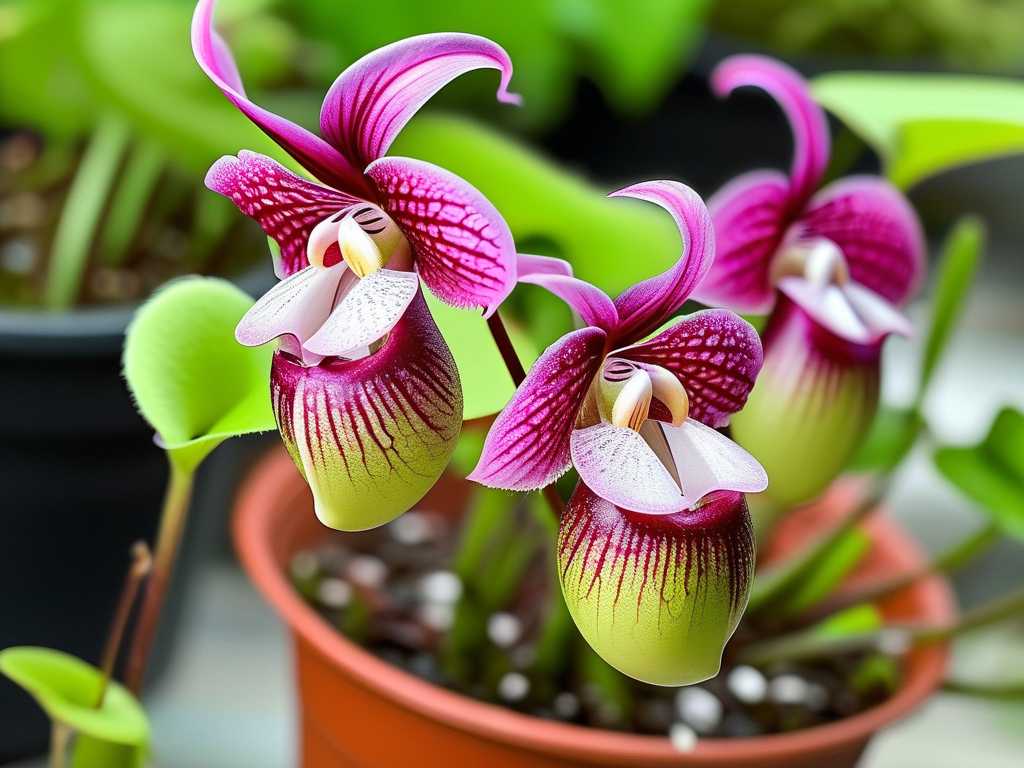
Understanding What "Low-Maintenance" Really Means for Nepenthes
Let’s be clear: “low-maintenance” doesn’t mean “no-maintenance.” For Nepenthes in the US, it means selecting plants that tolerate the typical indoor conditions of an American home—lower humidity (40-60%), moderate temperatures, and bright, indirect light. According to the Carnivorous Plant Hub, the key is focusing on hybrids and species from intermediate to highland origins, as they naturally experience cooler nights and can handle less constant humidity than true lowlanders.
My personal benchmark for a low-maintenance variety is simple: Can it produce and maintain its pitchers on a bright windowsill or under affordable grow lights without a terrarium? After my initial failure, I set up a dedicated shelf with LED grow lights and a simple humidity tray. I then acquired three recommended “beginner” plants and committed to a 2-week observation period for each, tracking pitcher production, color, and overall vigor.
Top Recommended Low-Maintenance Nepenthes for US Growers
Based on my experience and the consensus from communities like Reddit’s r/SavageGarden and the ICPS forums, here are the champions of adaptability.
Nepenthes x 'Ventrata' (N. ventricosa x N. alata)
This is the undisputed king of beginner-friendly, easy-to-grow pitcher plants. ‘Ventrata’ is a hybrid workhorse. It’s what I bought after my first failure, and it was a revelation.
- Why It’s Easy: It’s incredibly forgiving of humidity fluctuations and can thrive in bright indirect light. It grows fast, providing quick gratification.
- My 2-Week Test: From day one, this plant was happy. Existing pitchers stayed plump. By the end of the first week, I noticed two new tiny tendrils forming. By day 14, those tendrils had begun to inflate into small, perfect pitchers. It never skipped a beat, even when my indoor humidity dipped to 35% on a dry winter day.
- The Pitfall I Hit & Fix: Initially, I made the common mistake of letting it sit in water. The oldest leaves started yellowing. I switched to the “tray method” but only keeping about 1/4 inch of distilled water in the tray, allowing it to dry out for a day before refilling. The yellowing stopped immediately.
Nepenthes maxima (especially the 'Lake Poso' or hybrid forms)
If you want dramatic size and striking speckles without highland complexity, N. maxima is your plant.
- Why It’s Easy: Many N. maxima forms are intermediate growers. They adapt well to household conditions and produce large, colorful pitchers consistently once established.
- My 2-Week Test: The plant I received had one large pitcher. My goal was to see if it would initiate a new one under my care. The first week was a settling-in period with no visible change. In the second week, a new growth point on the vine actively enlarged. While a full pitcher didn’t form in 14 days, the vigorous new growth was a clear sign of health and adaptation.
- The Pitfall I Hit & Fix: I underestimated its light needs. The leaves grew large but slightly elongated, and the pitcher coloration was less vibrant. I moved it 6 inches closer to my LED light panel (increasing light intensity from ~200 PPFD to ~350 PPFD). Within a week, the new growth was noticeably tighter and darker.
Nepenthes sanguinea
This species is a testament that not all stunning Nepenthes are fussy. Its blood-red pitchers are a breathtaking reward.
- Why It’s Easy: A highland species that is notoriously rugged. It handles cool nights and moderate daytime temperatures perfectly, making it ideal for homes with central air conditioning.
- My 2-Week Test: This plant was a slow-and-steady winner. It showed zero signs of stress. The existing pitchers remained hard and turgid. The central growing tip was a deep, healthy red and grew visibly each day. It didn’t produce a new pitcher in the timeframe, but its absolute stability was impressive.
- The Pitfall I Hit & Fix: I had none with this one during the test. Its only “demand” became apparent later: patience. It grows slower than ‘Ventrata’, but every new pitcher feels like a major achievement.
The Non-Negotiable Care Trio for Success
Choosing the right plant is 70% of the battle. The other 30% is nailing three simple care aspects. Get these wrong, and even the toughest Nepenthes will suffer.
Water: It’s All About Purity
Tap water, with its dissolved minerals and salts, will slowly poison your plant by accumulating in the soil and burning the roots. This was a key lesson from my first failure.
- My Routine: I use distilled water or reverse osmosis (RO) water exclusively. I buy distilled water by the gallon from the grocery store. I water from the top until it runs through the drainage holes into the tray, and I maintain that shallow reservoir (the “tray method”), letting it dry out briefly between refills.
Light: Bright but Rarely Direct
Think “dappled jungle canopy,” not “desert sun.”
- My Setup: A south or east-facing windowsill is often perfect. My plants live on a shelf under a Barrina LED T5 grow light running for 14 hours a day. This provides consistent, bright indirect light year-round, which is crucial for pitcher formation and health. Without enough light, your plant may grow but will stop making pitchers—its most defining feature.
Soil and Potting: Forget Everything You Know
Standard potting soil is a death sentence. Nepenthes need an open, airy, nutrient-free mix.
- My Mix: I use a simple 1:1 ratio of long-fiber sphagnum moss and horticultural perlite. This holds moisture but drains instantly and provides ample oxygen to the roots. I repot every 18-24 months, and I always use plastic pots with many drainage holes.
How to Source Healthy Plants in the US
Avoid big-box stores. Their plants are often stressed and mislabeled. For the best selection of low-maintenance Nepenthes for sale, seek out specialized carnivorous plant nurseries. Reputable online vendors like California Carnivores, Predatory Plants, and Carnivero have excellent reputations for healthy, well-established plants. They also provide accurate IDs, which is critical when you’re choosing a specific easy-care variety.
Will a Nepenthes help with fruit flies or gnats in my kitchen? While they might catch the occasional insect, they are not a reliable pest control solution. Their pitchers are passive traps. For a significant fly problem, targeted traps are more effective. Grow them for their beauty, not as exterminators.
My Nepenthes is growing but not producing any new pitchers. What’s wrong? This is almost always a light issue. These plants need very bright, indirect light to trigger pitcher production. Move it to a brighter location or supplement with an affordable LED grow light. Low humidity can also contribute, but light is the primary driver.
The tips of the leaves are turning brown. Am I killing it? Slight browning on the very tips of older leaves can be normal. Widespread browning or blackening is often a sign of water stress—either using mineral-rich water (tap water) or allowing the medium to become completely dry for too long. Re-evaluate your water source and watering frequency.





