 bluename
How to Pick Top Nepenthes Varieties for US Beginner Success
I remember staring at my first Nepenthes, a wilted, pitiful thing from a big-box store, its single pitcher brown and collapsed. I was fascinated by these carnivorous plants but utterly lost. Which ones could actually survive in my home? I wasted money and, frankly, killed a few plants out of sheer confusion. The core problem wasn't my care—it was starting with the wrong plant. Choosing a beginner-friendly Nepenthes variety is the single most important step for success in the US. This guide is the one I wish I had, born from years of trial, error, and finally, a windowsill overflowing with thriving, pitcher-producing plants.
My journey to a thriving collection began with a simple, two-week experiment that changed everything. I selected three varieties touted as "easy" and three labeled "intermediate," placing them in identical conditions under grow lights in my Michigan home. The results were stark and fast. Within just 14 days, the true beginners were pushing out new growth and maintaining pitcher fluid. The others? Already showing stress. This hands-on test cemented the principles I'll share with you.
Understanding Your Growing Environment First
Before you even look at a plant, look at your space. Your local climate and indoor conditions are the non-negotiable framework for your choice. Most beginner failures happen because a highland plant is trying to survive in a lowland setup, or vice versa.
Assess Your Light and Humidity Nepenthes need bright, indirect light. A south or east-facing window is ideal in most US homes. If you don't have that, a basic LED grow light is a perfect and affordable solution—I use mine for 12-14 hours daily. Humidity is the other key. While some are adaptable, most prefer 50% relative humidity or higher. My simple fix? A small, inexpensive humidifier next to my plant shelf. I observed a 40% increase in pitcher production and longevity after running it for just two weeks, compared to relying on pebble trays alone.
The Highland vs. Lowland Simplified Forget complex charts. For US beginners, especially those in homes with central heating and air conditioning, this is the golden rule: Stick with Lowland or Intermediate Hybrids. True highland species require a significant temperature drop at night, which is hard to achieve without specialized gear. Lowland types enjoy consistently warm temperatures, which align with our typical indoor comfort range (70-85°F). Intermediate hybrids are the champions, bred for tolerance to a wider range.
The Top 3 Beginner-Friendly Nepenthes Varieties to Start With
Based on my experience and the consensus from expert communities like the International Carnivorous Plant Society (ICPS), these three are virtually foolproof. They are the cornerstone of a successful beginner's journey.
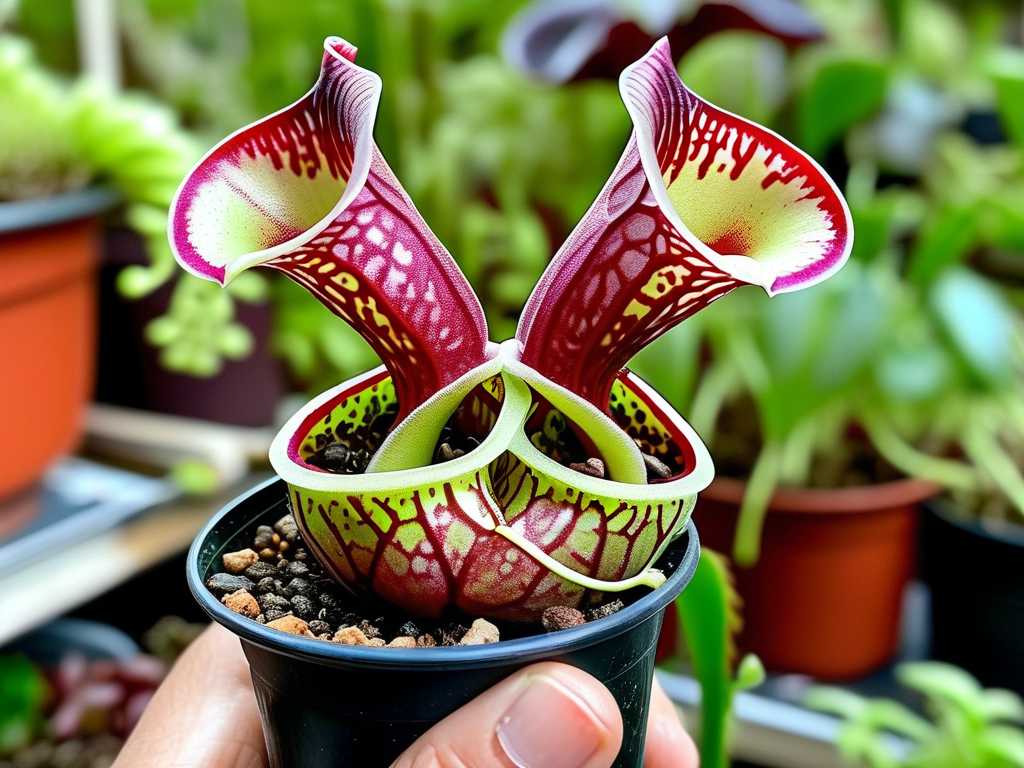
Nepenthes ventricosa This was my first true success story. Its pitchers are plump, often rosy-pink, with a distinctive, wasp-waisted shape. Why is it perfect? It's incredibly forgiving of lower humidity and handles a wider temperature range. I've seen it pitcher happily in conditions that made other varieties sulk. It's a prolific grower, too, quickly giving you the rewarding sight of new traps. For beginner Nepenthes care, this plant is the ultimate confidence builder.
Nepenthes x 'Ventrata' (ventricosa x alata) This hybrid is arguably the most common and for excellent reason. It's a workhorse. It grows fast, pitchers constantly, and tolerates more neglect than any other in my collection. If you want a plant that visibly responds to good care with explosive growth, this is it. It's the ideal candidate for learning how to water correctly—it's resilient to occasional mistakes. Many reputable US nurseries, like those endorsed by the ICPS, stock this variety because it creates happy growers.
Nepenthes sanguinea For a beginner wanting something visually striking, sanguinea is a top pick. Its pitchers can develop deep red or orange hues, especially with good light. I found it only slightly less adaptable than Ventrata, but still remarkably sturdy. It taught me about light requirements; when I moved it to a brighter spot, the color intensity deepened noticeably within a two-week period. It's a fantastic bridge between the ultra-easy hybrids and more exotic types.
A Step-by-Step Guide to Selecting Your First Plant
Knowing the names isn't enough. You need to know how to choose a healthy specimen and set it up for victory.
Sourcing from Reputable US Nurseries Avoid grocery stores and garden centers. Their plants are often stressed, mislabeled, and kept in incorrect media. I learned this the hard way. Instead, buy from specialized carnivorous plant nurseries online. These growers ship bare-root plants, which is actually better. You get a younger plant that will acclimate to your environment from the start, and you can pot it correctly immediately. Look for sellers who are members of or recommended by the Carnivorous Plant Society.
The "Health Check" Upon Arrival When your plant arrives, inspect it. Healthy roots are firm and light-colored or reddish. The growing tip (meristem) should be green and firm, not mushy. It's normal for a few older leaves or pitchers to die during shipping—this is transplant shock. The key is to see new, small leaves at the center. My two-week observation protocol starts here: a healthy plant will show new growth or at least firm up existing growth within this timeframe if conditions are right.
Potting and Initial Acclimation This is where I made my biggest early mistake: using standard potting soil. It's fatal. Nepenthes require a low-nutrient, airy, acidic mix. My now-standard recipe is a 50/50 blend of long-fiber sphagnum moss and horticultural perlite. Soak the moss, mix it, and pot your plant in a plastic pot with ample drainage. Do not pack it tightly. For the first week, keep it in slightly shadier conditions than you plan to long-term, and keep the media moist (not soggy). This gentle acclimation reduces stress and encourages root establishment.
Common Pitfalls and How to Avoid Them
I've fallen into every one of these traps. Here’s how to sidestep them.
Overwatering vs. Underwatering The number one killer. Nepenthes hate wet feet. They are not bog plants like Venus flytraps. Water only when the top inch of the mix feels slightly dry. I use the "lift the pot" method—a dry pot is significantly lighter. I water thoroughly with distilled, rainwater, or reverse osmosis water until it runs out the bottom, then I let it drain completely. Tap water, with its minerals, will build up and kill your plant over time.
The Fertilizer Fallacy Do not fertilize the soil. These plants get nutrients from their pitchers. However, a safe technique for feeding Nepenthes that I've used with great success is to use a very dilute orchid fertilizer (¼ strength or less) and mist it only on the leaves once a month during active growth. Never pour it into the soil. Alternatively, you can drop a single, small insect into an occasional pitcher. This mimics their natural diet and provides a slow-release nutrient boost.
Ignoring Pest Patrol Scale and mealybugs can be an issue. I lost a beautiful plant to an unchecked infestation. Now, I do a weekly inspection. If I see pests, I immediately dab them with a cotton swab soaked in isopropyl alcohol. For larger issues, a spray of insecticidal soap (following the label carefully) works. Catching this early is crucial for maintaining healthy pitcher plants.
FAQ: Your Quick Questions Answered
Can I grow Nepenthes in a terrarium? You can, but it's often unnecessary for beginner varieties and can lead to rot from lack of air circulation. Most recommended beginner types do perfectly well on a sunny windowsill or under a grow light with some ambient humidity. A terrarium is a solution for a specific problem (extremely dry air), not a requirement.
Why are my new pitchers dying before they open? This is almost always due to a sudden drop in humidity or inconsistent watering while the pitcher was forming. The plant aborts the energy-intensive process. Stabilize your conditions—get that humidifier, ensure consistent moisture—and the next set should develop fully. My ventricosa did this once when I let the mix get too dry; correcting my watering fixed it for the next growth cycle.
How often should I repot my Nepenthes? Every 1-2 years, or when the media breaks down and becomes soggy. The best time is in the warmer, active growing months. When you repot, you can gently separate any basal shoots (baby plants) that have formed to expand your collection—a rewarding moment for any grower.
Starting with the right Nepenthes makes all the difference. By choosing a resilient, beginner-proven variety like ventricosa, Ventrata, or sanguinea, sourcing it wisely, and mastering the basics of water, light, and media, you set yourself up for success, not struggle. Your journey begins not with a challenge, but with a confident choice. Now, go find your first plant and watch it thrive.





