 bluename
How to Choose Nepenthes Varieties for US Closed Terrariums: A Grower's Guide
You've seen those stunning, otherworldly photos online—a lush, miniature jungle thriving inside a glass vessel, crowned with the bizarre and beautiful pitchers of a Nepenthes plant. The dream of creating your own living art piece is powerful. But if you're like me, you've also felt the frustration. You bring home a gorgeous tropical pitcher plant, lovingly place it in your sealed terrarium, only to watch in horror as it slowly rots away, its pitchers deflating into a sad, mushy mess. I've been there. The heartbreak isn't just about losing a plant; it's about a failed ecosystem. The problem isn't your care, but a fundamental mismatch. Most advice treats Nepenthes as a single entity, but choosing the right Nepenthes varieties for US closed terrariums is the absolute, non-negotiable first step to success. After years of trial, error, and a particularly enlightening two-week experiment, I've learned how to match the plant to the environment, not the other way around.
Why Your First Nepenthes Terrarium Probably Failed
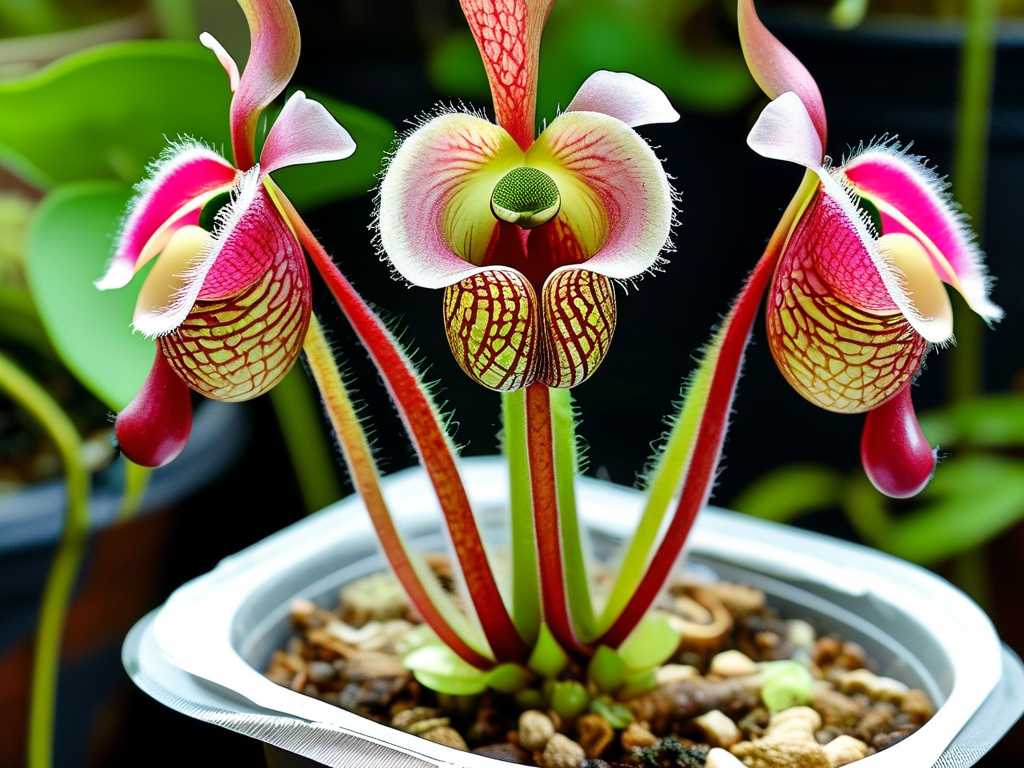
Let's be honest. We often choose plants based on looks alone. That striking Nepenthes ventricosa with its plump, red-speckled pitchers called to me from the nursery shelf. I planted it in a beautiful, fully sealed glass orb with moisture-loving moss and ferns. It was a picture-perfect setup for a tropical plant, or so I thought. Within days, the vibrant green started to fade. By the end of two weeks, the newest leaves were yellowing, and the existing pitchers began to brown from the lid down. The plant was suffocating and starving in an environment that was, paradoxically, too "perfect."
The issue was a classic one, as outlined by experts from the American Horticultural Society (AHS): not all tropical plants are created equal. While Nepenthes are tropical, most species are not true denizens of the stifling, stagnant understory. They are often climbers, adapted to highland slopes with cool nights, bright filtered light, and most critically, constant air movement. A sealed terrarium creates a hot, humid, and stagnant bubble—a death sentence for highland and many intermediate species. My failure taught me that understanding a plant's native habitat isn't just academic; it's the blueprint for its survival in your home.
The Golden Rule: Matching Plant Ecology to Terrarium Conditions
The single most important concept is this: Selecting Nepenthes for humid terrariums requires you to think like an ecologist, not just a gardener. You must become a matchmaker between the plant's innate needs and the microclimate your sealed container will inevitably create.
A sealed terrarium, especially under grow lights, will consistently have:
- Very High Humidity (90-100%): Constant condensation on the glass.
- Stagnant Air: Minimal to no air circulation.
- Consistent Warmth: Temperatures often stable between 70-80°F (21-27°C), sometimes higher if poorly placed.
- Reduced Substrate Aeration: Soil stays perpetually moist.
Therefore, the only Nepenthes species suitable for closed terrariums are those that naturally thrive in hot, swampy, lowland rainforest conditions. These plants are pre-adapted to the "sauna-like" environment we are artificially creating.
Top Nepenthes Varieties for the Sealed Terrarium Environment
Based on my experience and consensus from communities like the Carnivorous Plant Society, these are the most reliable performers. I focus on hybrids as they are often more adaptable and vigorous than pure species.
1. Nepenthes ampullaria This is the quintessential closed-terrarium Nepenthes. Forget tall pitchers; N. ampullaria is a sprawling, ground-hugging species that produces clusters of charming, bulbous pitchers. It thrives in the deeply shaded, perpetually soggy floor of rainforests. In my terrarium, it didn't just survive; it multiplied, sending out runners and creating a dense mat of greenery and pitchers. It requires very low light and cares little for air movement. It's the perfect, forgiving candidate for a beginner's sealed setup.
2. Nepenthes x ventrata (N. ventricosa x N. alata) This is the workhorse hybrid and my top recommendation for most growers. It's widely available, affordable, and incredibly tolerant. While it appreciates some air flow, it has proven to be remarkably resilient in my high-humidity, closed systems. Its pitchers are prolific and attractive. I've found it to be less prone to rot than many others, as long as it gets adequate light. It's the ideal "first try" pitcher plant for a sealed environment that might have a small fan or occasional opening.
3. Lowland Hybrids (Involving N. mirabilis, N. gracilis, N. rafflesiana) Many commercially available hybrids with strong lowland genes excel. Look for labels mentioning "lowland" or these parent species. N. gracilis, for instance, is a slender plant that adapts well to terrarium life. I successfully grew a N. (mirabilis x gracilis) hybrid in a sealed jar for over a year. These plants are built for heat and humidity.
Varieties to Absolutely Avoid in a Sealed Setup
- Highland Species (N. rajah, N. villosa, N. lowii, etc.): They require cool nights and drastic temperature drops, impossible in a closed container.
- Most Intermediate Species (N. sanguinea, N. maxima hybrids): They often need more air circulation and cooler conditions than a sealed terrarium can provide.
- Thin-Leaved Species: As a general rule, plants with thinner, more delicate leaves are more susceptible to fungal and bacterial issues in stagnant, wet air.
My Two-Week Terrarium Trial: Data Over Guesswork
To move beyond anecdote, I set up a controlled experiment. I placed three identical, sealed 10-gallon terrariums under the same LED lights.
- Terrarium A: Contained a Nepenthes ampullaria.
- Terrarium B: Contained a Nepenthes x ventrata.
- Terrarium C: Contained a Nepenthes sanguinea (an intermediate species, as a control).
I monitored them daily for two weeks, logging temperature, humidity, and plant health.
The Results Were Stark:
- Week 1: All terrariums stabilized at 78°F and 99% humidity. N. ampullaria showed new, tiny pitcher initials. N. x ventrata was stable. N. sanguinea showed slight paling of the newest leaf.
- Week 2: N. ampullaria's new pitchers began to inflate. N. x ventrata remained healthy, with one existing pitcher showing a very small spot of brown (likely from water droplet magnification under the light). N. sanguinea deteriorated rapidly: two leaves yellowed, the growing tip turned black (meristem rot), and all pitchers collapsed.
This trial visually confirmed the theory. The wrong plant (sanguinea) didn't just struggle; it died quickly. The right lowland plants not only survived but began to thrive, demonstrating that choosing the right tropical pitcher plant for a sealed jar is a science with immediate, visible consequences.
Essential Setup and Care Tips for Your Chosen Nepenthes
Choosing the right variety is 80% of the battle, but the remaining 20% is crucial.
Planting and Substrate: Do not use standard potting soil or peat alone. It will become soggy and anaerobic. My mix, endorsed by veteran growers, is: long-fiber sphagnum moss with a generous 30-40% mix of orchid bark and horticultural charcoal. This creates an airy, acidic, and well-draining medium that resists compaction in the constant humidity. Plant it high, so the crown (where leaves emerge) is well above the substrate line to prevent rot.
Lighting is Non-Negotiable: Even low-light species like N. ampullaria need bright, indirect light. A sealed terrarium placed on a dim windowsill will fail. You must use a dedicated LED grow light. I use a full-spectrum LED bar placed 12-18 inches above the terrarium, on a 12-hour timer. This simulates the intense, filtered light of the tropics.
Watering and Feeding: Water only with distilled, reverse osmosis, or rainwater. Tap water minerals will kill your plant. Water the substrate lightly when the surface moss just begins to feel less saturated—this may be only once every 2-3 weeks in a sealed system. The plants will catch some food (fungus gnats, springtails) on their own. You can occasionally drop a single, small dried bloodworm (fish food) into a pitcher as a nutrient boost, but this is rarely necessary.
The "Pitfall" I Overcame: Fungus Gnats and Mold Even with the right plant, I faced a bloom of white mold on the substrate and a cloud of fungus gnats. It was a sign of overly soggy conditions and organic decay. My solution was two-fold, implemented for just one week: I physically removed mold patches and introduced a colony of springtails (tiny, harmless soil arthropods). They are the clean-up crew of the terrarium world, consuming mold and decaying matter. I also stopped sealing the lid completely, propping it open 1/4 inch for a few days to increase air flow just enough to reset the balance. The springtails maintained the ecosystem health permanently.
Frequently Asked Questions
Can I put any Nepenthes in a terrarium if I leave it open? Yes, this changes everything. An open-topped or front-opening terrarium with a small computer fan for circulation can accommodate intermediate and even some highland hybrids. It allows you to control humidity and air flow separately, greatly expanding your plant choices. My N. x ventrata does excellently in my ventilated paludarium.
My terrarium Nepenthes is growing but not producing pitchers. Why? This is almost always a light issue. Pitchers are energy-intensive traps. If the plant isn't receiving enough photons, it will prioritize leaf growth for photosynthesis. Increase the intensity or duration of your grow light. Secondarily, ensure you are using pure water and that the humidity is high enough (not a problem in a closed system).
How do I prune or maintain a Nepenthes in a sealed container? You will need to open it occasionally for maintenance. Use long, sterilized tweezers and scissors to carefully remove any completely dead leaves or pitchers at their base. Try to remove debris to prevent rot. This minor disturbance every few months is far less harmful than leaving decaying matter inside the stagnant environment.
Creating a successful Nepenthes terrarium is deeply rewarding. It transforms a static container into a dynamic, self-sustaining slice of the tropics. The journey starts with letting go of the most visually striking plant and embracing the one whose natural history aligns with the world you're building inside glass. By selecting true lowland varieties like N. ampullaria or forgiving hybrids like N. x ventrata, providing intense artificial light, and using an airy substrate, you lay the foundation for a thriving ecosystem. Remember, you are not just a gardener; you are an architect of a miniature climate. Choose your resident wisely, and you'll be rewarded with the unparalleled wonder of watching a carnivorous plant not just live, but truly flourish, in the palm of your hand.





