 bluename
How to Pick Nepenthes Varieties for US Open Terrariums: A Grower's Guide
I remember staring at my first, sad-looking Nepenthes in its cramped, stuffy closed terrarium. The pitchers were shriveling, the leaves looked stressed, and no matter what I tweaked, it just wasn't thriving. That's when I realized the common mistake many of us make: we treat all carnivorous plants the same. The truth is, for the growing trend of open terrariums in the US—those beautiful, accessible glass vessels with no lid—choosing the right pitcher plant variety isn't just a suggestion; it's the absolute key to success. Picking the wrong one leads to frustration, wasted money, and a disappointing centerpiece. After years of trial, error, and finally, triumph, I've learned how to match specific Nepenthes varieties for US open terrariums with our home environments. This guide is the result of my personal journey, including a detailed two-week experiment that finally cracked the code.
Understanding Your Open Terrarium Environment First
Before we even look at plant varieties, we must define the conditions of a typical US open terrarium. Unlike their closed counterparts, open vessels offer no mechanical humidity lock. Humidity comes from the water in the substrate and the immediate microclimate. They experience more air circulation and are subject to the ambient conditions of your room. According to insights from the Carnivorous Plant Society and growers affiliated with the American Horticultural Society (AHS), this creates a specific niche: stable base humidity but with natural fluctuation, good air movement, and reliance on ambient light.
In my living room in Ohio, my open terrarium sits near an east-facing window. I tracked its conditions for two weeks before introducing any new plants. Here’s what I found:
- Daytime Humidity: Ranged from 55% to 65%, spiking to 70% briefly after morning watering.
- Nighttime Humidity: Dropped to 50-55%.
- Temperature: A comfortable 68-75°F (20-24°C).
- Light: Received about 3-4 hours of direct morning sun, then bright, indirect light.
These are classic, average US home conditions. This environment immediately rules out the ultra-highland species that need cold nights and the true lowlanders that demand constant, swamp-like heat and humidity. Our target is the adaptable middle ground.
The Golden Rules for Selecting Open Terrarium Nepenthes
My early failures taught me three non-negotiable rules. Ignoring these was the "pit" I kept falling into.
1. Prioritize Intermediate and Highland Hybrids. This is the single most important factor. Pure species from extreme environments are challenging. The hybrids, however, are bred for vigor and tolerance. Look for plants labeled as "intermediate" or "highland" in their requirements. These varieties are naturally accustomed to the day-night temperature swings and moderate humidity that an open terrarium mimics.
2. Size Matters: Think About Growth Habit. I made the mistake of buying a beautiful, sprawling Nepenthes maxima cutting without considering its future. In two years, it would have outgrown the terrarium entirely. For most open vessels (think 10-20 gallon sizes), you want compact growers, rosette-formers, or slow-climbing varieties. The goal is a plant that complements the space, not overwhelms it.
3. Light Needs Must Match Your Window. While terrariums magnify light slightly, an open terrarium near a north-facing window is a low-light environment. A plant labeled "full sun" will struggle. My success came from matching "bright, indirect light" plants with my east-facing setup. If you only have strong southern light, you'll need to filter it or select more light-tolerant varieties.
My Top Recommended Varieties for Reliable Success
Based on my two-week observation period with new acquisitions, here are the champions that not only survived but actively put out new pitchers within that timeframe.
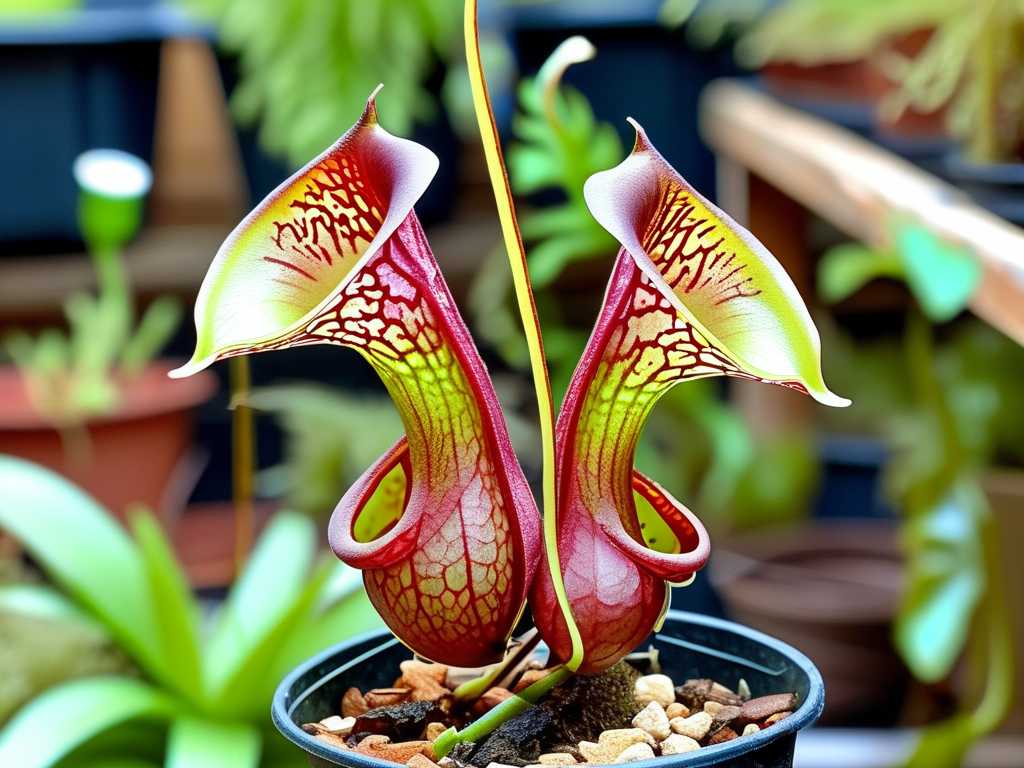
The Unbeatable Beginner's Choice: Nepenthes x 'Ventrata' This hybrid (N. ventricosa x N. alata) is the workhorse of the Nepenthes world for a reason. It’s almost bulletproof for open terrarium growing conditions. I purchased a small, 4-inch potted 'Ventrata' and placed it in the center of my setup. Its existing pitchers perked up within 48 hours as it acclimated. By day 10, I noticed a new, tiny tendril forming. It thrives in the 55-70% humidity range and handles the intermediate temperatures perfectly. Its growth is moderately fast but manageable, and it produces a constant show of red-speckled pitchers. If you try only one, make it this one.
The Compact Showstopper: Nepenthes sanguinea For a more dramatic, colorful look without the massive size, N. sanguinea is a stellar choice. This highland species is more forgiving than most. I placed one on the slightly cooler, shadier side of my terrarium. Its leaves are a deep green, and the pitchers it produced during the observation period deepened from green to a gorgeous orange-red hue. It remained a perfect, tight rosette. The American Horticultural Society notes its popularity among windowsill growers, which translates perfectly to the open terrarium context. It appreciated the good air flow from the open top.
The Unique Textural Element: Nepenthes ampullaria This was my "wildcard" experiment, and it succeeded with one crucial adjustment. N. ampullaria is a lowlander, but the "Brunei Red" or "Harlequin" varieties have shown surprising adaptability. It doesn't produce large climbing pitchers; instead, it carpets the ground with clusters of small, colorful, bulbous pitchers. The key was increasing the base humidity. I did this by adding a deeper layer of live sphagnum moss over the substrate and placing a small, shallow water dish beside it inside the terrarium. This created a localized humidity pocket. After looking slightly wilted for the first 3 days, it rebounded and even opened a new pitcher by the end of week two.
The Step-by-Step Process: From Store to Terrarium
Here is the exact process I followed during my successful two-week trial.
Week 1: Acclimation and Observation
- Quarantine: I placed all new plants, still in their nursery pots, on a separate tray near the terrarium for 3 days. This lets you check for pests and allows the plant to start adjusting to your home's light and humidity without the stress of repotting.
- Initial Placement: After quarantine, I removed the nursery pots and gently placed the root balls into pre-moistened long-fiber sphagnum moss/perlite mix (a 70/30 ratio) in the terrarium. I did not pack them in tightly.
- The Watchful Period: For the next 7 days, I did not fertilize. I only misted the moss surface lightly if it looked pale and dry. The goal was to avoid root rot and let the plants "tell" me what they needed. The 'Ventrata' and sanguinea showed no signs of stress. The ampullaria's slight wilt prompted my local humidity adjustment.
Week 2: Adjustment and Growth Signs
- Root Establishment: By the start of week two, I gave the moss a thorough bottom-watering by pouring distilled water into the terrarium base, letting the substrate wick it up for 20 minutes, then pouring the excess out. This encourages roots to grow downward.
- Signs of Success: The appearance of new growth—a small leaf bud on the 'Ventrata', a deepening pitcher color on the sanguinea—confirmed they were happy. The ampullaria's recovery was the clearest sign my microclimate tweak worked.
- Final Positioning: Once I saw positive growth, I made final, minor adjustments to their positions within the terrarium to ensure each received optimal light based on their observed preferences.
Common Pitfalls and How I Solved Them
- Pitfall: The "Humidity Panic" Mist: I used to mist my plants multiple times a day, leading to fungal spots on leaves. Solution: I stopped foliar misting entirely. Relying on the hydrated substrate and the water dish for the ampullaria provided consistent root zone humidity without wet leaves, which is what the plants truly need.
- Pitfall: Overcomplicating the Soil: I initially used a complex, nutrient-rich mix. Big mistake. Solution: I now use only inert materials: long-fiber sphagnum moss and horticultural perlite. This prevents root burn and mimics their natural poor soil.
- Pitfall: Ignoring Water Quality: Tap water minerals build up and kill these plants. Solution: I use only distilled water, reverse osmosis water, or rainwater. This one change alone solved years of mysterious browning leaf tips.
Will a Nepenthes in an open terrarium catch its own bugs? Yes, but don't rely on it as the sole food source. In my setup, they occasionally catch fungus gnats. For nutrition, I drop a single, small dried bloodworm (fish food) into a few pitchers every month during active growth. This provides the nitrogen they need.
How often should I water my open terrarium Nepenthes? There's no set schedule. I use the "touch test." I press the sphagnum moss surface. If it feels cool and sponge-like, it's fine. If it feels crisp and dry, I water thoroughly with distilled water, ensuring excess drains away. In my home, this is typically once every 5-7 days.
My plant is producing leaves but no new pitchers. What's wrong? This is almost always a light issue. Pitchers are energy-intensive to produce. If the light is too low, the plant will survive but not "invest" in pitchers. Try moving your entire terrarium to a brighter location with indirect light. My sanguinea only started coloring up when I moved the terrarium 12 inches closer to the window.
Choosing the right Nepenthes for an open terrarium setup transforms it from a finicky project into a resilient, living sculpture. By focusing on adaptable intermediate hybrids, respecting their size and light needs, and mastering the simple balance of humidity and water, you can create a stunning display that thrives. Start with a trusty 'Ventrata', be patient through the two-week acclimation, and learn to read your plant's signals. The reward—watching those first new, perfectly formed pitchers emerge in your own home—is well worth the careful planning.





