 bluename
How to Propagate Rare Nepenthes Varieties in North America: A Grower’s Detailed Guide
I’ve spent years in the fascinating, sometimes frustrating, world of carnivorous plants, but nothing quite compares to the thrill of successfully propagating a rare Nepenthes. If you're reading this, you likely share that passion and have felt the sting of watching a precious cutting rot or a seedling mysteriously fail. The unique challenge in North America isn’t just the technique—it’s adapting those methods to our diverse climates, often far from the humid, stable tropics these plants call home. After numerous trials, errors, and finally, successes, I’ve refined a practical approach. This guide will walk you through the most effective methods I use, including the exact steps for stem cuttings and basal shoots, the critical two-week observation window that decides success or failure, and how to troubleshoot the common pitfalls that haunt growers on this continent.
Understanding Your Propagation Arsenal: Methods for Rare Nepenthes
Before we make the first cut, it's crucial to choose the right path. For rare varieties, where every leaf and node is invaluable, I primarily rely on two vegetative methods: stem cuttings and basal shoot separation. Seed propagation, while rewarding, is a multi-year marathon best left for bulk production or hybridization, as it rarely guarantees the exact traits of a rare parent plant.
Stem Cuttings: The Gold Standard for Vining Specimens
This is my go-to method for mature, vining Nepenthes like the spectacular N. rajah or the elegant N. lowii. The goal is to create a perfect environment for root initiation from a segment of the mother plant.
My step-by-step process, honed over many attempts, is as follows:
- Selection and Cutting: I always choose a healthy, firm stem section with at least two or three nodes (the small bumps where leaves emerge). Using a sterile razor blade or scalpel, I make a clean, angled cut about 1/4 inch below a node. This increases the surface area for rooting. Immediately, I trim the leaves on the lower nodes, leaving about half of the leaf on the top one or two to reduce moisture loss without eliminating all photosynthetic capacity.
- The Rooting Hormone Debate: I’ve experimented with and without. For rare varieties, I don’t take chances. I use a rooting hormone containing IBA (Indole-3-butyric acid). I dip the cut end, especially the node area, into the powder, tapping off the excess. As noted in resources from the International Carnivorous Plant Society (ICPS), while not always strictly necessary, it can accelerate root development and improve consistency—a key factor with precious material.
- The Medium is the Message: My failed early attempts almost always traced back to the medium staying too soggy. I now use a 50:50 mix of long-fiber sphagnum moss and perlite. I soak the moss in distilled or reverse osmosis water, squeeze it out so it’s moist but not dripping, and fluff it with perlite. This mix is airy, sterile, and retains moisture without waterlogging.
- Potting and Tenting: I place the cutting into a small, clean pot filled with the pre-moistened mix. Then, I create a humidity dome. A clear plastic bag over a wire frame or a dedicated propagation dome works perfectly. This mini-greenhouse is non-negotiable for preventing desiccation.
Separating Basal Shoots: A Safer Bet for Bushier Types
For rare, cluster-forming varieties like some N. ventricosa hybrids, basal shoots are a gift. These are the small side shoots that emerge from the base of the main plant. Propagation here is more about careful division than creating a new plant from scratch.
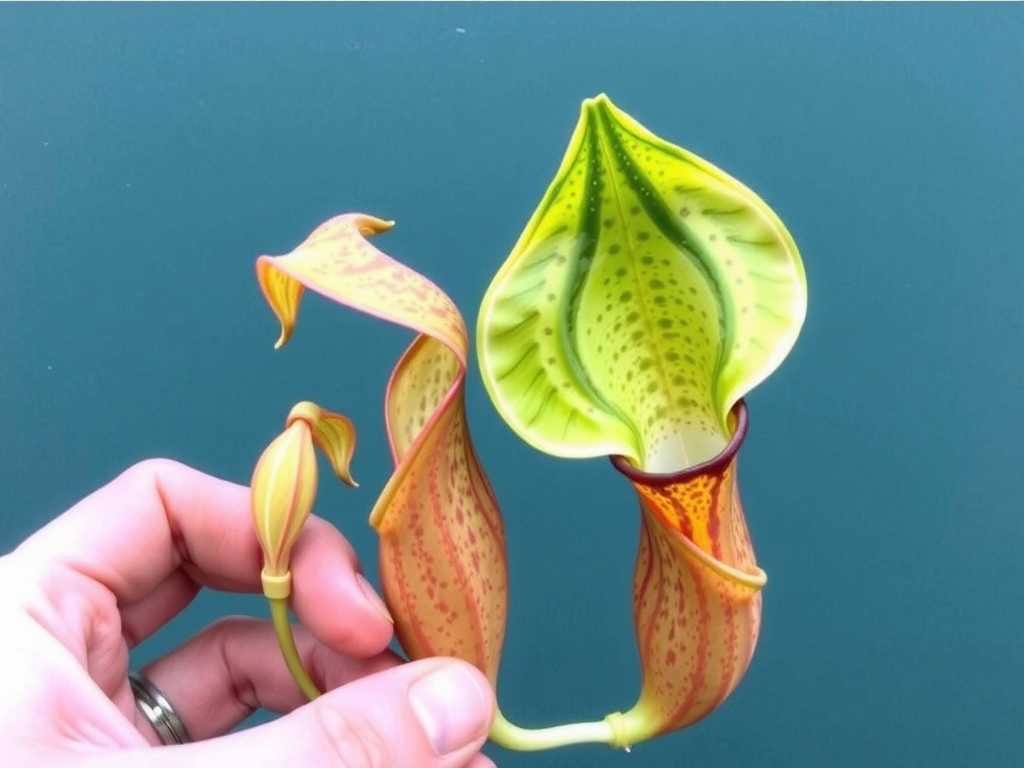
The key is patience. I wait until the basal shoot has developed several of its own roots, visible at the base of the pot or when I gently brush away the top layer of media. Using a thin, sterile tool, I carefully tease apart the root mass connecting it to the mother plant, minimizing damage. I then pot it immediately into its own small container with my standard Nepenthes mix. The success rate for this method, in my experience, is significantly higher than cuttings, as the new plant is already partially established.
The Critical First Two Weeks: A Diary of Observation
This period is where your propagation effort is truly won or lost. Here’s what I meticulously monitor, day by day.
- Days 1-3: The focus is on stability. I keep the cuttings under bright, indirect light (no direct sun, which will cook them in the humidity dome). I maintain constant high humidity, with condensation visible on the dome. The media should feel cool and damp to the touch—if it looks wet, I might briefly vent the dome.
- Days 4-7: This is often when the first sign of trouble appears. I’m looking for firm, green growth at the tip or nodes, not for roots yet. The biggest pitfall I’ve encountered is the stem turning black and mushy at the cut end—a sign of rot. Early in my journey, I lost a prized N. hamata cutting this way. The solution? Immediate surgery. I removed the cutting, made a fresh cut above the rot into healthy tissue, re-applied hormone, and used a sterilized pot and fresh media. Sterility is everything.
- Days 8-14: By the end of the second week, I’m looking for the most hopeful sign: new root initials. I gently tug on the cutting. If there’s slight resistance, roots are likely forming. I also watch for new, tiny leaf buds swelling at the nodes. This is the signal that the plant is shifting energy from survival to growth. At this stage, I begin to gradually acclimate the cutting to lower humidity by propping the dome open for an hour more each day over the next week.
Optimizing the North American Growing Environment
Our homes are the new highlands or lowlands. Creating the right climate is 50% of the propagation battle.
- Humidity is King, But Airflow is Queen: A common mistake is sealing cuttings in a stagnant, humid box. This invites fungal and bacterial nightmares. I use a small, computer-style USB fan placed outside the propagation dome, running for 15 minutes every few hours, to ensure gentle air circulation. This mimics a natural breeze and strengthens the developing plant.
- Lighting for Growth, Not Stress: Under a humidity dome, intense light builds up heat. I use LED grow lights (with a spectrum strong in blue and red) placed 12-18 inches above the dome, on a 14-hour timer. T5 fluorescent fixtures also work well. As the American Horticultural Society’s (AHS) guides on indoor propagation suggest, consistent, moderate light is superior to intense, direct sunlight which can scorch tender growth.
- The Water Rule: I use only distilled, reverse osmosis, or rainwater. Tap water, with its dissolved minerals, will accumulate in the media and slowly poison sensitive new roots. I water from the bottom by placing the pot in a shallow tray of water, allowing the media to wick up moisture, which encourages roots to grow downward.
From Propagation to Establishment: The Transition Phase
Once roots are established (usually after 4-8 weeks), the gradual transition to normal Nepenthes care begins. I repot into a more permanent, airy mix (like orchid bark, perlite, and sphagnum). I start applying a very dilute foliar fertilizer (1/4 strength orchid fertilizer) only after the plant is actively growing new pitchers. As the Royal Horticultural Society (RHS) advises for carnivorous plants, feeding should be supplemental and cautious; the primary nutrition should come from the plant’s own captured prey once it’s producing pitchers again.
What is the single most important factor for successful Nepenthes propagation in a dry climate? Without a doubt, managing humidity without sacrificing airflow. A sealed container leads to rot; dry air leads to desiccation. The sweet spot is a contained, humid environment (90%+) with periodic, gentle air exchange. A propagation dome with adjustable vents or a small fan is the best investment you can make.
My rare Nepenthes cutting has not rooted after two months, but it’s still green. What should I do? Patience is a virtue here. As long as the cutting is firm and green, it’s still alive. Sometimes, especially in cooler months or with slower-highland varieties, rooting can take 3-4 months. Ensure your conditions are stable—consistent warmth (70-80°F for most), high humidity, and bright light. Avoid the temptation to constantly check for roots, as this disturbs any delicate initial growth.
Can I propagate a Nepenthes from a leaf pull? While some carnivorous plants like Pinguicula propagate easily from leaves, Nepenthes generally do not. A leaf without a node lacks the meristematic tissue needed to generate new roots and shoots. My attempts at leaf propagation have consistently failed. For reliable success, always ensure your cutting includes at least one node.
Propagating rare Nepenthes is a blend of science, art, and attentive care. It requires understanding the plant’s needs, creating a micro-environment that bridges the gap between your home and its native habitat, and having the patience to observe and respond to subtle cues. The journey from a single cutting to a thriving, pitcher-producing plant is immensely satisfying. By focusing on sterile technique, balanced humidity and airflow, and careful observation during those pivotal first weeks, you can confidently expand your collection and safeguard the unique genetics of these extraordinary carnivorous plants. Start with a hardy variety if you’re new, document your process, and don’t be discouraged by setbacks—each one teaches a lesson that brings you closer to consistent success.





