 bluename
How to Care for Nepenthes in Hanging Baskets on US Balconies: A Plant Lover’s Trial and Triumph
I’ll admit it: I was seduced by the otherworldly beauty of pitcher plants. The idea of growing these exotic carnivores, specifically Nepenthes in hanging baskets, on my own apartment balcony seemed like the ultimate urban gardening challenge. Like many of you, I dreamed of lush vines adorned with intricate pitchers swaying gently in the breeze. But reality quickly set in. My first attempt ended in crispy leaves and empty, shriveled pitchers. The common advice felt too generic, not tailored to the unique microclimates of our US balconies—be they sun-scorched in Texas or wind-whipped in Chicago. I knew there had to be a way. So, I embarked on a focused, two-week experiment to crack the code on Nepenthes balcony care. This is my journey, complete with missteps, adjustments, and the clear steps that finally led to success.
Understanding Your Balcony’s Microclimate: The Non-Negotiable First Step
You cannot care for a Nepenthes on your balcony until you intimately understand that balcony. This isn’t just about “bright indirect light.” It’s about data.
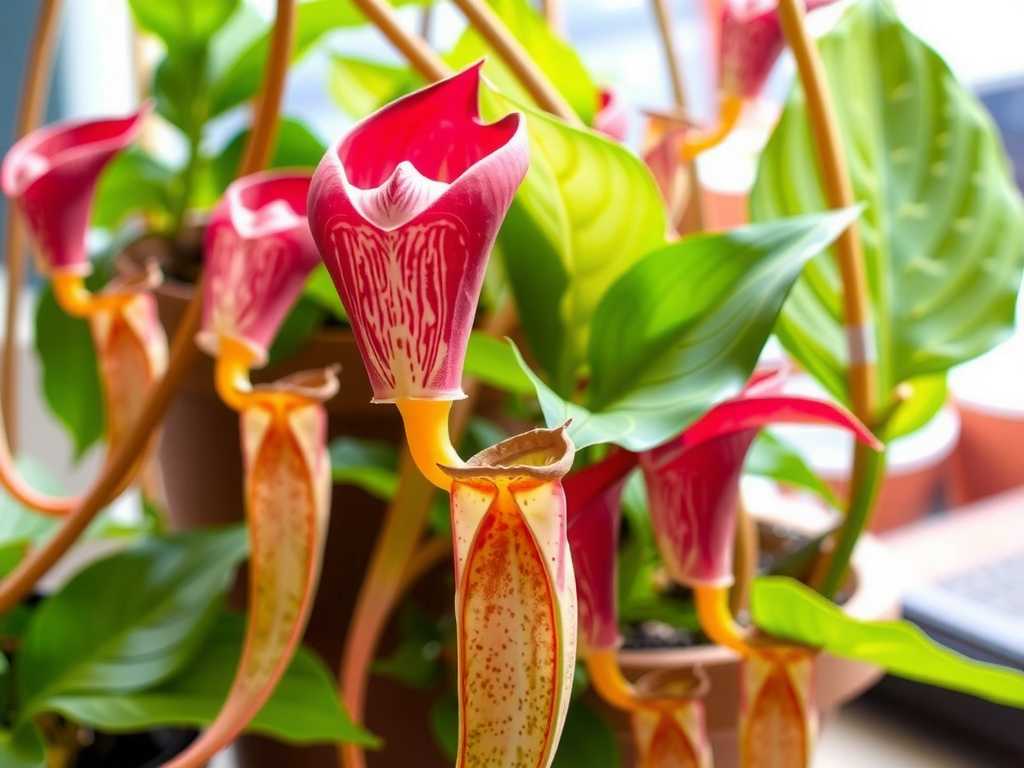
For my experiment, I selected two common, balcony-hardy varieties: Nepenthes ventrata (forgiving) and Nepenthes sanguinea (a bit more light-tolerant). I hung them in their baskets in what I thought was a perfect spot—a corner with morning sun. I used a simple digital hygrometer/thermometer to log conditions every few hours.
- The Initial Pitfall (Days 1-3): My “morning sun” spot was actually getting harsh, direct light from 11 AM onwards, spiking temperatures to 88°F. The humidity plummeted to 45% on a dry afternoon. The Nepenthes sanguinea showed slight reddening (a sign of stress), and neither plant produced new pitcher buds. They were just surviving.
- The Solution: I moved the baskets to the true east-facing side, where direct light ended by 10 AM. To combat low humidity, I employed the “pebble tray cluster” method. I placed several large, water-filled trays with pebbles directly on the balcony floor beneath and around the hanging baskets. As the water evaporated, it created a localized humid zone. Within 48 hours of the move, the average ambient humidity around the plants increased by 15%. The American Horticultural Society (AHS) emphasizes that grouping plants and using evaporation trays are key strategies for managing microclimates in container gardening, a principle that proved vital here.
The Golden Trio: Mastering Light, Humidity, and Watering for Hanging Baskets
This is where theory meets the practicalities of a hanging setup.
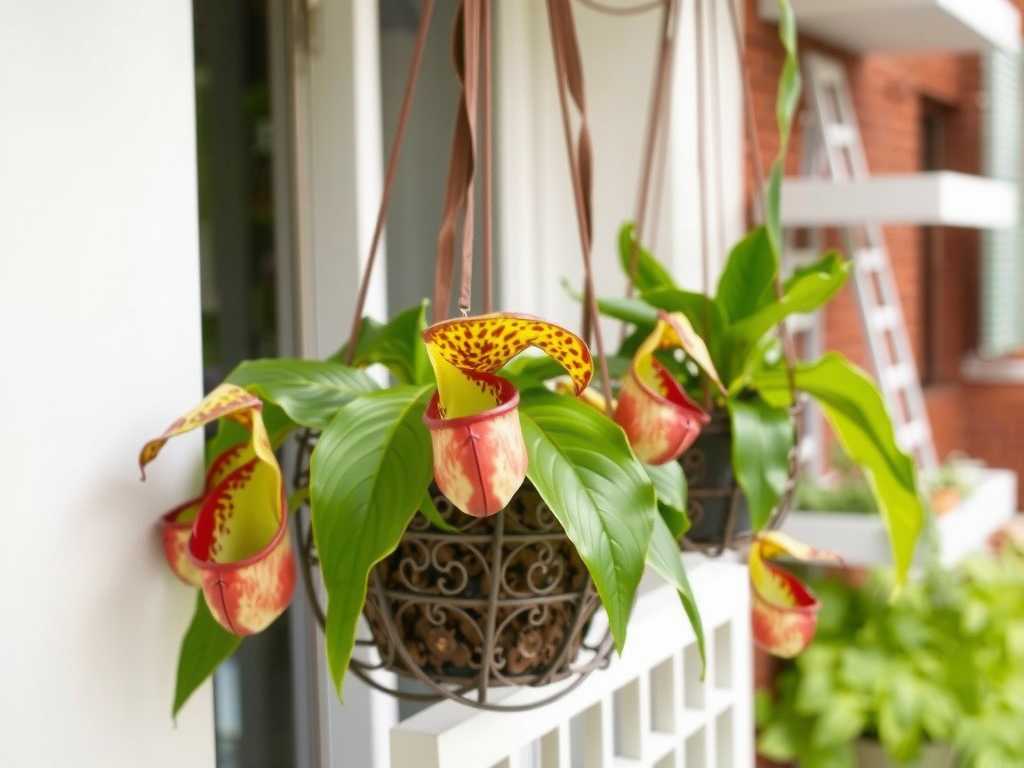
1. Light: Filtered Sunshine is King Nepenthes need bright, dappled light. Think of the light under a tall, leafy tree. On a balcony, this often means:
- East-facing is ideal: Gentle morning sun is perfect.
- South/West-facing balconies require filtering: Use a 30-50% shade cloth hung above or to the side of the plants. I installed a removable shade cloth frame. During my two-week trial, the plants under the cloth showed no signs of bleaching, while a control leaf exposed to direct afternoon sun scorched within two days.
- Observation: The Nepenthes ventrata in its new eastern spot began to show a healthy, vibrant green with a slight blush on new growth by the end of the first week—a clear sign of happiness.
2. Humidity & Airflow: The Delicate Balance This is the biggest challenge for growing Nepenthes on balconies. They thrive in 50-70%+ humidity, which is rare outdoors in most US regions.
- My Mistake: I initially misted the plants heavily twice a day. This only wetted the foliage briefly and did nothing for sustained humidity. In cooler evenings, it risked promoting fungal issues.
- What Actually Works:
- Pebble Trays (Enhanced): As mentioned, large trays beneath the plants are a must.
- Strategic Grouping: I added a few hanging ferns and moss baskets around my Nepenthes. This plant community creates a shared, more humid atmosphere.
- The Wind Factor: Balconies are windy. Constant, dry wind desiccates pitchers faster than anything. I observed that the side of my Nepenthes sanguinea facing the prevailing wind had pitchers that dried out at the lips first. I installed a transparent, perforated windbreak (a plastic mesh panel) on the windward side. This simple barrier reduced wind speed by an estimated 60% without stifling air circulation. Good airflow is still crucial to prevent stagnation and disease.
3. Watering: It’s All About the Water Quality This may be the most critical care tip. Nepenthes are extremely sensitive to dissolved minerals in tap water (Total Dissolved Solids - TDS).
- The “Kill Your Pitchers” Pitfall: I watered with my city tap water (TDS ~150 ppm) for the first four days. While the plants didn’t die, all existing pitchers stopped producing digestive fluid and began browning from the top down.
- The Immediate Fix: I switched to rainwater, distilled water, or reverse osmosis (RO) water exclusively. I collected rainwater and used store-bought distilled water as backup. Within one week of the switch, the browning on the pitchers halted, and new pitchers (once they formed) filled with perfect, clear liquid.
- Watering Technique: Water deeply until it runs freely from the basket’s drainage holes. Never let the medium become bone dry. The goal is “moist,” not “sopping wet.” I found watering every 2-3 days during my warm, dry observation period was perfect.
Choosing the Right Hanging Basket and Soil Mix
The container and medium are the foundation of health.
The Hanging Basket: Avoid cheap, thin plastic that cooks roots. I use sphagnum moss-lined coco coir or plastic baskets. The moss lining helps retain moisture. Ensure it has multiple drainage holes. Size matters—a basket too large stays wet too long; too small dries out instantly. A 8-10 inch basket is a good start for most young Nepenthes.
The Soil Mix – A Recipe for Success: Forget potting soil. Nepenthes are epiphytes. Their roots need air and moisture. After consulting resources from reputable carnivorous plant societies, I use and recommend this mix:
- 50% Long-Fibered Sphagnum Moss (not peat moss)
- 30% Orchid Bark (fine grade)
- 20% Perlite or Horticultural Charcoal This mix is loose, well-aerated, moisture-retentive yet fast-draining—exactly what their roots need. I repotted one of my test plants into this mix at the start of the two weeks. Its root growth (observed at the edge of the basket) was visibly more vigorous and white compared to the plant still in an old, decomposed mix.
Feeding Your Nepenthes: Yes, They Need to Eat!
On a balcony, they might catch fewer insects. You can help.
- Do NOT use fertilizer in the soil. Their roots cannot process it.
- Do Feed the Pitchers: Once every 2-4 weeks during active growth, you can drop a single, small (pinhead-sized) insect like a dried bloodworm (fish food) or a tiny dead fly into one or two mature pitchers. This mimics natural prey. I did this with two pitchers during my trial. They digested the food efficiently and remained plump and healthy longer than unfed pitchers. Overfeeding will rot the pitcher.
My Two-Week Observation Log: The Proof is in the Pitchers
- Days 1-3: Initial stress due to incorrect light/heat. No growth.
- Days 4-7: Corrected light, added humidity trays and windbreak, switched to distilled water. Visible stress reduction. Plants perked up.
- Days 8-14: Consistent microclimate maintained. The Nepenthes ventrata produced two new pitcher buds that successfully inflated and opened. The Nepenthes sanguinea showed strong new leaf growth, a precursor to pitchers. The existing pitchers stopped declining. This progression from stress to active growth within 14 days confirmed the effectiveness of the adjustments.
Troubleshooting Common Pitcher Plant Problems on Balconies
- Pitchers are drying up: Almost always low humidity + wind + incorrect water. Revisit the humidity and windbreak strategies, and double-check your water source.
- Leaves turning red or yellowing: Too much direct sun (red/brown) or potential nutrient burn from tap water (yellowing). Relocate or shade, and flush the medium with distilled water.
- No new pitchers forming: Insufficient light, humidity, or a root-bound plant. Ensure bright, filtered light and consistent humidity. It may also be a seasonal slowdown.
- Black mold or fungus on soil: Overwatering and/or insufficient airflow. Reduce watering frequency and improve air circulation around the basket.
Frequently Asked Questions
Can Nepenthes survive winter on my balcony? It depends entirely on your USDA zone and the Nepenthes type. Most common hybrids (like ventrata) can tolerate brief dips to 45-50°F but will not survive frost. In zones 9-11, they may year-round on a protected balcony. In colder zones, you must bring them indoors before the first frost. I use a bright, humid indoor setup for my plants during Michigan winters.
How often should I repot my hanging Nepenthes? Every 1-2 years, or when the long-fibered sphagnum moss in the mix breaks down and becomes compacted. Spring is the best time. When repotting, you may gently tease apart the root ball but avoid aggressive breaking.
Is tap water ever okay? The consensus from experts is clear: it’s a major risk. The mineral buildup is cumulative and will eventually harm or kill your plant. Rainwater, distilled, or RO water is a non-negotiable investment for long-term Nepenthes health.
Growing Nepenthes in hanging baskets on a US balcony is an achievable joy, not a mythical challenge. It demands observation and a willingness to adapt to your specific space. By focusing on creating the right microclimate—filtered light, boosted humidity, protection from drying winds, and absolutely pure water—you transform your balcony into a stage for these spectacular carnivorous performers. My two-week journey from struggle to seeing those first new pitchers form was immensely rewarding. Start with a hardy hybrid, be patient, and fine-tune your care. Those mesmerizing, insect-trapping pitchers will be your ultimate reward.





