 bluename
How to Choose Ideal Placement for Newly Purchased US Nursery Nepenthes
I killed three Nepenthes before I finally figured out where they actually want to sit in a house.
So here's the short answer upfront: put your newly purchased US nursery Nepenthes in a spot with bright, indirect light, steady humidity above 50%, and a temperature that never drops below 55°F at night.
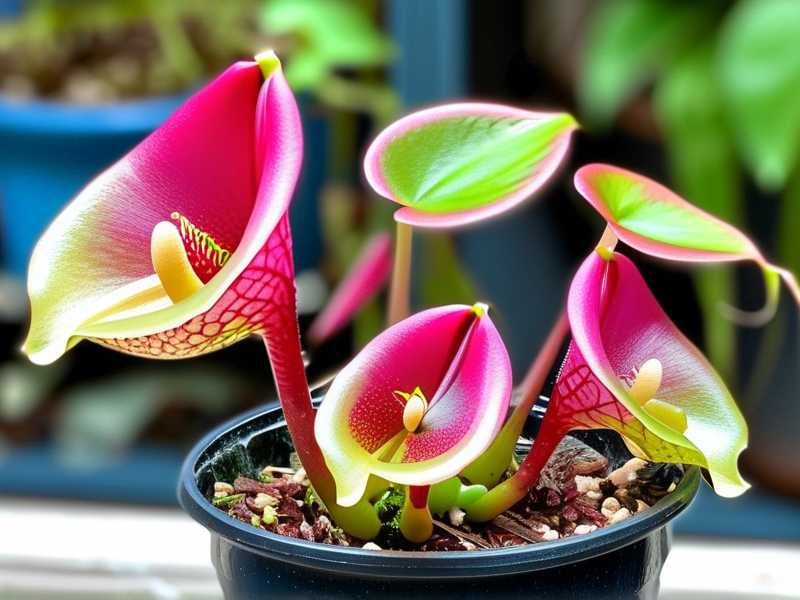
That's it. That's the whole game.
But "bright indirect light" is one of those phrases that sounds simple until you realize your window faces the wrong way and your bathroom has no window at all.
I've been growing tropical pitcher plants for six years now. I've ordered from US nurseries more times than I want to admit. And I've learned that placement isn't just about light. It's about airflow, humidity pockets, water quality, and honestly, how lazy you're willing to be about refilling a humidifier.
Let's talk about what actually matters.
Why Placement Makes or Breaks a New Nepenthes
Your plant just traveled in a box. Maybe two days. Maybe five.
It's stressed. The leaves might be slightly limp. The pitchers could be browning at the tendrils.
According to the Royal Horticultural Society (RHS), tropical pitcher plants need consistent conditions to recover from transport shock. Moving them around during this window makes it worse.
I learned this the hard way.
I once moved a brand-new N. ventricosa three times in one week because I couldn't decide where it looked best. Guess what happened? Every single pitcher dried up within ten days.
The plant survived. But it looked terrible for two months.
So pick a spot. Commit to it. Give the plant two full weeks to settle before you even think about relocating.
The Three Biggest Mistakes I See New Growers Make
Let me be blunt. I've made all three of these.
Mistake #1: Overwatering
I'm going to say this plainly: 90% of indoor plants die from overwatering.
Nepenthes are not swamp plants. They're not sitting in bogs like some Sarracenia. They want moist, airy media, not soggy roots.
I killed my second Nepenthes by watering it every single day because I thought "tropical" meant "wet." The roots rotted in about two weeks. The plant collapsed from the bottom up.
Here's what I do now: I water when the top inch of the potting mix feels barely damp, not wet. In summer, that's about every three days. In winter, once a week.
And I always use distilled water or rainwater. Tap water builds up minerals and burns the roots over time.
Mistake #2: Wrong Light
Light is where most people get confused.
Nepenthes don't want full sun. They also don't want deep shade.
I tried a south-facing windowsill in July once. The leaves got crispy brown patches within four days.
Then I tried a dark corner in my living room. The plant stopped growing entirely.
What works for me is an east-facing window with a sheer curtain. Or a north-facing window if it's bright. The goal is strong light that never hits the leaves directly for more than an hour or two in the morning.
If you're using grow lights, keep them 10–14 inches above the plant. Run them 12 hours a day.
Mistake #3: The Wrong Pot
This one doesn't get talked about enough.
Nepenthes need drainage. If you plant them in a decorative ceramic pot with no holes, you're asking for root rot.
I use plastic orchid pots with slotted sides. They let air reach the roots and drain fast.
Terracotta can work, but it dries out too quickly in low humidity. I stopped using it after my N. alata dried out in three days during winter.
My Two-Week Observation Method
When I get a new Nepenthes from a US nursery, I do the same thing every time.
I place it in my chosen spot and leave it completely alone for 14 days.
No repotting. No fertilizing. No moving it to "see if it likes another window better."
I check three things during those two weeks:
- Are the leaves staying firm or getting limp?
- Is there any new growth at the growing tip?
- Are existing pitchers holding their color or browning?
If leaves stay firm and I see a tiny new leaf unfurling by day 10, the spot is working.
If pitchers start browning and leaves curl inward, I know the humidity is too low or the light is too intense.
I've found that most problems show up within the first week. The second week is just confirmation.
Humidity: The Factor Nobody Warns You About
Nepenthes want humidity between 50% and 80%.
Most homes sit around 30–40%. That's a problem.
I tried misting every day for a month. It did almost nothing. The humidity spike lasted maybe ten minutes.
What actually worked was grouping my Nepenthes with other humidity-loving plants on a pebble tray. That got me to about 55%.
Then I added a small ultrasonic humidifier nearby. Now I hover around 65–70%. The pitchers got bigger within a month.
If you can't run a humidifier, a bathroom with a window works surprisingly well. Just make sure there's some airflow, or you'll get fungal issues.
The American Horticultural Society (AHS) notes that good air movement is just as important as humidity for tropical plants. Stagnant wet air invites rot. Gentle airflow keeps things healthy.
Temperature and Airflow
Nepenthes are more forgiving on temperature than people think.
Most common hybrids tolerate 65–85°F during the day. Nighttime drops to 55–65°F are fine for lowland types.
Highland species need cooler nights, sometimes down to 50°F. But if you're buying from a typical US nursery, you're probably getting a hybrid that handles average home temps.
What matters more is avoiding drastic swings.
Don't put your plant near an air conditioning vent. Don't put it above a radiator. Don't stick it next to a drafty door in winter.
I made the mistake of placing one near a heating vent. The leaves dried at the edges within a week. Moved it two feet away and the problem stopped.
Airflow matters too. A small clip fan on low, oscillating, pointed slightly away from the plant, keeps mold away and strengthens the stems.
A Quick Word on Windows
Here's my general rule for window placement in North America, the UK, and Australia:
- East-facing: Best option. Morning sun, gentle warmth.
- North-facing (Northern Hemisphere): Good if bright. Consistent, no harsh sun.
- West-facing: Works if you diffuse with a sheer curtain. Afternoon sun can scorch.
- South-facing (Northern Hemisphere): Too intense in summer unless heavily filtered.
In Australia, flip that. South-facing windows give the gentle light. North-facing gets brutal.
The key is observing your specific window for a full day before placing the plant. Watch where the sun hits and for how long.
I spent one Saturday just watching my windows. Sounds boring. But it saved me from scorching another plant.
What About Terrariums and Cabinets?
I've tried growing Nepenthes in a glass terrarium. It worked for small seedlings.
Humidity stayed at 80%+. Temperature was stable. The plants grew well for about six months.
Then they outgrew it. And transitioning them out of high humidity caused massive pitcher drop.
If you're going the terrarium route, plan for the eventual move. Or choose a compact species like N. bellii that stays small.
For most people, a simple windowsill with a humidifier is easier and more sustainable.
Final Thoughts and Common Questions
Placement really comes down to three things: light, humidity, and stability.
Get those right, and your US nursery Nepenthes will settle in within two weeks. Get them wrong, and you'll watch pitchers brown one by one.
I've been there. It's frustrating. But once you dial it in, these plants are surprisingly resilient.
How long should I wait before repotting a new Nepenthes?
Wait at least a month. The plant needs to recover from shipping first. Repotting too soon adds stress and can kill it.
Can I grow Nepenthes in a low-humidity home without a humidifier?
You can, but the pitchers will be small and may dry out. Try a pebble tray and group plants together. If humidity stays below 40%, consider a small humidifier.
My Nepenthes pitchers are turning brown after two weeks. What's wrong?
Usually it's low humidity or a sudden change in conditions. Check if the leaves are also affected. If leaves look fine, the plant is just dropping old pitchers from shipping stress. New ones should form once it settles.





