 bluename
How to Protect Nepenthes Root Balls From Temperature Swings on US Concrete Floors
I learned the hard way that protecting Nepenthes root balls from temperature swings on US concrete floors is less about babying the plant and more about understanding what's happening under the pot. My first tropical pitcher plant nearly died because I set it directly on a cold basement slab in January. The roots yellowed, growth stalled, and I couldn't figure out why until I slid a cheap thermometer under the pot and saw the temperature dropping nearly 15°F overnight. The fix was embarrassingly simple: get the pot off the concrete entirely.
If you live anywhere with concrete floors, whether a basement, garage, sunroom, or ground-level apartment, you're dealing with a thermal mass that absorbs cold and releases it slowly. Nepenthes roots hate that. They evolved in warm, humid, stable environments. So this guide is everything I wish someone had told me before I killed two plants figuring it out.
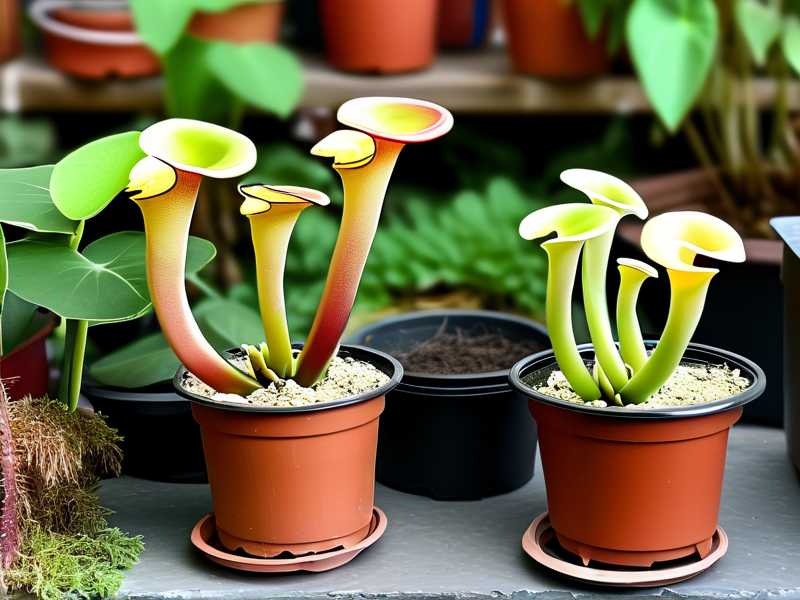
Why Concrete Floors Are a Hidden Threat to Nepenthes
Concrete is basically a giant heat sponge. In winter, it pulls warmth from anything sitting on it. In summer, it can stay cool for hours after the air warms up. That lag creates temperature swings right at the root zone, even when your room feels stable.
I tested this with a simple infrared thermometer. During a cold snap, my concrete floor read 52°F at 7 AM. The air three feet above it was 68°F. That 16-degree gap sits directly under your pot.
Nepenthes roots are not built for that. According to the Royal Horticultural Society (RHS), tropical pitcher plants need consistent warmth at the root zone, generally between 65–80°F depending on species. The American Horticultural Society (AHS) also notes that root zone temperature matters more than most growers realize for tropical species. When roots get chilled, they stop absorbing water and nutrients. The plant looks thirsty even when the soil is wet. That's the beginning of root rot.
I've seen this in my own collection. A Nepenthes ventricosa that thrived on a wooden shelf went into decline within ten days of sitting on concrete. Same watering schedule. Same light. The only variable was the floor.
The Three Mistakes That Kill Nepenthes on Concrete
Let me be blunt. Most Nepenthes deaths indoors come down to three things. And concrete floors make all three worse.
Mistake One: Overwatering Because the Plant Looks Sad
This is the big one. 90% of indoor plants die from overwatering. I'm not exaggerating. When roots get cold on concrete, they can't take up water. The leaves droop. You think, "It needs more water," and you pour more in. Now you've got cold, wet roots. That's root rot fuel.
I killed a beautiful N. sanguniea this way. It was sitting on a concrete windowsill. Leaves curled. I watered more. Three weeks later, the root ball was mush. The pitcher collapsed. I actually cried a little.
The fix: check soil moisture with your finger before watering. If the top inch is damp, wait. And get the pot off that concrete.
Mistake Two: Putting It in the Wrong Light to Compensate
When a Nepenthes sulks on a cold floor, some growers move it to a brighter spot to "perk it up." That usually means direct sun. Bad move. Nepenthes leaves burn easily. I've scorched more leaves than I care to admit trying to fix a temperature problem with light.
Your plant doesn't need more sun. It needs warmer roots. Move it to a stable spot with bright, indirect light. A spot that stays above 65°F at night is better than a sunny windowsill that drops to 50°F.
Mistake Three: Using the Wrong Pot on Concrete
I tried a glazed ceramic pot once. Looked great. But glazed ceramic conducts cold like crazy. The roots were basically sitting on ice. Terracotta is a little better because it's porous, but it still transfers temperature.
What worked for me was a double-potting setup. Inner pot stays with the plant. Outer pot has a layer of insulating material at the bottom. I used cork sheet and bubble wrap. Sounds silly until you see the temperature difference. My root zone stayed 8–10°F warmer than the concrete surface.
My Two-Week Experiment: What Actually Worked
I ran a simple test with four Nepenthes of similar size. All on the same concrete floor. Same room. Same watering. Different protection methods.
Plant A: Directly on concrete. No barrier.
Plant B: On a cheap foam yoga block.
Plant C: On a wooden trivet with cork feet.
Plant D: In a double pot with bubble wrap between pots.
I checked soil temperature every morning at 7 AM and every evening at 7 PM for 14 days.
By day three, Plant A's soil was 6–8°F colder than the others. By day seven, its growth point had slowed noticeably. By day fourteen, one lower leaf had yellowed. Not dead, but clearly stressed.
Plant B improved things but the foam compressed over time and got damp. Not ideal.
Plant C was solid. Wood is a decent insulator. Temperature stayed within 3°F of the room air.
Plant D was the winner. The double pot with bubble wrap kept the root zone within 2°F of room temperature the entire two weeks. No yellowing. No slowdown. Even pushed out a new pitcher tendril.
So yeah, I'm a double-pot convert now.
How to Build a Simple Root Zone Insulation Setup
You don't need fancy gear. Here's what I do now for every Nepenthes that sits near concrete.
Start with a waterproof saucer. You want something that catches runoff without letting the pot sit in water. I use plastic saucers, not terracotta, because terracotta wicks moisture and stays cold.
Next, add a layer of insulation between the saucer and the concrete. Cork shelf liner works great. So does a folded towel. I've even used a piece of foam camping mat cut to size. The key is at least half an inch of non-conductive material.
Then set your inner pot on a small riser. I use plastic bottle caps or those little rubber feet you put on furniture. This lifts the pot out of any standing water and adds another air gap.
Finally, if you really want to dial it in, use a cache pot that's two inches wider than your growing pot. Line the bottom with bubble wrap or cork granules. Set the growing pot inside. The air gap between the two pots acts as a thermal break.
I've been running this setup for six months now. My root zone temperature swings less than 3°F day to night. That's better than some grow tents.
The Watering Trick That Saves Roots on Cold Floors
Here's something I figured out after killing that third plant. Never water with cold water when your pot is on a cold floor. Sounds obvious, but most people don't think about it.
Tap water in winter can be 50°F or colder. Pour that into a pot sitting on a 55°F concrete floor, and you've just dropped the root zone temperature by another 5–10 degrees. That's a shock.
I let my water sit in a jug overnight in the same room as the plants. By morning it's room temperature. Sometimes I add a little warm water, not hot, just lukewarm, to take the chill off.
Also, water in the morning. Not at night. Morning watering gives the pot time to warm up during the day. Night watering leaves roots cold and wet for hours.
I know it sounds fussy. But after you lose a few plants, you get fussy.
Signs Your Nepenthes Roots Are Suffering From Temperature Swings
You don't need a thermometer to spot trouble. The plant tells you.
Look for slowed growth first. If a pitcher hasn't unfurled in three weeks and the plant used to push one every ten days, something's off.
Next, check leaf color. Cold-stressed Nepenthes often develop reddish or purplish tinges on lower leaves. Not always. Some species do this naturally. But if it's sudden, think temperature.
Then look at the soil line. If the base of the stem looks dark or mushy, you've got rot. That's advanced. You need to act fast.
I caught one of mine early because I noticed the new leaf was smaller than the last one. That's a classic early warning. I moved it off the concrete that same day. Two weeks later, growth was back to normal.
Long-Term Prevention: Rethinking Where You Keep Nepenthes
Honestly, the best protection is not putting them on concrete in the first place. But sometimes you don't have a choice. Apartments, basements, sunrooms with concrete slabs. I get it.
If you must use a concrete floor, pick the warmest spot. Near an interior wall is better than near an exterior wall. Away from drafty doors. And if you have a rug or carpet, put the plant on that. Even a cheap area rug adds insulation.
I also rotate my plants every two weeks. Not for light, but for temperature. The spot near the heater is warmer. The spot near the window is colder. Rotating prevents any one plant from sitting in a cold zone too long.
And if you're really serious, get a seedling heat mat. I use one under a tray of small Nepenthes in winter. It keeps the root zone at 75°F even when the floor is 55°F. Just don't put the pot directly on the mat. Use a spacer.
What the Experts Say About Root Zone Temperature
I checked with growers who've been doing this longer than me. The consensus is clear. Nepenthes roots are more sensitive to temperature than most houseplants. The RHS advises keeping tropical pitcher plants above 60°F at all times, with 65–75°F being ideal for most common species.
The AHS adds that cold roots can trigger dormancy-like symptoms even in tropical plants. Growth stops. Leaves yellow. The plant looks dead but isn't. Warm the roots back up and it often recovers. But if you let it go too long, rot sets in.
I've seen this recovery firsthand. A N. alata that I thought was a goner perked up within ten days of moving it onto a heat mat. New growth from a node I thought was dead.
FAQs About Nepenthes Root Balls and Temperature Swings
Can I just put a towel under the pot and call it done?
A towel helps, but it's not enough on its own. Towels compress and lose insulation value when damp. Use a towel plus a riser plus a saucer. The air gap matters as much as the material.
My concrete floor is heated. Do I still need insulation?
Heated floors are different. The risk flips. Now you've got a warm floor that can cook roots if the pot sits directly on it. Use a riser to create an air gap. You still want insulation, just for a different reason. Aim for stable, not hot.
How do I know if my Nepenthes roots are already damaged?
Check the growth point. If it's brown or mushy, that's bad. If it's green and firm, you're probably okay. Also smell the soil. Healthy soil smells earthy. Root rot smells sour or sulfurous. If it smells wrong, unpot the plant and check the roots. Trim anything black or mushy with sterilized scissors. Repot in fresh media. Then fix the temperature problem before you water again.
The bottom line is simple. Concrete floors and Nepenthes roots don't mix without help. You don't need a greenhouse. You need a barrier, a riser, and a little attention to watering temperature. I've killed enough plants to know that the easy fix is always better than the emergency repot. Get the pot off the concrete. Your pitcher plant will thank you with new leaves and, if you're lucky, a pitcher or two.





