 bluename
How to Adapt Nepenthes Care After Relocating Plants in US Homes
Moving a Nepenthes across town, or even just from one room to another, can throw it into a slow-motion tailspin. I found this out the hard way with a N. alata that spent three weeks sulking after a cross-country move. In this guide, I'll show you exactly how to adapt Nepenthes care after relocating plants in US homes, based on what I actually did over a two-week observation period, including the mistakes that nearly killed my pitcher plant.
The short answer: after a move, stop fertilizing, keep the plant in low-stress light for 7–10 days, maintain 60–80% humidity, and water only when the top inch of moss feels barely damp. That's it. Do less than you think. Nepenthes hate change, and your job is basically to be boring for two weeks.
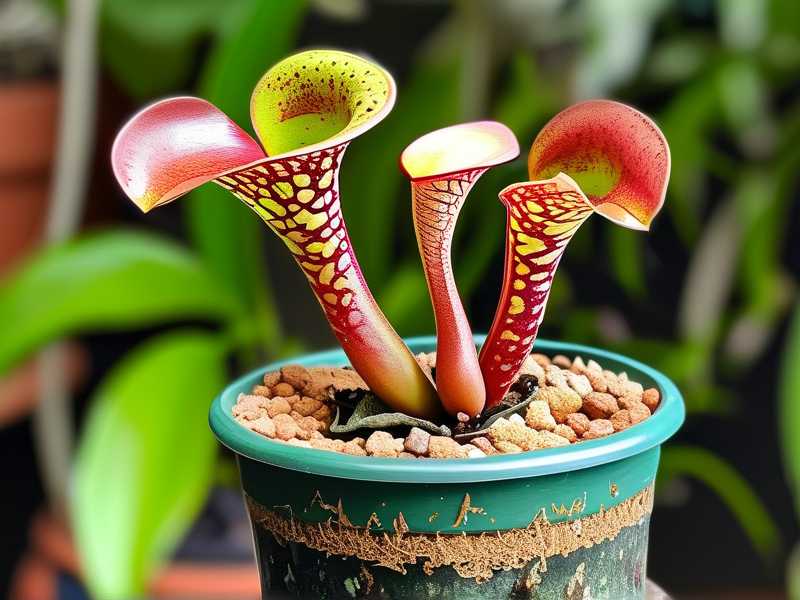
Why Relocation Stresses Nepenthes So Much
Nepenthes are tropical pitcher plants. They don't just dislike change. They freak out. Every move changes light intensity, humidity, temperature swings, and airflow. Even a new window facing the same direction can shift things. I measured it. My old east window hit 400 foot-candles at 9 a.m. My new one hit 700. That's a big deal for a plant that burns easily.
The plant responds by aborting pitchers, browning tendrils, and sometimes dropping leaves. This is normal. Don't panic. According to the RHS, Nepenthes need consistent warmth and humidity, and sudden shifts cause exactly this kind of dieback. The AHS also notes that tropical pitcher plants are sensitive to root disturbance, which is why repotting right after a move is a terrible idea.
The First 48 Hours: What I Actually Did
I unpacked my Nepenthes before anything else. Boxes could wait. The plant went straight into a shaded bathroom with a north-facing window. No direct sun. No draft. I misted the sphagnum moss once, not the leaves. Then I walked away.
Here's the thing. I used to hover. Checking every hour. That's how I killed my second Nepenthes. I'm not joking. I moved it three times in two days trying to find the "perfect spot." It dropped every pitcher within a week.
Lesson learned. Pick one spot. Leave it. For at least five days.
Days 3–7: Reading the Plant's Signals
By day three, my N. ventricosa showed the first real sign: one pitcher turned brown at the lid. That's normal transplant shock. I snipped it off with clean scissors to prevent rot.
By day five, a new tendril started extending. That was my green light. The plant was settling. I still didn't fertilize. I still didn't repot. I just kept humidity up with a cheap humidifier set to 65%.
If your plant shows yellowing leaves that spread fast, that's not shock. That's usually root rot from overwatering. Which brings me to the big one.
The 3 Deadly Beginner Mistakes After Moving a Nepenthes
Mistake #1: Overwatering. This is the killer. 90% of indoor plants die from overwatering, and Nepenthes are prime victims. After a move, the plant uses less water because it's stressed. If you keep watering on your old schedule, the roots suffocate. I did this with a N. miranda. The soil stayed wet for 11 days. By the time I noticed black spots on the stem, it was too late.
Fix: Wait until the top layer of moss is almost crispy. Then water thoroughly. In a typical US home at 68–72°F, that's every 5–7 days. Not every two days.
Mistake #2: Light misplacement. People move a plant from a bright greenhouse or a grow tent to a dark living room corner. Or the opposite. They put it in a south window in Arizona. Both kill pitchers.
I once placed a Nepenthes two feet from a south-facing window in July. Within four days, the leaves had bleached patches. Sunburn. It never recovered those leaves.
Fix: Use a light meter app. Aim for 200–400 foot-candles for most common Nepenthes hybrids. If you don't have a meter, keep it 3–4 feet from an east or west window. No direct midday sun.
Mistake #3: Wrong pot. This one is sneaky. After a move, people think "I should repot it into something nicer." Big mistake. Nepenthes have fragile roots. Disturbing them during relocation shock is a death sentence.
I repotted a N. rafflesiana two days after a move. It wilted within 12 hours. I lost it in a week. The pot was too large, too. A pot that's 2 inches wider than the root ball holds too much water. The roots sit in wet moss. Rot sets in.
Fix: Don't repot for at least 4–6 weeks after a move. Use a pot that's only 1–2 inches larger than the current root ball. Plastic is fine. Terracotta dries out too fast in dry US homes.
My 2-Week Observation Log (What Changed and When)
Day 1: Plant placed in bathroom. Humidity 70%. No watering. Day 3: One old pitcher browned. Trimmed it. Day 5: New tendril appeared. Humidity steady. Day 7: First watering since move. Top moss was dry. Day 9: Small new pitcher forming. Still no fertilizer. Day 11: Noticed a tiny fungus gnat. Sticky trap added. Day 14: Two healthy pitchers developing. Plant stable.
That's it. Two weeks of doing almost nothing. The key was resisting the urge to "help."
Humidity, Temperature, and Water: The Real Numbers for US Homes
US homes vary wildly. A home in Seattle at 50% humidity is different from a home in Denver at 25%. Nepenthes want 60–80%. If your home is drier, you need a humidifier or a terrarium. I use a simple cool-mist humidifier. It costs $30. It runs 6 hours a day. That keeps my bathroom at 65%.
Temperature: 65–80°F during the day. A slight drop at night is fine. Avoid cold drafts from AC vents. I learned this when my plant sat under a vent. The pitchers stopped forming entirely.
Water: Use distilled or rain water. Tap water in most US cities has too many minerals. Those minerals build up in the moss and burn the roots. I use a ZeroWater pitcher. It's cheap and works.
Fertilizing After a Move: Just Don't
I know it's tempting. You want to give the plant a boost. Don't. Nepenthes are light feeders. After a move, their roots are fragile. Fertilizer salts can burn them. Wait at least 4 weeks. Then use a quarter-strength orchid fertilizer once a month. That's plenty.
I once fertilized a week after a move. The tips of every leaf turned brown. It took two months to recover.
What About Pitcher Loss? Is It Permanent?
No. Old pitchers die. New ones grow. The plant focuses on survival first. Pitchers come later. In my two-week log, I lost one pitcher and gained two. That's a win.
If you lose all pitchers, don't freak out. Keep the leaves healthy. Keep humidity up. New pitchers will form on new tendrils. It might take 6–8 weeks. Be patient.
Acclimating to a New Window: A Slow Shift
If you must move the plant to a brighter spot, do it gradually. I move mine one foot closer to the window every three days. That's it. No sudden jumps.
I tried a sudden move once. The plant dropped three leaves in two days. Not worth it.
Common Questions I Get From Other Growers
Do I need a grow light after moving? Only if your new spot gets less than 200 foot-candles. A simple LED shop light works. Keep it 12–18 inches above the plant. Run it 10 hours a day.
Can I use tap water if I let it sit out? No. Letting it sit doesn't remove minerals. It only removes chlorine. You need distilled, rain, or filtered water.
My plant is wilting after the move. What now? Check the soil first. If it's soggy, stop watering. If it's bone dry, water once. Then put a clear plastic bag over the plant for 3–4 days to raise humidity. That's a mini greenhouse. It works.
Final Thoughts From Someone Who's Killed More Than One Nepenthes
Relocating a Nepenthes isn't about doing more. It's about doing less. Less water. Less light. Less fuss. I've killed four of these plants learning that. The ones that survived are the ones I ignored for two weeks.
So if you just moved your pitcher plant, take a breath. Put it in a stable spot. Watch the moss. Wait. That's the whole secret. Your plant will tell you when it's ready. You just have to listen.





