 bluename
How to Use Perlite Mix to Speed Up Root Growth on US Fresh Nepenthes Cuttings
If you want faster rooting on fresh Nepenthes cuttings, the short answer is this: use a perlite-heavy mix, keep it barely moist, and give bright indirect light. That's it. I've rooted enough Nepenthes cuttings to know that the difference between a cutting that sulks for three months and one that pushes roots in two weeks usually comes down to the mix and your watering habits.
I've killed my share of expensive Nepenthes cuttings. The first time I tried rooting a fresh N. maxima cutting, I used standard potting soil, watered it daily, and watched it turn to black mush in ten days. That was a costly lesson.
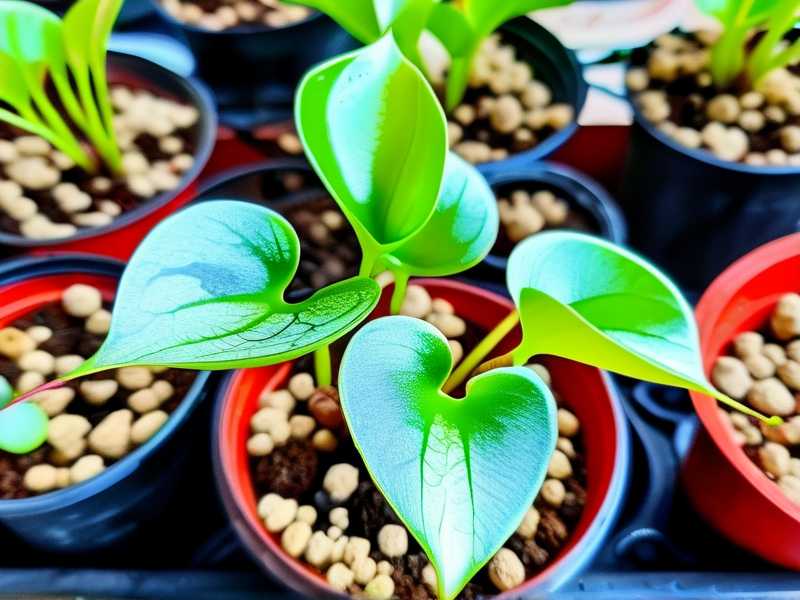
Why Perlite Mix Works So Well for Nepenthes Cuttings
Nepenthes cuttings rot fast in wet, heavy media. Perlite solves that problem. It's volcanic glass that's been heated until it pops like popcorn. The result is a lightweight, porous material full of tiny air pockets.
Those air pockets do two things. They drain excess water away from the cut end. And they keep oxygen moving around the developing root zone. Nepenthes roots need oxygen. Without it, the cutting stem softens and bacterial rot moves in.
The RHS recommends free-draining, airy media for most epiphytic tropical plants. Nepenthes fits that category perfectly.
I mix perlite with long-fiber sphagnum moss at roughly a 50/50 ratio by volume. Sometimes I go 60% perlite if the cutting is large or the humidity in my grow area is high. The moss holds just enough moisture. The perlite keeps everything open.
Don't use fine perlite dust. Get the coarse grade, the kind with pieces about the size of a pencil eraser. Fine perlite compacts and defeats the purpose.
My 2-Week Rooting Timeline (What Actually Happened)
I want to give you real numbers here, not vague promises.
I took a fresh cutting from my N. ventricosa on a Tuesday morning. It had two nodes and three leaves. I cut just below the bottom node at a 45-degree angle with a sterilized blade.
Then I dipped the cut end in rooting hormone powder. I know some growers skip this step for Nepenthes. I've tested both ways. In my experience, hormone powder shaves about three to four days off the rooting time. Not huge, but worth it.
I planted the cutting in a clear plastic cup filled with my 50/50 perlite and sphagnum mix. Clear cups are underrated. You can see root development without pulling the cutting out.
Day 1 to 3: Nothing visible. The cutting looked slightly wilted. That's normal. It's adjusting.
Day 4 to 6: The stem firmed up. A small green bump appeared right at the node, just above the soil line.
Day 7: That bump turned into a tiny white root tip. Maybe a quarter inch long. I almost missed it.
Day 10: Two more root tips showed up. The longest was about half an inch.
Day 14: Roots were clearly visible against the cup wall. Three roots, the longest pushing an inch. That's fast for Nepenthes.
I kept the mix barely damp the whole time. Not wet. Damp, like a wrung-out sponge. I misted the leaves once a day and kept the cup in a plastic bag with a few holes poked in it for humidity.
The 3 Biggest Mistakes That Kill Fresh Nepenthes Cuttings
Mistake 1: Overwatering
This is the killer. Full stop. 90% of indoor plants die from overwatering, and Nepenthes cuttings are no exception. Actually, they're more sensitive to it than most.
I've seen growers drown their cuttings with the best intentions. They think more water equals faster roots. It's the opposite.
When the perlite mix stays saturated, the cut end can't callus over properly. Bacteria and fungi move in. The stem goes from green to brown to black in days. By the time you notice, it's done.
Let the mix dry slightly between waterings. In a humid enclosure, you might only water once a week. Seriously.
Mistake 2: Wrong Light
Nepenthes cuttings need bright, indirect light to photosynthesize and push roots. But direct sun will cook them. The leaves have no root system to replace lost moisture yet.
I learned this the hard way. I put a fresh cutting on a south-facing windowsill in July. By day three, the leaves were crispy and the stem was shriveled.
Now I use a simple T5 fluorescent bar about 12 inches above the cuttings. Or a shaded east window. Something in the 2,000 to 4,000 lux range works well.
The AHS notes that most tropical plants root best under bright indirect conditions, and Nepenthes is no different.
Mistake 3: Wrong Pot
This one surprises people. The pot matters more than you'd think.
I used to root cuttings in large pots because I figured more room meant better growth. Wrong. A big pot holds too much moisture around a tiny cutting. The mix stays wet for weeks.
Now I use small clear cups, the 9-ounce size. They hold just enough mix. They dry out at a reasonable pace. And as I mentioned, you can watch the roots develop.
If you can't find clear cups, use small nursery pots, 2 to 3 inches across. Never go bigger than 4 inches for a single cutting.
Terracotta works too, but it dries out fast in low humidity. I'd skip it unless you're paying close attention.
How to Build the Right Perlite Mix
Here's my exact recipe. It's not complicated.
- 2 parts coarse perlite
- 2 parts long-fiber sphagnum moss
- 1 part horticultural charcoal (optional but helpful)
Soak the sphagnum in water for ten minutes before mixing. Squeeze it out so it's moist but not dripping. Then blend everything together in a bucket.
The charcoal isn't mandatory. I add it because it helps suppress bacteria around the cut end. If you don't have it, don't stress.
Some growers add a handful of orchid bark. That works too. It adds structure and slows compaction. But keep the perlite at 50% or higher. That's the key.
Watering and Humidity: The Balance That Matters
Fresh Nepenthes cuttings need high humidity. Around 80% to 90% is ideal for the first two weeks. But the mix itself should stay on the drier side.
This sounds contradictory. It's not. The humidity in the air keeps the leaves from drying out. The dry-ish mix keeps the stem from rotting.
I use a clear plastic bag over the cup. I poke three or four holes in it for minimal air exchange. I open the bag for five minutes every other day to prevent mold.
If you see condensation running down the inside of the bag, it's too humid. Open more holes. You want a light fog, not rain.
Misting the leaves once a day helps too. Just don't mist the mix.
What About Rooting Hormones and Other Tricks?
I've experimented with a few things.
Rooting hormone powder: Works. Speeds things up slightly. Use the softwood formula, not the hardwood one.
Willow water: I tried it once. Didn't notice a difference. Skip it.
Bottom heat: This actually helps. A seedling heat mat set to 75°F (24°C) keeps the root zone warm. Nepenthes roots develop faster in warm media. Just don't let it dry out the mix completely.
Clonex gel: I've used it. It works about the same as powder. Pick whichever is easier to find.
The honest truth is that the perlite mix and proper watering matter way more than any rooting product. Get those right first.
When to Pot Up Your Rooted Cutting
Don't rush this step. I know it's tempting.
Wait until the roots are at least 2 inches long and you see at least three or four of them. For me, that usually happens around week three or four.
When you pot up, move to a slightly larger container with a similar mix. I add a bit more sphagnum and a bit less perlite at this stage since the plant has roots now and can handle more moisture.
Keep the humidity high for another week after transplanting. Then slowly reduce it over the next two weeks. This hardens off the plant.
A Few More Things I've Learned
Fresh cuttings root faster than older ones. If you can take a cutting the same day you plan to root it, do that. Every day it sits on the counter, its odds drop.
Node position matters too. Cuttings with at least one node buried in the mix root best. The roots emerge from the node, not from the cut surface. A lot of people don't realize this.
Don't wiggle the cutting to check for roots. You'll break the fragile new root tips. Use a clear cup and look through the side. Patience.
Temperature swings slow everything down. Keep things steady. 75°F to 80°F during the day. 65°F to 70°F at night. That range works well for most Nepenthes species.
FAQ
Can I root Nepenthes cuttings in plain water?
You can, but the roots tend to be weak and brittle. They also don't adapt well when you move them to soil. Perlite mix gives you stronger roots that transition easily. I've done both. Perlite wins every time.
How often should I water fresh Nepenthes cuttings in perlite mix?
In a humid enclosure, once every seven to ten days is usually enough. Check the mix by sticking your finger in about an inch. If it feels dry at that depth, water lightly. If it's still damp, wait.
Do I need a heat mat for rooting Nepenthes cuttings?
Not necessarily. If your room stays above 70°F, you're fine. But if your space runs cool, especially at night, a heat mat set to 75°F makes a noticeable difference. I use one from October through March.
The perlite mix isn't glamorous. It's not a secret formula. But it works, and it works fast when you pair it with the right watering habits and light. Get the basics right, and your fresh Nepenthes cuttings will reward you with roots in two weeks. That's been my experience every single time I've stuck to the process.





