 bluename
How to Grow Tiny Nepenthes Specimens for US Household Mini Terrariums
It took me three dead pitcher plants and a soggy carpet to learn the real answer. 90% of indoor plants die from overwatering, and Nepenthes are the ultimate victims of that mistake. So here is the direct truth: you do not grow tiny Nepenthes successfully unless you give them bright indirect light, keep their roots moist but never waterlogged, and use a pot with massive drainage. That is the entire game.
I remember unboxing my first miniature Nepenthes, a gorgeous N. ampullaria hybrid. I was so excited. I put it in a glass terrarium, poured a cup of water over the moss, and sealed the lid. Within a week, the leaves turned black. The roots were mush. I had basically stewed the plant. That is when I started researching proper methods.
Why Tiny Nepenthes Are Perfect for Terrariums
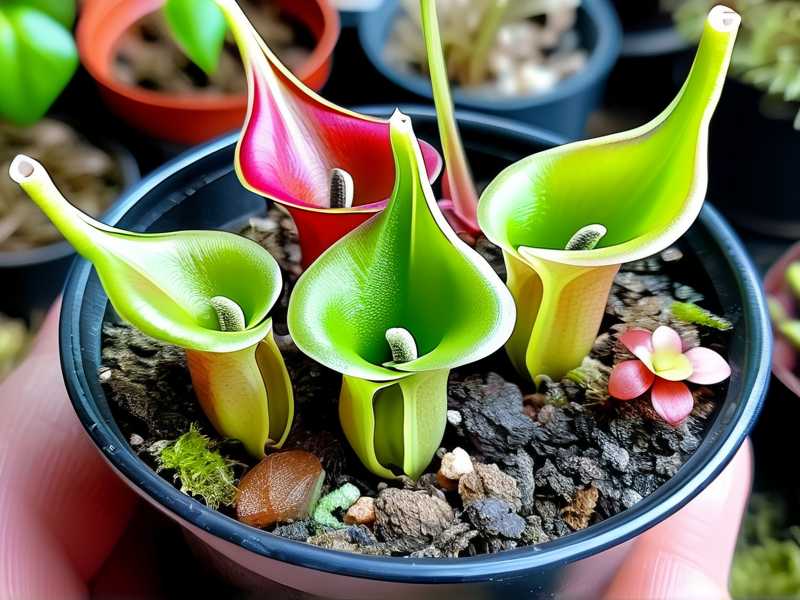
Miniature Nepenthes species are genuinely amazing. They stay small, they produce adorable pitchers, and they fit on a windowsill. Think N. gracilis. Or N. bellii. Or the ever-popular N. ampullaria. These are compact growers that do not need a greenhouse.
A mini terrarium gives you controlled humidity. That is the biggest advantage indoors. You can create a microclimate that mimics their tropical home. High humidity keeps pitchers from drying out. It also helps new leaves unfurl properly. Without it, you get crispy, stunted foliage.
However, a terrarium is not a fish tank. Many people close the lid completely. I tried that. It killed my second plant. The air got stagnant. Fungus started growing. The soil stayed wet forever. So use a terrarium with a ventilation opening. Or keep the lid slightly ajar. Air movement is critical.
My 2-Week Journey with a Tiny N. gracilis
I want to walk you through my exact two-week process with a fresh tiny Nepenthes gracilis. This is the routine that finally worked. I followed this after my earlier disasters. It made the difference.
Week 1: The Acclimation Phase
Day one, I received my tiny plant in a plastic cup. It was wrapped in sphagnum moss. The roots were delicate. I did not repot it immediately. That is a huge mistake people make. They repot on day one and shock the plant. I learned that after losing a N. ventricosa to repotting stress.
I placed the entire cup inside my terrarium. The substrate around it was pre-moistened peat and perlite mix. I kept the cup slightly recessed. This let the plant adjust to the humidity level. I misted the leaves lightly once. Just a fine spray.
For the first three days, I watched it. I did not water the cup. I let the surrounding moss act as a moisture buffer. The humidity in the terrarium stayed around 70%. I measured it with a cheap hygrometer. You need one of those. Guesswork fails.
On day four, I noticed new condensation on the glass. That is a good sign. The environment was stabilizing. The plant leaves looked perky. I opened the terrarium lid for fifteen minutes that evening. I wanted to refresh the air. Stale air is a killer.
On day five, I gently checked the base of the plant. The moss in the cup was still slightly damp. I did not add water. The roots were getting moisture from the humid air and the surrounding substrate. This is the "dry top, moist bottom" trick. It prevents crown rot.
Day six to seven, I saw no visible growth. But the plant stayed green. The old pitchers were still firm. Growth takes time. I resisted the urge to "help" it. Patience is hard. But it is essential.
Week 2: The Adaptive Growth Phase
Day eight, I decided it was time to repot. I had a small plastic pot with a lot of drainage holes. I filled it with a 50/50 mix of long-fiber sphagnum moss and perlite. This mix is critical. It holds moisture but lets air reach the roots.
I took the plant out of its original cup. The roots were a bit tangled. I did not pull them apart aggressively. I just placed the root ball gently onto the new mix. I did not pack the soil down hard. Nepenthes likes loose media. I watered it thoroughly once until water ran out the bottom.
Day nine, I placed the potted plant back into the terrarium. I positioned it so the pot sat on a layer of pebbles. The pebbles sit in a shallow water film. This raises local humidity around the plant without soaking the roots. That is a classic greenhouse trick. It works wonders.
Day ten, I observed a new leaf emerging from the center. It was tiny. But it was a healthy green color. I was thrilled. The previous blackened leaves taught me that the right environment produces new growth. I also noticed the old pitchers were still intact. They had not dried up.
Day eleven to twelve, I fed the plant a single small cricket. I just dropped it into one of the older pitchers. Nepenthes are carnivorous. They need some nutrients. In a closed terrarium, they do not get insects naturally. A tiny cricket every two weeks is perfect. I do not use fertilizer on the roots. It can burn them.
Day thirteen, I checked the moisture level in the pot. The top inch of moss was dry. The lower part was still damp. I misted the top moss only. I did not pour water into the pot. The water film on the pebbles was enough for the roots. This controlled watering schedule saved me.
Day fourteen, the new leaf had grown slightly larger. The plant looked robust. The pitchers had a slight shine to them. That indicates good hydration. I was confident now. The key was my new routine: high humidity from pebbles, periodic airing, and no direct watering of the roots. Simple as that.
The 3 Deadly Mistakes You Must Avoid
My journey is full of corpses. I have killed a lot of plants. Let me spare you the pain. Here are the three mistakes I made repeatedly before I got it right.
Mistake 1: Overwatering – The Silent Killer
I said it earlier, and I will say it again. 90% of indoor plants die from overwatering. But Nepenthes are even more sensitive. They need moisture, but they need air at the roots. When you water too often, the water displaces the air. The roots suffocate. Then they rot.
I used to water my Nepenthes every other day. I thought it was a rainforest plant, so it needed rain every day. That was wrong. The roots need to breathe. I have learned to water only when the top inch of the moss feels dry. The rest of the pot stays moist. That is the balance you need.
Mistake 2: Light Misplacement – Too Dark or Too Harsh
My second mistake was putting the plant in a dark corner. I thought "low light houseplant" applied to all tropical plants. It does not. Nepenthes need bright, indirect light. In a terrarium, I place it near a north-facing window or a few feet from a south window.
I also tried a grow light once. It was too strong. It bleached the leaves. The pitchers turned brown and crisp. So now I use a weak LED grow light set to 6 hours on a timer. Or I rely on natural indirect light. If you see red or reddish leaves, the light is too intense. Back it off.
Mistake 3: Using The Wrong Pot – The Death Trap
I started with a glass jar. It had no drainage. That is the worst possible container for a Nepenthes. Water pools at the bottom. The roots sit in standing water. They rot in days. I lost a plant to a mason jar. Do not be like me.
You need a pot with drainage holes. A small plastic pot is fine. Or a terracotta pot, but I find plastic is easier to manage in a terrarium. Terracotta wicks moisture away too fast. Plastic keeps the moisture balanced. You can sit this pot on the wet pebbles. That gives humidity without waterlogging the roots.
The Perfect Mini Terrarium Setup – Step by Step
Let me break down my exact current setup. I have refined this over two years. It is simple and effective.
-
Container Choice: Use a wide glass dish with a lid that can be offset. Think of a tall cookie jar. Or a large glass aquarium. Do not use a fully sealed bottle. Air exchange is crucial. I prefer a container with a volume of 2 to 5 gallons. It gives enough room for the plant and the moisture bed.
-
The Bottom Drainage Layer: Add a 1-inch layer of small pebbles or LECA balls. This holds a thin layer of water. It creates surface area for evaporation. The water should never touch the plant pot's bottom.
-
The Substrate: Mix long-fiber sphagnum moss with perlite in a 1:1 ratio. Some people use peat moss. But sphagnum is better. It resists breaking down. It stays airy. It holds water like a sponge but drains perfectly.
-
The Pot: Choose a 2 to 4-inch plastic pot with drainage holes. This is the best size for a tiny Nepenthes. Small pots dry out evenly and prevent moisture pockets.
-
Water Source: Use only distilled water, rainwater, or reverse osmosis water. Tap water has too many minerals. They build up in the soil and burn the roots. This is a non-negotiable rule. My sister used tap water and her plant died in three weeks.
-
Light Setup: Place the terrarium near a bright windowsill. North or East windows work best. If you use grow lights, keep them at least 12 inches above the plant. Use a timer for 10-12 hours a day.
My Routine Recalled
My routine is lazy and effective. Every morning, I check the pebble tray. I add a little distilled water if it is dry. Every third day, I mist the inside of the glass. This keeps the dew on the walls. The plant loves this. I air out the terrarium for 10 minutes every other day.
I feed the plant a small insect every two weeks. I use flightless fruit flies for tiny pitchers. For larger ones, I use a small cricket. If I have no insects, I drop a tiny piece of fish food pellet. You cannot put heavy fertilizers. Nepenthes are adapted to nutrient-poor soils. Too much fertilizer will burn the roots.
Observing Long-Term Growth
After two weeks, my N. gracilis was producing a new leaf. The old pitchers did not die. In a month, the plant had grown two new pitchers. The color was vibrant. It looked like a miniature jungle specimen.
I have done this with N. bellii and N. ampullaria too. They all respond to the same basic rule: think like a mountaintop cloud forest. There is high humidity, but the roots are not sitting in puddles of water. The best way to describe it is "moist, not wet."
Expert Validation
I based a lot of my methods on general orchid cultivation principles. But I also looked up specific carnivorous plant guidance. According to the Royal Horticultural Society, plants in the Nepenthes genus prefer humid conditions but require excellent drainage and air movement around the roots. That aligns perfectly with my pebble tray setup.
The American Horticultural Society also emphasizes the importance of matching the plant's native habitat. Tropical highland species like N. gracilis appreciate cooler nights and brighter days. My setup near a window naturally provides this temperature fluctuation.
Frequently Asked Questions
Q: Do tiny Nepenthes need a closed terrarium? No, they do not. Closed terrariums can cause mold and rot. I use a lid slightly ajar or a glass dish with a ventilation hole. They need fresh air exchange to prevent fungal diseases. A closed system only works if you open it daily.
Q: How often should I water my Nepenthes in a mini terrarium? You should water when the top inch of the moss dries out. In my setup, that is roughly every 5 to 7 days. I pour a small amount of water directly on the moss, then let it drain. The pebble tray handles the humidity. Do not just pour water into the pot on a schedule.
Q: What kind of water is safe for these plants? You must use distilled water, rainwater, or purified water. Municipal tap water contains calcium and chlorine. These chemicals accumulate in the sphagnum moss. They will burn the sensitive roots over time. This is probably the most common reason indoor Nepenthes fail. I cannot stress this enough.
Final Words from a Former Plant Killer
I genuinely love these little plants. They look alien. They are fascinating to watch. But they had a steep learning curve for me. It was only when I stopped over-managing them that they started thriving. I let the terrarium do the hard work. I just maintained the pebble moisture and watched the light.
You will probably kill your first one. That is okay. I killed three. The point is to learn from it. Understand that less is more. Give them bright light, moist air, and a light hand with watering. Those are the secrets. I have finally found a routine that works. I hope this guide saves you from the same expensive trial-and-error. Good luck with your tiny jungle.





