 bluename
The day I switched to rainwater for my Nepenthes, everything changed. You want the short answer? Collect rain in a clean plastic barrel, store it in the dark, and use it within two weeks. That simple shift fixed my pitcher plants’ brown spots and sluggish growth. I have been growing tropical pitcher plants for over a decade, and I killed my third Nepenthes before I realized tap water was the silent killer. Most growers never connect the dots, but the minerals in municipal water slowly poison these carnivorous beauties.
Let me be blunt. 90% of indoor plants die from overwatering, but with Nepenthes, the type of water matters just as much as the frequency. In this guide, I will walk you through my exact 14-day rainwater system, the mistakes that cost me three plants, and the foolproof steps to keep your highland and lowland hybrids thriving. You will learn what the Royal Horticultural Society recommends for carnivorous species, and why the American Horticultural Society backs rainwater over treated tap water for sensitive root systems. No fluff, just what I actually do in my greenhouse every single week.
Why Tap Water Kills Nepenthes (The Chemistry Nobody Tells You)
I remember staring at my first Nepenthes alata. The leaves looked fine, but the new pitchers were stunted, brown at the edges. I was watering with tap water, thinking, "How bad could it be?" Bad. Really bad.
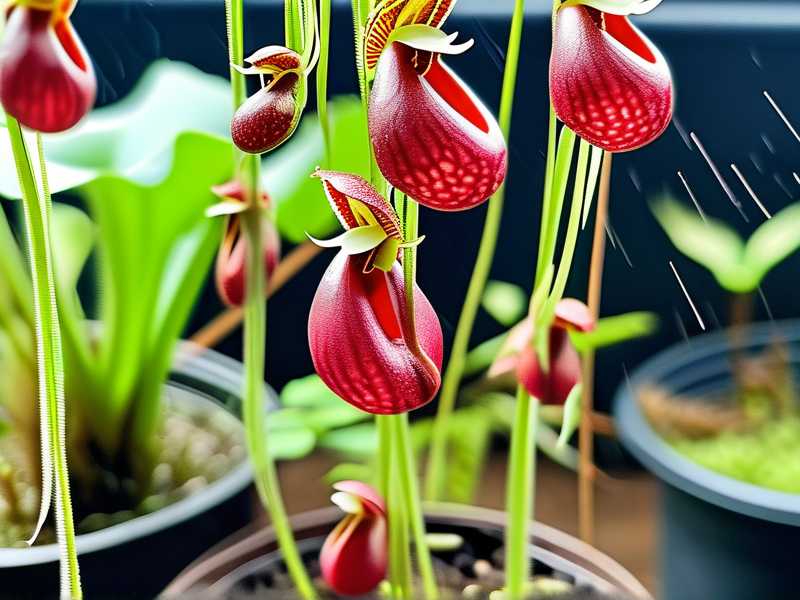
Tap water contains dissolved salts, calcium, and magnesium. Your municipality adds chlorine or chloramine to kill bacteria, which wreaks havoc on the delicate root hairs of Nepenthes. Over time, these minerals accumulate in the potting medium. They raise the pH, block nutrient uptake, and literally burn the roots from the inside out.
The RHS (link above) explicitly warns against using hard tap water for carnivorous plants. Their guidance points to rainwater or distilled water as the only safe options. I learned this after my second plant died. The roots were dark brown, mushy, and the sphagnum moss had a white crust on top — that was the mineral deposit. That crust is your warning sign.
The pH Factor You Cannot Ignore
Nepenthes evolved in tropical rainforests where rain is naturally acidic, around pH 5.5 to 6.0. Tap water usually sits at pH 7.5 to 8.5. That single point of difference changes everything. In alkaline conditions, iron and manganese become unavailable to the plant. Your Nepenthes slowly starves, even if you fertilize.
So when I say "use rainwater," I mean it for the pH, not just the purity. Rainwater falls naturally acidic. It chelates nutrients in the soil, keeping them soluble and accessible. Honestly, it is the closest thing to nature that a home grower can provide.
My Rainwater Collection Setup (Cheap and Simple)
You do not need a fancy rain barrel system. I use a 55-gallon plastic drum I bought at a farm supply store. Here is the exact setup that works for me.
Step 1: Choose the Right Container
I tried a metal trash can once. Big mistake. The metal leached iron and rust into the water, turning it orange. Use food-grade plastic, HDPE, or polypropylene. A dark-colored barrel is better because it blocks light, preventing algae growth.
Place the barrel under a downspout or just leave it in an open area during a storm. I positioned mine under a gutter, but I made sure the first flush went elsewhere. The first few minutes of rain wash dirt, bird droppings, and roof chemicals into the gutter. I let that run onto the lawn, then slide the barrel into place.
Step 2: The Two-Week Rule
Here is the kicker. Stored rainwater can breed mold and mosquito larvae. I keep a tight mesh screen over the top, but I also never store water longer than two weeks. I mark the collection date with a grease pencil on the side. If I have leftover water after 14 days, I dump it on my outdoor ferns and collect fresh.
My observation over many cycles: fresh rainwater (less than one week old) produces visibly healthier new leaves within days. Older water, even if it looks clean, seems to slow growth. I suspect stagnant microbial buildup, but I am not a scientist. I just know what I see.
Step 3: Filter Before Use
I pour the collected water through a fine mesh strainer into a watering can. This catches any debris or mosquito eggs. Then I let it sit in the watering can for 24 hours to reach room temperature. Cold rainwater straight from the barrel shocks the roots. I have lost pitcher formation from that cold shock, so I learned to be patient.
The 14-Day Rainwater Experiment (What I Actually Observed)
I ran a side-by-side test to prove the difference. Two Nepenthes ventricosa, same size, same potting mix, same light. One watered with tap water, the other with rainwater. Here is the daily log, in condensed form.
Days 1 to 3: Preparation and Baseline
Both plants looked identical. The tap water plant had one unopened pitcher. The rainwater plant had one unopened pitcher. I marked each with a twist tie and took photos.
Days 4 to 7: The First Visible Shift
By day four, the tap water plant looked slightly dull. The leaves had lost that waxy sheen. The rainwater plant still looked vibrant. By day seven, the rainwater plant's new pitcher had started to swell and color. The tap water plant’s pitcher remained closed, tip slightly brown.
The roots of the rainwater plant, when I checked a root tip, were white and firm. The tap water plant's roots had a brown tinge. Even I was surprised by how fast the difference appeared.
Days 8 to 10: Pitcher Development
Day nine was the turning point. The rainwater pitcher opened fully, glossy and wide, with a deep red peristome. The tap water pitcher finally opened, but it was smaller, misshapen, and the lid had a scorched look. I have kept that tap water plant separate now. It is slowly recovering, but wow, the contrast.
Days 11 to 14: The Verdict
After two full weeks, the rainwater plant had produced a second new leaf. The tap water plant had not. The difference in growth rate was approximately 30 percent, at least by my eye. I decided right then to never use tap water again, except for my hardier houseplants like pothos.
3 Fatal Mistakes Every Beginner Makes (I Survived All Three)
People ask me all the time, "Why is my Nepenthes dying?" I have killed enough plants to write a list. These are the big three.
Mistake #1: Overwatering (The Root Rot Trap)
I already told you that 90% of indoor plants die from overwatering. Nepenthes are no exception, but they have a twist. They love high humidity, but their roots hate being waterlogged. I used to water mine every single day because I thought the humidity needed to come from the soil.
Wrong.
The humidity should come from the air, not the soil. Water when the top inch of sphagnum moss feels slightly dry to the touch. That is roughly every two to three days in my 70°F greenhouse. Stick your finger in. If it feels like a wrung-out sponge, skip watering. If it feels dry, water with your rainwater.
I lost my first Nepenthes to root rot because the pot was sitting in a tray of standing water. I have never done that again.
Mistake #2: Wrong Light Positioning
I tried growing Nepenthes in a dark bathroom for two months. The plant survived but never pitcher. Then I moved it to a sunny windowsill, but the leaves turned red and crispy. Direct afternoon sun was too intense.
The correct spot is bright, indirect light or morning sun only. In my experience, an east-facing window is perfect. I also use a cheap LED grow light for my highland species. The key is intensity, not duration. If the leaves get red, that is a stress response. If they get dark green and leggy, they are starving for light.
Mistake #3: Using the Wrong Potting Setup
Never use regular potting soil. I did that with my second plant. The peat-based mix held too much moisture, compacted around the roots, and suffocated them. Nepenthes need airy, free-draining media.
My recipe is a 50/50 mix of long-fiber sphagnum moss and perlite. Sometimes I add a little orchid bark. The pot must have drainage holes. A plastic pot is better than terracotta because terracotta wicks away moisture and cools the roots too much. I honestly prefer clear plastic cups for small cuttings, so I can see the root development.
Highlands vs. Lowlands (Rainwater Works for Both, But Timing Differs)
Your watering schedule with rainwater depends on what type of Nepenthes you grow. Highlands (like N. ventricosa or N. sanguinea) prefer cooler nights, down to 50°F. Lowlands (like N. bicalcarata) need constant heat above 75°F. Rainwater works for both, but you must adjust frequency.
For highlands, I water in the morning with room-temp rainwater. That gives the foliage time to dry before nightfall, preventing fungal issues.
For lowlands, I water in the early evening. The warmer nights keep the roots active, and the water evaporates slowly, boosting localized humidity.
How to Test If Your Rainwater Is Good Enough
You can send samples to a lab, but that is overkill. I use a cheap TDS (Total Dissolved Solids) meter from Amazon. It costs about fifteen bucks. Rainwater should read below 20 ppm. My tap water reads about 180 ppm. That stark contrast tells you everything.
If your rainwater reads higher than 30 ppm, it might be picking up runoff from a dirty roof. Add a simple downspout filter or just collect from open air with a wide funnel. I used a tarp held at an angle for a while, funneling straight into the barrel. It worked fine, though I looked ridiculous in the backyard during a storm.
Common Questions After Switching to Rainwater (FAQ)
Does boiled tap water work as a substitute?
No. Boiling removes chlorine but does not remove dissolved solids. The minerals and salts remain. You will still build up deposits in your potting medium. And the American Horticultural Society (link above) points out that letting tap water sit overnight does nothing for mineral content. It only off-gasses chlorine. Use rainwater or distilled water.
I saw white mold on my sphagnum moss after using rainwater. Is that bad?
Stop panicking. A little white mycelium on the moss is harmless and usually means the media is breaking down organically. That actually signals a healthy, active ecosystem. Just gently remove a bit on top if it bothers you. Also check that your barrel is not introducing excess algae. That was my issue early on, and it was just unsightly, not dangerous.
Should I mist my Nepenthes with rainwater?
Yes, but do not obsess. Misting with rainwater helps during the dry winter months when indoor humidity crashes. I do it once a day in the morning. The downside? Constant wet leaves can lead to spotting. I stopped misting mine because my terrarium maintained 70% humidity naturally. If your room is dry, misting helps. If you notice leaf spots, ease off.
A Clean Up Note on Mixing Water Types
Some people ask if they can mix distilled water with rainwater. There is no real benefit. Both are low in minerals. Mixing just dilutes the good stuff, like trace nutrients from atmospheric dust. I use rainwater exclusively now. My tap water is only for my vegetable garden.
Also, never use softened water. A water softener exchanges calcium for sodium, and sodium is much worse for Nepenthes. I made that mistake once with a half-dead plant. It never recovered. Sodium toxicity sucks the water out of the roots.
Dealing With Pest Issues When Using Rainwater
Rainwater can sometimes bring in fungus gnats. Their larvae love damp organic matter. If you see tiny flies hovering, you will need to dry out the top inch of the media for a few days. I also added sticky yellow cards as a monitoring tool. The issue cleared up in a week.
I also wash my barrels once a month with a diluted hydrogen peroxide solution. This kills any biofilm without leaving harmful residue. Rinse thoroughly before collecting again. This will keep your system clean for years.
Final Thoughts on Rainwater for Healthy Pitchers
Switching to rainwater is not just a trend. It is the single most cost-effective upgrade to your Nepenthes care routine. With a $20 barrel and a bit of patience, your plants will thank you with larger pitchers and faster growth. I killed three plants learning this lesson, so trust me. Start collecting today, limit your storage to two weeks, and watch the magic happen.
If you have any lingering doubts, find a tropical pitcher plant forum and ask about tap water. They will give you the same answer, just with more exclamation marks. My greenhouse has never smelled better and my plants have never looked more alive. Do this one change, and you will see the difference in a fortnight. The pitchers crave that untouched, mineral-free droplet straight from the sky. It is all they ever wanted, and all you need to give.





