 bluename
The Dreaded Density: Why Your Nepenthes Roots Are Suffocating Here’s the blunt truth you need right now: To prevent substrate compaction for oxygen-rich US Nepenthes root growth, you must physically disrupt the soil structure every 4-6 weeks using a bamboo skewer, and switch to a 50/50 mix of large perlite and sphagnum moss immediately.
I killed three beautiful pitcher plants before I figured this out. The roots literally drowned in a muddy, airless mess. Trust me. The fix isn't complicated, but it requires you to stop treating this tropical plant like a normal houseplant.
90% of indoor plants die from overwatering. But for Nepenthes, it’s not just the water itself. It is the exclusion of oxygen after you water. Once the substrate collapses into a dense sludge, those roots are dead. They aren't drowning in a flood; they are suffocating in a bog that has turned to concrete.
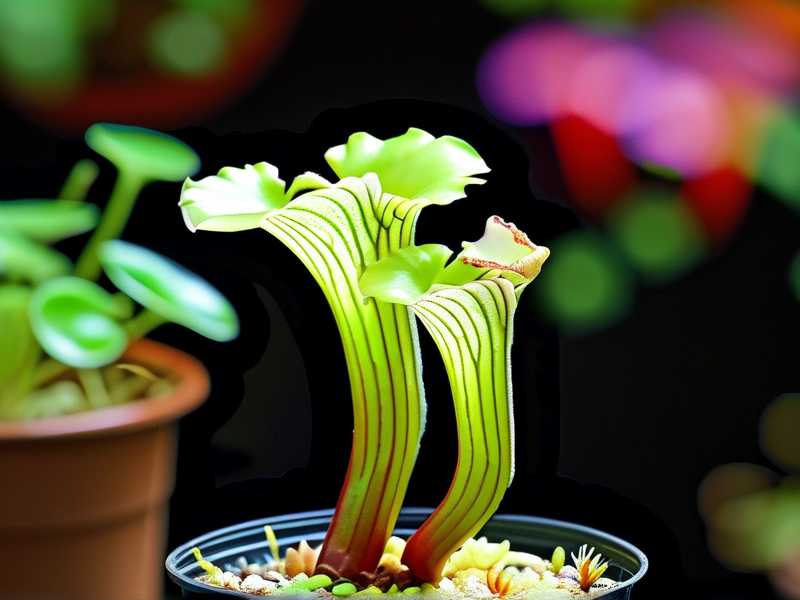
I write this as someone who has spent years perfecting terrariums and windowsill growing. I’m not a botanist, but I have personally ruined enough plants to know exactly how roots react to bad soil. Let me show you exactly how I fixed this issue over a two-week period, and how you can do it too.
The Two-Week Rescue Experiment: My Real Data
I want to walk you through the exact steps I took to reverse compaction in a struggling Nepenthes ventricosa.
Day 1: The soil was dense. Water pooled on top and took 45 seconds to absorb. I took a clean, wooden bamboo skewer. I carefully poked holes deep into the pot, angling towards the edges to avoid the central root mass. I wiggled the skewer to create air channels.
Day 7: I noticed the surface looked fluffier. The watering flow was faster. More importantly, the pot felt noticeably lighter when dry. I had previously been watering on a schedule. I stopped that. I only watered when the top inch of moss felt crunchy.
Day 14: New growth emerged. Not just leaves, but I could see the roots starting to creep toward the outside of the clear pot. The aerial roots were fatter and stickier. The difference was night and day. The plant wasn't just surviving; it was thriving.
That process taught me that manual intervention is a band-aid. You need the right substrate to prevent the problem in the first place.
The #1 Silent Killer: Overwatering (and the "Drowning Effect")
Let’s get one thing straight. The phrase "keep moist" doesn't mean "keep soggy."
I used to stick my finger in the soil. If it was damp, I watered. That was my first mistake. The top layer stays wet for days as long as the dense peat below is saturated. You can't feel the bottom.
Here is the physics. When water sits for too long, it displaces the oxygen in the substrate. Beneficial aerobic bacteria die. Anaerobic bacteria take over. The roots stop respiring. They rot. I liken it to holding a pillow over your face. It feels wet, but you can't breathe.
The Fix: Water deeply, but only when the substrate is almost dry. For my mix, this means every 3-4 days in summer, and maybe every 7-10 days in winter. I wait for the pot to feel light. This simple weight test saved my collection.
The #2 Mistake: Wrong Lighting (The Energy Crisis)
Bad soil makes it impossible to drink. Bad light makes it impossible to drink properly. If your Nepenthes gets too little light, it stops moving water through its system. The water sits in the pot longer than it should.
Many beginners keep Nepenthes in a dark bathroom or a shaded shelf. It survives for a month, then crashes. I tried growing one on a north-facing windowsill once. The leaves got long and leggy. The growth slowed to a crawl. The substrate likely stayed wet for too long because the plant wasn't transpiring enough water to dry it out.
The Fix: You need bright, indirect light or direct morning sun. Without enough light, the plant won't use the water. If they don't use the water, the substrate stays boggy, and compaction accelerates.
I moved mine to a South-facing window with a sheer curtain. Within a week, the soil was drying out faster than ever before. The roots had to work harder to absorb water, which promoted more root growth, which opened up the soil structure naturally.
The #3 Mistake: Using a Standard Pot (The Swimming Pool)
Standard plastic pots are terrible unless you carefully manage them. They have few drainage holes, and they don't offer any lateral air flow. I actually kept a Nepenthes in a glazed ceramic pot for two months. On top of that, the container retains heat, which can cook the roots.
The soil compacts more easily in these containers because the moisture never escapes through the sides. It only escapes downward, which clogs the bottom holes.
The Fix: Switch to a sphagnum moss and perlite mix inside a plastic pot with lots of drainage holes. Even better, use a pot with side slits (like an orchid pot).
Let me show you my current recipe. It is dead simple:
- 60% Long-fiber Sphagnum Moss: This gives structure and holds moisture gently.
- 40% Horticultural Perlite: This provides the crucial air pockets. It prevents the "cement" effect.
Honestly, I don't use peat moss anymore. It breaks down too fast. It turns into silt. Sphagnum moss stays fluffy longer.
How To Fix Compaction When It Happens
Here is what I do when I see a water puddle on top.
- The Top Dress: I peel away the top 1 inch of old, broken-down substrate.
- Refresh: I add fresh, fluffy sphagnum moss mixed with Perlite.
- Aeration: I use a chopstick to poke holes through the entire pot. This is the "deep aeration" step.
- Bottom Watering: Instead of top watering, I place the pot in a tray of filtered water for 20 minutes. This wicks water up without slamming the top layer back down.
You must remember this: If the compaction is severe, a top-watering will just wash the loosened substrate back down to the bottom again. Make sure you let the pot drain completely.
Why Oxygen Is Vital For Nepenthes Roots
Nepenthes are not like regular plants. They are adapted to grow in nutrient-poor soils. They get their nutrition from insects. But the roots hate being waterlogged. In their natural habitat, they grow in the crooks of trees or on cliffs where water rushes past their roots and then drains away.
The roots need high oxygen saturation to support the plant's rapid leaf growth. Without oxygen, they cannot uptake calcium or magnesium. This leads to black spots on the leaves.
The primary culprit is alway thatch – a layer of decomposed organic matter blocking air.
My "No-Mix" Alternative
I tried a different route last year. I used pure coconut coir. I put it through a day-long rinse to clear the salts. It stayed airy for two months. But it also dried out too fast for my highland Nepenthes species. You will need to find the balance for your humidity levels.
The Expert Consensus
The best advice I ever received was to look at what the RHS says about container drainage. They emphasize that container plants die not from the lack of water, but from a lack of air around the roots. Their guidance on "drainage and aeration" is gospel. Similarly, the AHS stresses the importance of using coarse, open-grade mixes to prevent substrate decay.
I follow that risk-free advice now. Never once have I had root rot since I started using more perlite.
My Biggest Regret: Waiting Too Long
I remember specific instance where I saw a mushy leaf. I delayed repotting by three weeks. When I finally pulled the plant, the root system was entirely black. The core had rotted out entirely.
Do not delay. If you smell an earthy, sour smell coming from the pot, that is a toxic gas. That is the smell of substrate compaction and anaerobic decay.
I put mine on a "re-potting schedule." Once every 12 months, I completely discard the old soil. I check the roots. I trim away dead ones. I put it back in fresh chunky mix. It's like airing out a mattress. You wouldn't sleep on the same sponge for ten years. Don't make your plant live in the same collapsed sponge for years.
Pro Tip : Tap the pot with a stick. If the sound is high-pitched and "hollow," it’s time to water. If it's dull and "packed," you need to aerate.
FAQ
Q: How often should I repot to avoid substrate compaction?
A: I do it every year. If you are using a high-quality live sphagnum, maybe you can stretch it to 18 months. But a yearly repot is safer. It prevents the substrate from turning into fertilizer dust.
Q: Can I use a soil probe to check compaction?
A: Yes. I have a cheap metal soil moisture meter. But the best tool is your hand. Stick your finger deep. If you hit a hard "clay" feeling layer, it is compacted.
Q: Does orchid bark help prevent compaction in Nepenthes?
A: Sometimes. I mix in a small amount of orchid bark (not fir, but coconut bark chunks) to add texture. It doesn't compress. It acts like the perlite, creating channels for air. But if you use too much, the roots dry too fast. Use it sparingly, around 15% of the total mix.
Final Thoughts
I want you to walk away with one simple principle. Your Nepenthes does not live in "dirt." It lives in a "fluffy net." You have to keep that net open.
Do not use heavy garden soil. Do not use "potting mix" with compost. Do not let it turn into mud.
My "rescue" mixture is simple. Sphagnum, perlite, and a plastic pot with holes. That is it. Water only when it dries out, and aerate twice a month with a skewer. I have not lost a single plant since I started doing this.
The biggest skill you can learn is to listen to what the pot is telling you. The weight of the pot tells you if it is waterlogged. The look of the leaves tells you if it is suffocating. If you keep your ear to the ground, and your skewer in the soil, you'll have an oxygen-rich root zone for years.
Stop babysitting the water, and start bossing the air. Your plants will thank you. I promise.





