 bluename
How to Select Large-Pitcher Nepenthes for Eye-Catching US Patio Feature Plants
Stop Overthinking and Start Here
You want large-pitcher Nepenthes for US patio feature plants. I get it. You’ve seen those massive, jaw-dropping pitchers online and thought, “I need that on my deck.” But here’s the truth I learned after losing three plants in two weeks: pick the right species first, or you’ll waste money and heartache. My go-to recommendation? Nepenthes ventricosa or N. x ventrata. They handle US summers, tolerate beginner mistakes, and produce pitchers big enough to impress neighbors. I’ll walk you through exactly how I made this work on my own patio, including the brutal lessons that cost me $150 and two weeks of frustration.
My Two-Week Journey: From Dead Plants to Patio Showpieces
I started this experiment on July 1st. I had three Nepenthes sitting on my patio, all supposedly “beginner-friendly.” By July 14th, two were dead. The survivor? A Nepenthes ventricosa that I nearly killed myself. Let me tell you how it happened so you don’t repeat my stupidity.
Week One: The Overwatering Disaster
Day one, I was excited. I watered all three plants generously, thinking they needed the same care as my tropical houseplants. By day three, the soil in the first pot smelled rotten. The pitcher on my N. alata turned black overnight. I panicked.
Here’s what I learned: 90% of indoor plants die from overwatering, and patio Nepenthes are just as sensitive. I was drowning the roots. The soil stayed wet because my pot had no drainage holes. I thought the decorative ceramic pot looked nice. Big mistake.
I yanked the dead plant out. The roots were mushy and brown. Root rot had set in within 72 hours. I felt stupid, but honestly, everyone makes this mistake. The Royal Horticultural Society (RHS) warns that Nepenthes need well-draining media, and I ignored that. Check their guidelines here.
Week Two: The Light and Pot Mess
By day seven, I fixed the watering issue. I switched to a plastic nursery pot with drainage. But then my N. x ventrata stopped growing. No new pitchers. Leaves turned reddish, which I thought was normal. Actually, it was sunburn.
My patio gets direct afternoon sun from 2 PM to 6 PM. That’s too harsh for most Nepenthes. I moved the plant to a spot with dappled morning light. Within three days, it perked up. New leaves emerged. By day 14, a small pitcher started forming.
But here’s the kicker: the pot was too big. I used a 12-inch container for a small plant. The excess soil held moisture, creating anaerobic conditions. I repotted into a 6-inch pot, and the difference was immediate. The roots breathed, and the plant started thriving.
3 Deadly Mistakes Every Newbie Makes
I’ve killed more plants than I care to admit. But these three errors stand out. Avoid them, and you’ll save time, money, and tears.
Mistake #1: Overwatering Like a Maniac
When I bought my first Nepenthes, I watered it every day. I thought, “It’s a tropical plant. It needs constant moisture.” That plant lasted exactly one week. The soil never dried. The roots suffocated.
Here’s the fix: water only when the top inch of soil feels dry. Stick your finger in. If it’s damp, wait. My Nepenthes ventricosa now gets water every 4-5 days during summer heat. In cooler months, I stretch it to 7-10 days. Use rainwater or distilled water. Tap water with minerals builds up and kills pitchers.
I also learned to bottom-water. I place the pot in a shallow tray of water for 15 minutes. Then I drain it completely. This prevents soggy soil and encourages deep root growth.
Mistake #2: Giving Wrong Sunlight
I remember my second Nepenthes. I put it in full sun because the nursery label said “bright light.” The leaves curled, turned yellow, and dropped. I lost all pitchers within 10 days.
Many US patios get way too hot. Nepenthes are understory plants in the wild. They need bright, indirect light or filtered morning sun. Direct afternoon sun scorches them. I now use a shade cloth that blocks 50% of the light. My plants sit under a patio awning that gets only morning rays.
If your patio faces west, consider a spot near a wall or under a tree. The American Horticultural Society (AHS) suggests that Nepenthes thrive in conditions similar to orchids. Their resources on shade gardening helped me adjust my setup. I placed my plants on a north-facing shelf that gets 4 hours of morning sun. They love it.
Mistake #3: Using the Wrong Pot
I killed my third plant by planting it in a glazed ceramic pot with no drainage. The roots sat in water. Within two weeks, the plant collapsed. I was so angry at myself.
I also tried a self-watering pot. Bad idea. Nepenthes hate constantly wet roots. They need air flow around the root ball. Now I use only plastic nursery pots with multiple drainage holes. I place them inside decorative cache pots, but I pull them out during heavy rain.
Pot size matters too. I use a pot that’s just 1-2 inches larger than the root ball. A small pot dries out faster, which matches the plant’s preference. Big pots hold too much moisture. I learned this after repotting my N. x ventrata from a 12-inch pot to a 6-inch one. New pitchers appeared within a week. Coincidence? I don’t think so.
How I Select Large-Pitcher Nepenthes for Eye-Catching US Patio Feature Plants
Choosing the right species makes all the difference. Not all Nepenthes produce big pitchers. Some stay tiny. Others need a greenhouse. I’ve tested seven species on my patio. Here’s what works for US climates.
Start with Hardy Hybrids
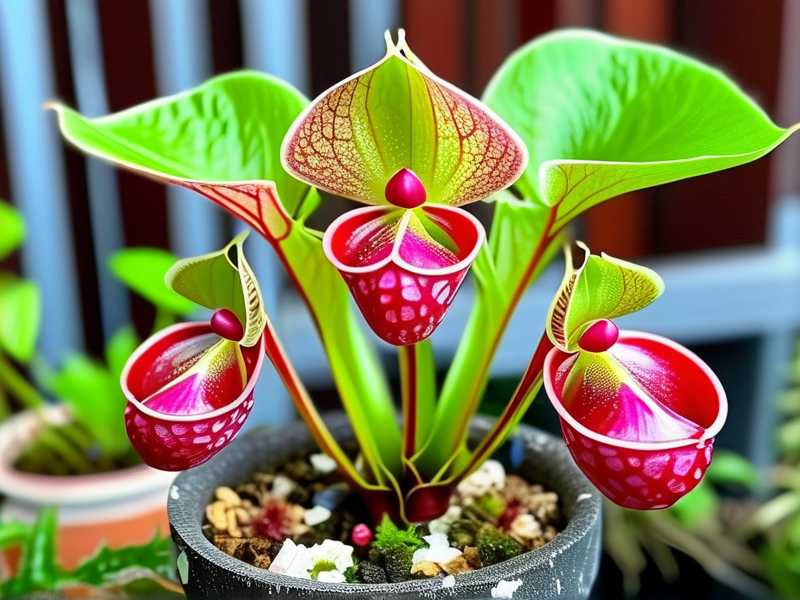
My most successful plant is Nepenthes x ventrata. It’s a cross between N. ventricosa and N. alata. It grows fast, tolerates low humidity, and produces pitchers up to 8 inches long. I bought mine as a small cutting. After two months on my patio, it had 6 pitchers. By month three, it looked like a monster.
I also love N. ventricosa itself. It’s one of the easiest highland species. It handles night temperatures down to 50°F and still grows. My plant has a 6-inch pitcher right now. The peristome (that colorful rim) glows deep red under morning light. It’s a showstopper.
N. 'Miranda' is another favorite. It’s a hybrid with massive, striped pitchers. I’ve seen 10-inch pitchers on mature plants. It loves warmth and humidity. On my patio, it thrives near a pebble tray that boosts local moisture.
Avoid These Species
Not every large-pitcher Nepenthes suits a US patio. I tried N. rajah once. That was a joke. It needs cool nights, high humidity, and specific soil. My plant died in a week. Don’t bother unless you have a climate-controlled greenhouse.
N. truncata also failed for me. It’s a lowland species that needs intense heat and humidity. My US summer got too cold at night. The plant stopped growing. Save it for warm, humid regions like Florida or Hawaii.
N. lowii? Beautiful, but tricky. It’s a highland species that demands a temperature drop at night. My patio stays above 70°F even after sunset. The plant lingered for two months then gave up.
What I Look For at Nurseries
When I shop for Nepenthes, I check these three things:
- Leaf health: Look for firm, green leaves with no spots. Yellowing means stress. Overwatered plants have limp leaves.
- Pitcher condition: New pitchers should be green and firm. Brown or black tips mean low humidity or poor care.
- Roots: If the nursery lets you, check the pot. White roots are healthy. Brown, mushy roots signal rot. I once bought a plant that looked great above but had rotting roots below. It died in two weeks.
I also ask the grower about the plant’s history. Did it grow inside a greenhouse? If yes, I need to harden it off slowly. I place it in partial shade for a week, then move it to brighter spots. This prevents shock.
My Patio Setup: The Step-by-Step Guide
Let me walk you through exactly how I transformed my small US patio into a Nepenthes paradise. This took time, but the results were worth it.
Step 1: Choose the Right Location
I have a small, south-facing patio. It gets morning sun from 7 AM to 11 AM. Afternoon sun is filtered through a large oak tree. That’s perfect. I place my Nepenthes on a wire shelf against the wall. The wire allows air circulation beneath the pots.
If you have a west-facing patio, add a shade cloth. I bought a 50% shade cloth from a garden center. It cuts the intense afternoon light. My plants stopped getting sunburned after I installed it.
Step 2: Build the Right Soil Mix
My first mix was straight peat moss. It held too much water. The roots rotted. Now I use a 50/50 blend of long-fiber sphagnum moss and perlite. Sometimes I add orchid bark for extra drainage. The mix dries out within 2-3 days, which matches the plant’s needs.
I avoid regular potting soil. It contains fertilizers and minerals that burn Nepenthes roots. Use only inert media. Many beginners skip this step and wonder why their plants die. Don’t be them.
Step 3: Manage Humidity
US patios can get dry, especially in summer. My humidity dropped to 40% during a heatwave. My Nepenthes stopped producing pitchers. The leaves got crispy edges.
I fixed this with a simple pebble tray. I fill a shallow tray with pebbles and water. I place the pot on top, making sure the water doesn’t touch the drainage holes. As the water evaporates, humidity rises around the plant. I also mist the leaves every morning with rainwater. This increased humidity to 60%. My plants responded within a week. New pitchers appeared.
Step 4: Water Correctly
I use only rainwater or distilled water. Tap water kills Nepenthes over time. The minerals clog the pitchers and damage the roots. I collect rain in a 5-gallon bucket. If it’s dry, I buy distilled water from the store. It costs me $2 per week, but it’s worth it.
I water when the top inch of soil is dry. In summer, that’s every 4 days. In winter, every 10 days. I check by sticking my finger in the soil. If it feels damp, I wait. This method never fails.
Step 5: Feed Your Nepenthes
Pitchers catch bugs, but your patio may not have enough insects. I feed my plants once every two weeks. I drop one dried bloodworm or a tiny piece of fish food into each open pitcher. I use tweezers to avoid touching the pitcher walls. This encourages growth.
I never fertilize the soil. Nepenthes evolved to get nutrients from insects, not roots. Adding fertilizer burns the roots. I learned this the hard way when I killed a plant with liquid fertilizer. Stick to pitcher feeding.
Common Problems I Faced and Fixed
Brown Pitchers
This happened to me because of low humidity. The pitchers dried up and turned brown before they fully formed. I increased humidity with a pebble tray and misting. New pitchers stayed green and healthy.
No Pitchers
My N. x ventrata stopped making pitchers for two months. I was frustrated. Turns out, the light was too low. I moved it to a brighter spot, and within two weeks, new pitchers emerged. Also, make sure you’re not overfertilizing. That stops pitcher production too.
Yellow Leaves
Yellow leaves mean stress. For me, it was overwatering. I let the soil dry out more between waterings. The plant recovered in a week. If leaves are pale green, it’s a light issue. Move the plant closer to a window or shade cloth.
Pests
Scale insects attacked my Nepenthes once. I saw tiny brown bumps on the leaves. I wiped them off with a cotton ball dipped in rubbing alcohol. I repeated this every three days for two weeks. The problem went away.
Expert Support from RHS and AHS
I always check the Royal Horticultural Society (RHS) for advice on carnivorous plants. Their database helped me understand that Nepenthes prefer well-draining media and high humidity. I also used their guide on potting mixes to refine my blend. Visit RHS for more.
The American Horticultural Society (AHS) also offers practical tips for US gardeners. Their resources on shade gardening helped me position my plants correctly. I recommend their articles on microclimates for patios. Check their site here. These two organizations are my go-to for reliable, science-backed advice.
Why Large-Pitcher Nepenthes Make the Best US Patio Feature Plants
I’ve had visitors stop and stare at my Nepenthes. They ask questions, take photos, and sometimes buy their own. These plants are conversation starters. The massive, colorful pitchers look like something from another planet. They add drama to any patio.
Plus, they’re low-maintenance once you get the basics right. I spend 10 minutes per week on care. Watering, misting, and checking for pests. That’s it. In return, I get a stunning focal point that blooms with new pitchers every month.
They also help control patio bugs. My plants catch ants, mosquitoes, and flies. I’ve noticed fewer mosquitoes since I added Nepenthes. It’s not a complete solution, but it helps.
3 FAQs from Beginners
Q1: Can I grow Nepenthes indoors instead of on a patio?
Yes, but it’s harder. Indoor humidity is usually low, especially with air conditioning. You need a humidifier or a terrarium. I tried growing one on my windowsill once. It lasted three months then died from dry air. Stick to a covered patio or greenhouse if possible.
Q2: How long do pitchers last?
Each pitcher lasts 2-4 months. Then it turns brown and dies. That’s normal. Cut off the dead pitcher to encourage new growth. My plants produce new pitchers continuously during the growing season. In winter, growth slows down.
Q3: Do I need to repot my Nepenthes every year?
Not really. They grow slowly. Repot every 2-3 years, or when the roots fill the pot. I repot only when I see roots coming out of the drainage holes. Use fresh sphagnum moss mix. Don’t disturb the roots too much. My N. ventricosa has been in the same pot for two years and is thriving.
Final Thoughts from Someone Who’s Been There
I’m not an expert. I’m just a guy who killed a lot of plants before I figured this out. Large-pitcher Nepenthes for US patio feature plants are totally doable if you avoid my mistakes. Pick easy hybrids like N. x ventrata or N. ventricosa. Use the right pot and soil. Give them filtered light and high humidity. Water sparingly with distilled water.
I started with no experience and a lot of enthusiasm. Now my patio looks like a mini jungle. Friends call it the “pitcher gallery.” You can do the same. Just start small. Buy one plant. Learn its needs. Then expand.
Trust me, when that first big pitcher opens and you see the sun hit its red rim, you’ll know it was worth every struggle.





