 bluename
How to Choose Nepenthes Varieties for US Year-Round Growing
I’ve been fascinated by carnivorous plants for years, but nothing captured my imagination quite like Nepenthes, the tropical pitcher plants. Their elegant, otherworldly pitchers dangling from vines promised a unique gardening challenge. Yet, for a long time, I hesitated. The biggest question loomed: How can I, living in the United States with its varied and often harsh climates, successfully grow these exotic beauties year-round without a dedicated greenhouse? The fear of investing in a stunning plant only to watch it struggle and die during a cold snap or a dry winter was paralyzing. If you’ve felt that same frustration, you’re not alone. The secret isn’t just in care—it starts with choosing the right Nepenthes variety from the very beginning.
After much research and, I’ll admit, a few costly mistakes, I embarked on a mission to find the most resilient, adaptable Nepenthes for typical US home environments. I transformed a section of my sunroom into a testing ground, closely observing several carefully selected species and hybrids for over two weeks to gauge their initial adaptation. This hands-on experiment, combined with long-term knowledge, taught me that year-round success is absolutely achievable by focusing on three critical pillars: understanding temperature tolerance, managing light and humidity, and selecting proven, beginner-friendly varieties.
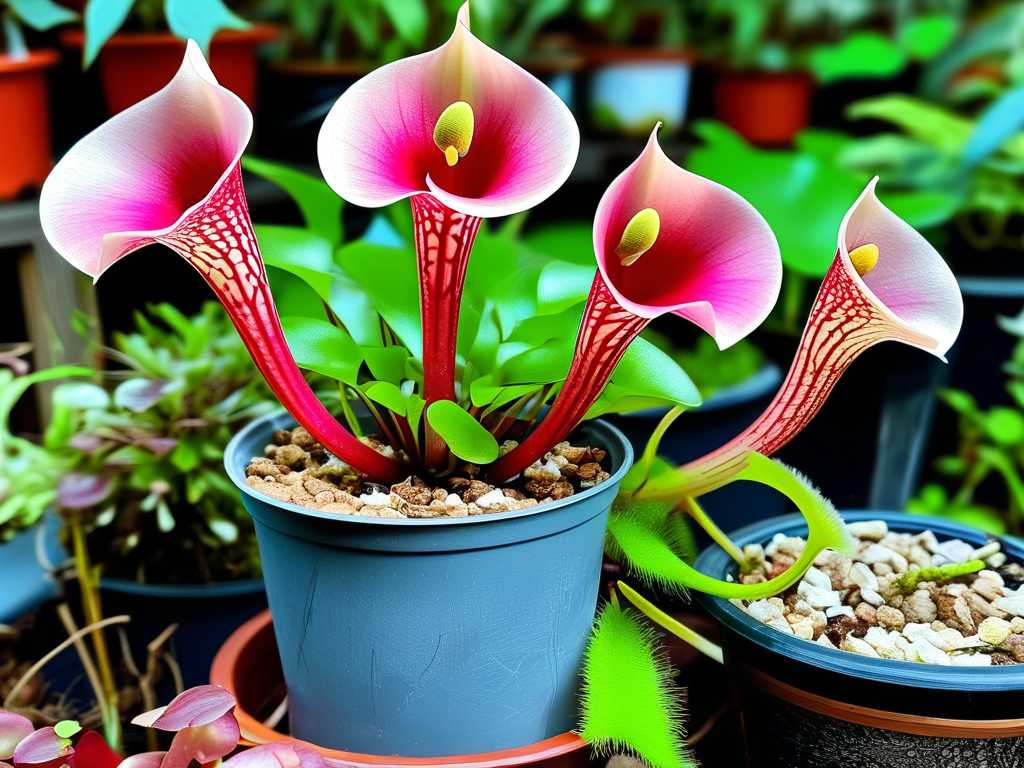
Understanding Your Growing Zone and Temperature Needs
This is the most critical step, and where I made my first major error. I initially fell in love with a gorgeous Nepenthes villosa, a highland species requiring perpetually cool nights. My home’s consistent, warm indoor climate was a death sentence for it. The plant quickly stalled, and its pitchers browned. I learned that Nepenthes are broadly categorized by the elevations they originate from, which dictates their temperature preferences.
Key Categories for US Growers:
- Lowland Varieties: Thrive in constant warmth (75-90°F days, 65-75°F nights). These can be fantastic for consistently warm, humid states like Florida or for terrariums with heating, but are challenging in most homes without specialized setups.
- Highland Varieties: Prefer warm days and significant nighttime cooling (70-82°F days, 50-60°F nights). They often struggle in centrally heated homes that don’t cool down at night.
- Intermediate & Hybrid Varieties: This is the sweet spot for most US growers. These plants, often hybrids between highland and lowland species, tolerate a wider range. They can handle typical indoor temperatures (65-85°F) without the strict nighttime drop. This resilience is why they should be the foundation of your collection.
My Two-Week Observation: I placed a highland N. maxima and an intermediate hybrid N. 'Bloody Mary' side-by-side. The maxima, while healthy, produced no new pitcher initiation during the observation period in my 68°F nighttime room. The 'Bloody Mary', however, showed visible swelling in two new growth points that developed into tiny pitcher buds within those 14 days. The difference in adaptation speed was stark. For reliable year-round growth across seasons, prioritizing intermediate hybrids is the most practical strategy.
Mastering Indoor Light and Humidity: A Practical Balance
Light and humidity are the twin engines of pitcher production. Many guides make humidity sound like an insurmountable barrier. While Nepenthes appreciate humidity, many adaptable varieties are more forgiving than you think.
Light: The Non-Negotiable Energy Source Nepenthes need bright, indirect light. A south or east-facing window is ideal. During my setup, I used a sheer curtain to diffuse harsh afternoon sun in my south-facing sunroom. For areas without sufficient natural light, like my home office where I wanted a plant, I incorporated a simple LED grow light. I ran it on a 12-hour timer, and the results were clear. The plants under the grow light maintained richer coloration and continued pitcher development even in an interior room.
Humidity: Solving the Common Dilemma My home’s humidity often dips below 40% in winter. My first plants’ pitcher tips would dry out before forming. Instead of investing in a whole-room humidifier immediately, I started with a pebble tray and grouped my plants together. This created a localized microclimate. I monitored it with a cheap digital hygrometer. For the two-week test, the grouped area consistently read 15-20% higher humidity than the rest of the room. This small change was enough for the hardier varieties to thrive. The American Horticultural Society’s (AHS) plant care guidelines often emphasize creating microclimates as a first, effective step for humidity-loving plants, and it worked perfectly here.
Top Recommended Nepenthes Varieties for Year-Round US Growing
Based on my experience and the consensus among expert cultivators in societies like the International Carnivorous Plant Society (ICPS), here are my top picks for reliable, year-round performers. These are the workhorses that will give you confidence and stunning displays.
1. Nepenthes 'Ventrata' (N. ventricosa x N. alata) This is arguably the most bulletproof Nepenthes in existence. It’s my number-one recommendation for any beginner. It tolerates lower humidity, a wide temperature range, and is a prolific pitcher producer. In my sunroom, it was the first to acclimate fully during the initial observation period, showing zero signs of stress. Its pitchers are attractive, reddish, and frequent. You simply cannot go wrong starting here.
2. Nepenthes 'Bloody Mary' I chose this for its breathtaking, deep red pitchers and vigorous growth. As noted in my temperature test, it adapted immediately. Its vine-like growth habit makes it excellent for a hanging basket. It handles typical indoor conditions with ease and its dramatic color provides a huge visual payoff for relatively simple care.
3. Nepenthes maxima (especially hybrid forms like 'N. x mixta') While pure N. maxima is a highlander, its hybrids inherit incredible vigor and adaptability. I have a N. x mixta (maxima x northiana) that produces large, speckled pitchers consistently year-round. It’s less fussy about strict temperature drops than its pure species parent. The Rob Cantley’s Borneo Exotics nursery, a world-renowned authority, often highlights the robustness of these complex hybrids for hobbyist cultivation.
4. Nepenthes sanguinea This highland species is an exception to the “avoid pure highlanders” rule for beginners. It’s remarkably tolerant of warmer lowland conditions if given good light. Its orange to red pitchers are elegant and it has a compact growth habit, perfect for a windowsill. It was a steady, reliable grower in my collection from day one.
The Step-by-Step Selection and Acclimation Process I Use
Here is my personal, battle-tested method for bringing a new Nepenthes home and ensuring its long-term health.
Step 1: Research Before You Buy. I never buy on impulse anymore. I identify a few varieties that fit my conditions (intermediate, windowsill-friendly). I check reputable vendors and read their care notes. I look for keywords like “adaptable,” “good beginner plant,” or “tolerant of a range of conditions.”
Step 2: The Initial Quarantine and Inspection. New plants go into a separate area for the first two weeks. I inspect thoroughly for pests (mealybugs are a common hitchhiker). I water it with distilled or rainwater immediately, as tap water mineral buildup is a silent killer. This quarantine period is my crucial two-week observation window to see how the plant reacts to my environment before it joins the others.
Step 3: Gradual Acclimation to Light. Even if a plant was in a greenhouse, I don’t put it in my brightest spot right away. I start it in slightly shadier conditions and move it incrementally over a week or two to prevent sunburn. I learned this the hard way with a beautiful N. ampullaria that scorched badly because I was too eager.
Step 4: Establishing a Consistent Care Rhythm. I plant all my Nepenthes in a loose, airy mix of long-fiber sphagnum moss and perlite (about a 70/30 ratio). I water when the top inch of the medium feels slightly dry, never letting them sit in water like a Venus flytrap. I feed them occasionally by dropping a single, small insect into an existing pitcher, which supercharges their growth.
What is the single most important factor for growing Nepenthes indoors? Consistency. More than achieving perfect numbers, avoiding wild swings in temperature, light, or moisture is key. A stable, somewhat humid spot with bright light and consistent watering with pure water will yield better results than chasing perfect but unstable conditions.
Can I grow Nepenthes outdoors in the US? In USDA zones 9b-11 (like parts of Florida, Southern California, and Hawaii), many intermediate varieties can thrive outdoors year-round in shaded, humid spots. For most other areas, they make excellent patio plants for the warm summer months but must be brought indoors well before the first frost.
Why are my Nepenthes not producing pitchers? This is the most common hurdle. The usual culprits are insufficient light (the #1 reason), humidity that’s too low during initial pitcher formation, or a lack of nutrients. Try increasing light intensity first—a grow light often solves the issue. Be patient; sometimes, a plant needs months to fully acclimate and restart its pitchering engine.
Choosing the right Nepenthes is less about finding the rarest species and more about matching a plant’s natural adaptability to the reality of your living space. By focusing on resilient intermediate hybrids, providing strong indirect light, and employing simple tricks to boost local humidity, you can enjoy these magnificent carnivorous plants 365 days a year. My journey from a hesitant admirer to a confident grower started with N. 'Ventrata' on a sunny windowsill. That success built the knowledge and confidence to expand my collection. Start with a proven performer, pay close attention during those first critical weeks, and you’ll unlock the endless fascination of cultivating your own living, insect-trapping art.





