 bluename
How to Keep Nepenthes Alive in North American Cold Winters: A Grower’s Survival Guide
I’ll be honest, the first time winter approached and I looked at my collection of tropical pitcher plants, or Nepenthes, I felt a knot of dread. I’d spent months nurturing them, only to face the seemingly impossible challenge of a North American winter. My central heating was drying out the air, daylight was scarce, and cold drafts lurked everywhere. The common fear among enthusiasts is clear: these jungle natives are doomed once the temperature drops. I was determined to prove that wrong. Through trial, error, and a two-week intensive observation period, I developed a reliable system. This guide is the result of my hands-on experience, the mistakes I made, and the solutions that finally worked.
Understanding the Core Challenge: It’s Not Just About Temperature
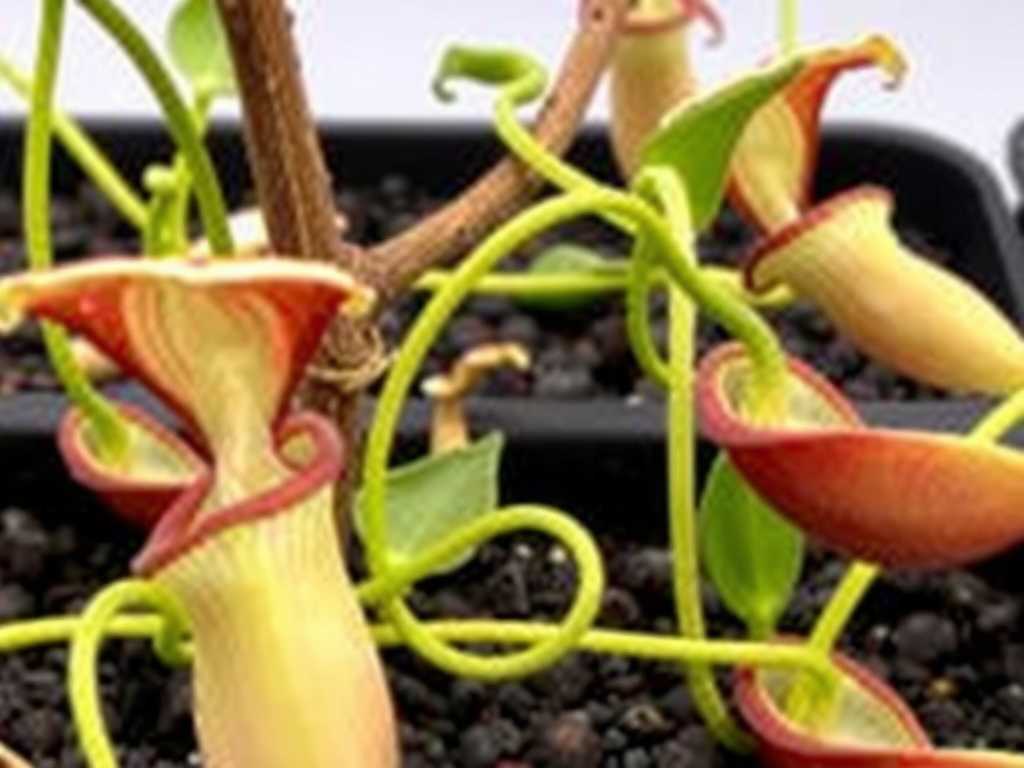
Most care sheets vaguely say “Nepenthes hate the cold,” but that’s an oversimplification. The real enemy is the combination of factors: low light, dry air from heating systems, and cold roots. A brief chill might not kill a plant, but sustained, damp cold coupled with darkness will. My goal became not to recreate summer, but to provide a stable, minimally stressful environment for dormancy-like survival.
My Two-Week Winterization Experiment and Setup
I selected three representative plants for a closely monitored transition: a hardy Nepenthes ventricosa, a more intermediate N. x ‘Miranda’, and a touchier highland N. sanguinea. The experiment lasted for two full weeks as I moved them from their outdoor summer spot to their final winter quarters.
Step 1: The Great Indoor Migration – Timing is Everything I didn’t wait for the first frost. The trigger was when nighttime temperatures consistently dipped below 50°F (10°C). Bringing them in earlier avoids cold shock. I placed all plants in a bright, transitional bathroom (for humidity) for 48 hours to acclimate and check for pests—a crucial quarantine step I learned the hard way after once introducing aphids to my entire collection.
Step 2: Choosing and Preparing the Winter Quarters A sunny south-facing windowsill is the classic solution, but it has pitfalls. At night, temperatures by a single-pane window can plummet. My solution was to use a thermal mass barrier. I placed each pot on a thick Styrofoam block to insulate the roots from the cold windowsill. For the N. sanguinea, which prefers cooler nights, I placed it closer to the glass. The ventricosa and ‘Miranda’ were positioned slightly further into the room.
Step 3: The Humidity Battle – Low-Tech Wins Heated air dropped my room’s humidity to a parched 30%. My first failed attempt was misting; it was sporadic and raised humidity for mere minutes. The solution was a humidity tray. I filled wide, shallow trays with pebbles, added water just below the top of the pebbles, and set the pots on top. This created a stable, localized humid microclimate. Within the first week of this setup, I observed that existing pitchers stopped drying out at the tips.
Step 4: Watering for Dormancy – Less is More This was my biggest mistake. I initially watered as I did in summer, keeping the media sopping wet. In lower light and cooler temperatures, the plants’ growth and water uptake slowed dramatically. By day 5 of my experiment, the N. sanguinea showed signs of root stress—slightly yellowing lower leaves. I immediately let all pots dry to just “damp” before watering again. I switched to watering with lukewarm water (not cold tap water) in the mornings, allowing excess to drain fully. This single change stabilized the plants for the remainder of the observation period.
Step 5: Supplemental Lighting – A Game Changer The natural light from my south window was insufficient, especially during a week of overcast days. Growth stalled. I installed a simple, full-spectrum LED grow light panel on a timer, set for a 12-hour cycle to supplement the natural daylight. The effect was noticeable by the end of the second week. The N. ventricosa actually initiated a new, small pitcher, a sign it was accepting its new conditions rather than merely surviving.
Key Observations and Pitfalls from My 14-Day Log
- Days 1-3: Plants looked slightly wilted from the change in humidity. Humidity trays mitigated this by Day 4.
- Days 4-7: Overwatering symptoms appeared on N. sanguinea. Correcting watering frequency resolved further yellowing.
- Days 8-14: With stable humidity, corrected watering, and supplemental light, all plants stabilized. Leaf color deepened, and no further pitcher loss occurred. The N. ‘Miranda’ even maintained the turgidity of its largest pitcher.
The takeaway was clear: consistency in the microclimate was far more important than chasing a single perfect temperature.
Advanced Strategies for Severe Climates
For growers in regions with brutal winters and very little sun, a dedicated indoor setup may be necessary. A terrarium or a small greenhouse cabinet with LED lights and a small humidifier offers complete control. The International Carnivorous Plant Society (ICPS) notes that for highland species, a drop in nighttime temperature is beneficial and can be achieved by turning off the cabinet’s heater or light for a period. However, they caution against letting temperatures fall below 45°F (7°C) for most common hybrids, a guideline I’ve found essential.
Addressing Light and Heat Myths
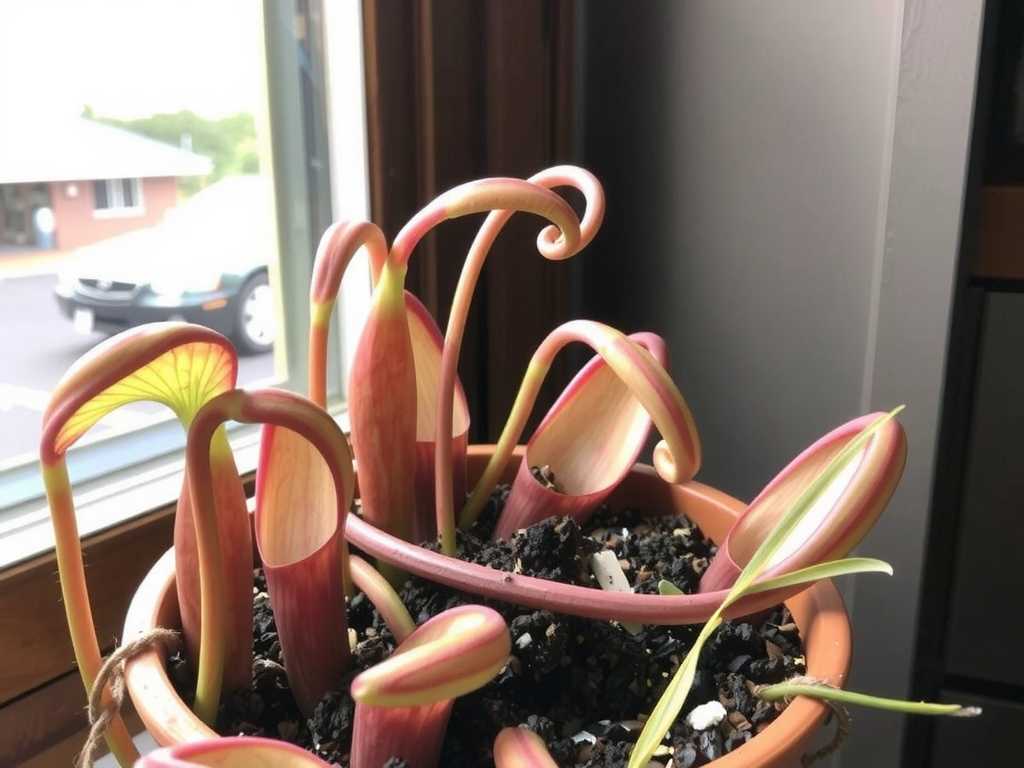
A common piece of bad advice is to place plants directly over a heat vent. This is a death sentence, causing rapid dehydration. Similarly, while grow lights are fantastic, they must be placed at the correct distance (12-18 inches typically) to prevent leaf burn. I learned this by scorching a leaf on my ventricosa during an early test—another valuable lesson in gradual adjustment.
Can I Use a Greenhouse or Unheated Porch? This depends entirely on your zone and the setup. An unheated porch that regularly freezes is unsuitable. However, a minimally heated greenhouse that stays above 45°F (7°C) can work, especially for hardier species like N. ventricosa or N. x ‘Ventrata’. The American Horticultural Society’s (AHS) plant heat-zone map can be a useful companion to the hardiness zone map, reminding us that winter plant stress isn’t just about cold, but about the plant’s overall metabolic experience.
What if My Plant Loses All Its Pitchers? Don’t panic! This is a common and expected conservation strategy. The plant is sacrificing its most energy-intensive organs to preserve its core. As long as the growing tip (the crown) is green and firm, and the leaves are mostly healthy, your plant is alive and likely just hibernating. Focus on keeping the crown dry during watering to prevent rot. New pitchers will form when conditions improve in spring.
When Spring Returns – The Re-Acclimation Process Don’t rush them back outside! Once nighttime temperatures are reliably above 50°F (10°C), begin by placing them in a shaded, protected outdoor spot for a few hours a day, gradually increasing their exposure over 1-2 weeks. This prevents sunburn on leaves adapted to lower indoor light. Resume your summer watering and feeding schedule as you see active new growth.
Successfully overwintering Nepenthes is about proactive management of their entire environment, not just the thermometer. By insulating roots, battling dry air with passive humidity, drastically reducing watering, and supplementing light, you can guide your plants through the cold months. My two-week intensive test proved that stability trumps perfection. Start the process early, observe your plants closely, and adjust one variable at a time. Your patience will be rewarded come spring, when the first new pitcher begins to swell.





