bluename
 How to Pick Best Nepenthes Varieties for US Spring Gardens: The Ultimate Selection Guide
Spring in the US brings a surge of gardening energy, but for carnivorous plant enthusiasts, it also brings confusion. You stand at the nursery or scroll through online catalogs, faced with hundreds of exotic names. Choosing the wrong variety can lead to melted pitchers and dead vines within weeks. How to Pick Best Nepenthes Varieties for US Spring Gardens is not just about aesthetics; it is about matching the plant’s native climate to your specific US hardiness zone and indoor environment.
Many new growers make the fatal mistake of buying a "cool" looking tropical plant without checking its temperature tolerance. In the United States, spring weather is volatile—warm days are often followed by freezing nights. This guide cuts through the noise to help you select resilient, thriving pitcher plants that will survive the transition from indoor wintering to outdoor summer displays.
Understanding Your Microclimate: The First Step
Before looking at photos of vibrant pitchers, you must analyze your growing space. The US spans zones 3 through 10, but most Nepenthes are tropical epiphytes that cannot tolerate frost.
Indoor vs. Outdoor Spring Conditions
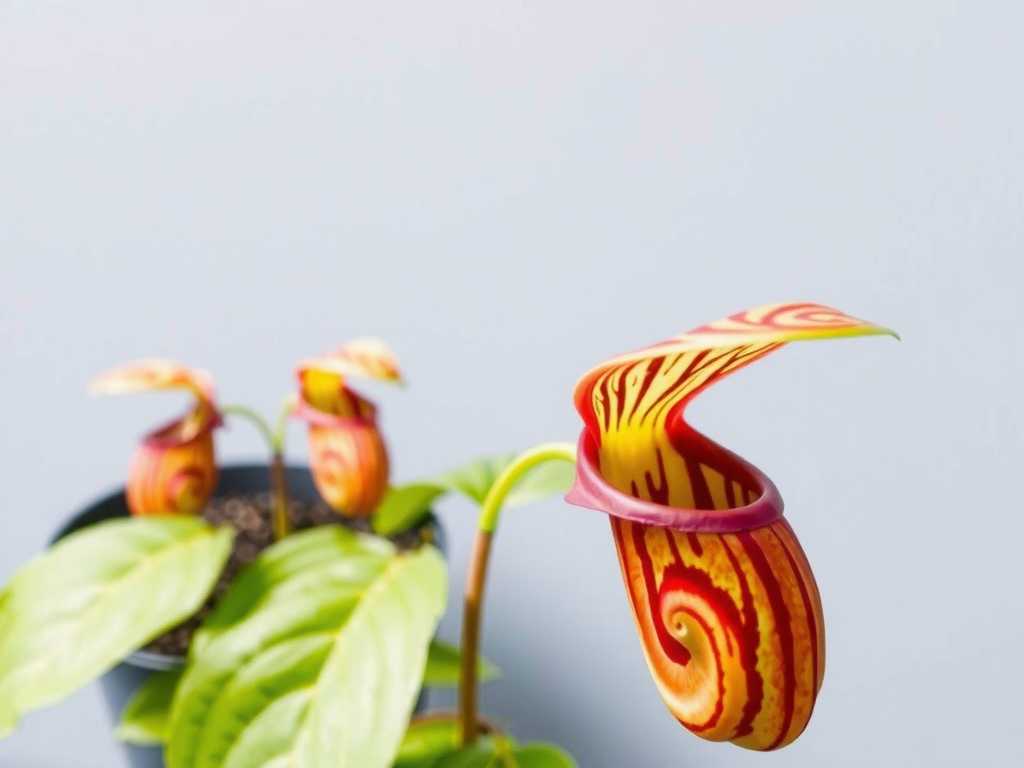
If you live in Zone 9 or 10 (Southern California, Florida), you might eventually grow them outdoors year-round. However, for 80% of the US population (Zones 5-8), spring means moving plants from a windowsill to a porch or greenhouse.
You need varieties that tolerate the "indoor grind"—central heating, lower humidity, and fluctuating light. Cold hardy nepenthes for sale is a common search term, but true cold hardiness is rare. Most "hardy" varieties simply tolerate cooler nights (50°F) rather than freezing temperatures.
The Highland vs. Lowland Distinction
This is the most critical classification in carnivorous plant selection. Nepenthes are generally divided into two groups based on their native elevation.
Highland Varieties (The Safe Bet for Spring)
Originating from mountains 3,000+ feet above sea level, these plants prefer cooler nights (50-70°F) and moderate days (75-85°F).
Why they work: They adapt well to typical US spring temperatures and central heating.
Examples: Nepenthes ventricosa, N. alata, N. sanguinea.
Tip: If you have a cool basement or a heated garage that stays above 50°F, these are your best picks.
Lowland Varieties (The High-Maintenance Beauty)
These grow at sea level and require consistently hot, humid conditions (nights above 70°F).
The Risk: In a US spring garden where nights drop to 55°F, lowlands often stall, rot, or get fungal infections.
Examples: N. rajah, N. lowii, N. bicalcarata.
Advice: Avoid these unless you have a high-tech greenhouse or a very warm, humid room in your house.
Top Recommended Varieties for US Beginners
When selecting pitcher plants for US gardens, prioritize resilience and ease of care over rarity. Here are the top three categories to consider this spring.
1. The "Ironclad" Hybrids
Hybrids often exhibit "hybrid vigor," meaning they grow faster and are more resistant to neglect than species plants.
N. 'Gaya': A cross involving N. khasiana. It is one of the easiest to grow, tolerating 60°F nights. It produces charming yellow pitchers with red speckles.
N. x 'Miranda': A complex hybrid that is incredibly vigorous. It traps insects prolifically and tolerates a wide range of humidity levels, making it perfect for the dry air of US homes in early spring.
N. 'Ventrata': A cross between N. ventricosa and N. alata. It is virtually indestructible, grows fast, and handles the low humidity of indoor environments better than almost any other variety.
2. The "Windowsill" Species
If you have limited space and plan to keep the plant inside under lights or on a sill, choose compact species.
N. truncata: While technically a lowlander, it is forgiving and produces fascinating "tooth-like" pitchers. It fits well on a crowded shelf.
N. hamata: A highland variety with incredible hooked tendrils. It prefers cooler nights, making it ideal for drafty spring porches in temperate zones.
3. The "Giant" Lowland Caution
You will inevitably see N. rajah or N. attenboroughii for sale. While tempting, growing exotic nepenthes in US climates requires professional equipment. These need nights above 70°F and humidity above 80%. In a typical US spring, they will likely melt unless kept in a heated terrarium. Save these for when you have mastered the basics.
Visual Traits vs. Cultural Needs
It is easy to be seduced by color. Red, purple, and black pitchers are stunning, but color often correlates with light and temperature stress.
Interpreting Pitcher Color
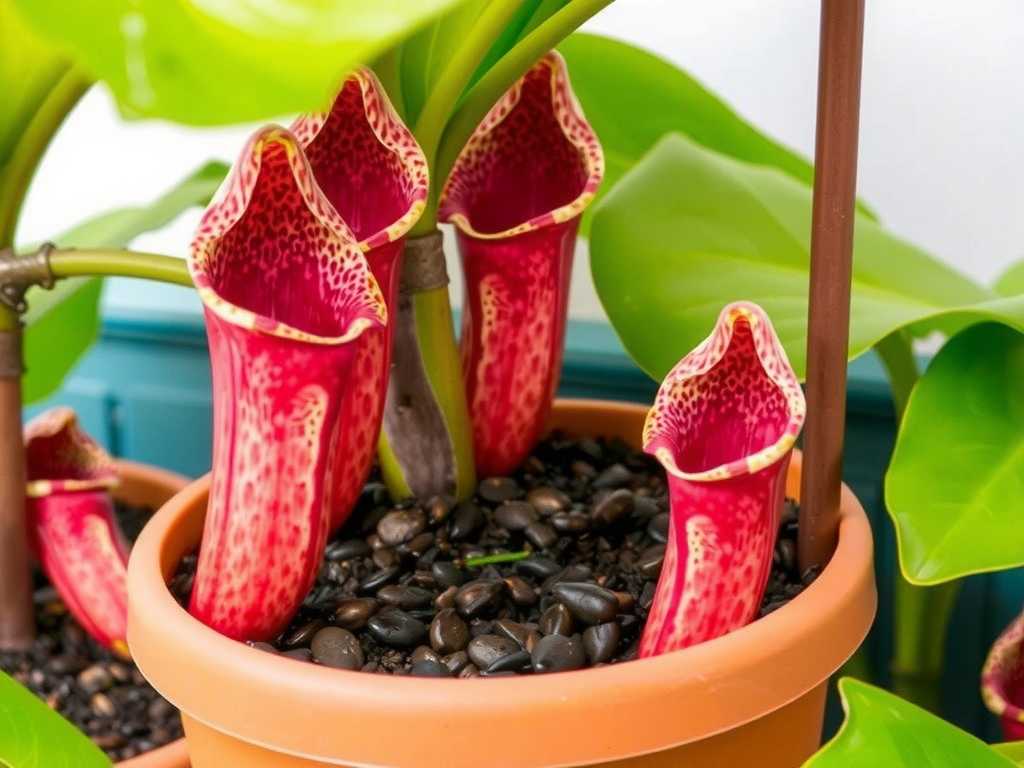
Green Pitchers: Usually indicate the plant is happy, hydrated, and receiving moderate light.
Red/Purple Pitchers: Often a sign of high light intensity or cool nights (anthocyanin production). While beautiful, deep red can sometimes mean the plant is trying to protect itself from UV damage.
The Trap: Don't pick a variety only because the online photo shows black pitchers. That color might disappear in your warmer home. Focus on the plant's vigor and root system health instead.
Sourcing: Where to Buy in the US
The source of your plant is as important as the variety itself. Big box stores rarely carry healthy Nepenthes.
Specialized Nurseries vs. Generic Retailers
Look for nurseries that specialize in carnivorous plants. They provide:
Accurate Labeling: Ensuring you get N. alata and not a mislabeled seedling.
Acclimatized Stock: Plants grown in a US nursery are already adjusted to local water and light conditions.
Health Guarantee: Reputable sellers will replace a plant that dies within 30 days.
Bare-Root vs. Potted
In spring, many nurseries sell bare-root cuttings. This is cheaper and reduces shipping shock. If you are a beginner, however, buy a potted plant. Bare-root nepenthes care requires precise humidity control immediately upon arrival, which can be tricky during the dry US spring transition.
Assessing Plant Health Before Buying
When inspecting a potential addition to your garden, look for these signs of health:
Active Growth: You should see new leaves or a vine extending. Avoid plants that look "stuck" in time.
Root Condition: If buying bare-root, the rhizome should be firm, not squishy. White or green roots are good; black, mushy roots indicate rot.
Pitcher Count: A plant with 5 pitchers is nice, but a plant with 2 pitchers and 3 new leaves is better. The leaves represent future energy production.
Acclimation: The "Spring Shock" Factor
You have picked your variety and brought it home. Now, the US spring weather tries to kill it.
The Hardening Off Process
If you plan to move the plant outside eventually (or just to a porch), do not do it overnight.
Week 1: Place in a shaded, protected area for 2 hours a day.
Week 2: Increase to 4 hours, introducing morning sun only.
Week 3: Leave out overnight only if temperatures are reliably above 55°F.
This prevents the "melting" phenomenon where established pitchers turn black and die due to sudden environmental shifts.
Long-Term Care Considerations
Your choice of variety dictates your long-term chores.
Highland types might need a cool room or AC in the summer if you live in the South.
Vining types (N. ventricosa) will need a trellis or hanging basket.
Terrestrial types (N. ampullaria) can be grown in soil rather than hanging, which is great for US gardeners with limited vertical space.
Frequently Asked Questions
Can I grow Nepenthes outside in my US garden year-round?
Only if you live in Zone 10 or 11 (Hawaii, Puerto Rico, Southern Florida). For Zones 9 and below, they must come inside when temperatures drop below 55°F at night.
Which Nepenthes variety is best for low-light US apartments?
Nepenthes ventricosa and its hybrids (like Ventrata) are the most tolerant of lower light levels, though they still require bright, indirect light to produce pitchers.
Should I buy seeds or a rooted cutting for spring planting?
Always buy a rooted cutting (clone) for spring. Seeds take months or years to germinate and reach a size where they can handle the summer heat. A cutting will be large enough to survive its first US summer.
How to Pick Best Nepenthes Varieties for US Spring Gardens requires balancing your desire for exotic beauty with the reality of your local climate. By focusing on resilient highland hybrids, sourcing from reputable US nurseries, and preparing for the temperature swings of spring, you can build a thriving collection. The joy of watching a new pitcher unfurl in the morning sun is worth the effort of careful selection. Start with a forgiving hybrid like N. 'Gaya' or N. x 'Miranda', master the basics of humidity and water, and soon you will be ready to tackle the more demanding jewels of the carnivorous world.