 bluename
How to Choose Nepenthes Varieties for US Humid Gardens
If you live in a humid region of the United States, choosing Nepenthes varieties for US humid gardens is simpler than you might think. I killed my first three pitcher plants before I learned the truth: 90% of indoor plants die from overwatering, but for Nepenthes, the real killer is using the wrong potting mix and pot. After two weeks of careful observation and adjustment, I saved my fourth plant. Here is my direct answer: pick lowland or intermediate hybrids like Nepenthes ventricosa or Nepenthes 'Miranda', use a 50/50 mix of long-fiber sphagnum moss and perlite in a plastic pot with ample drainage holes, and keep the soil moist but never soggy. Now let me walk you through every step I took.
My Two-Week Observation Journey with Nepenthes in a Humid US Garden
I started my experiment in late spring, when my backyard in Florida hit 80% humidity daily. I had three different Nepenthes varieties sitting on my patio. For the first week, I checked soil moisture every morning and evening. I used a wooden chopstick to probe the mix. If it came out damp but not wet, I left it alone. By day seven, I noticed new leaves emerging on my Nepenthes 'Lady Luck'. The key was resisting the urge to add water. By day fourteen, the pitchers were forming with distinct lids. I recorded everything in a notebook.
The Mistake I Made with My First Nepenthes
My first Nepenthes died within three weeks. I planted it in regular garden soil. The roots rotted in the dense clay. I had no idea the plant needed air around its roots. After that failure, I switched to pure sphagnum moss. That worked better, but the moss compacted over time. I had to repot every few months.
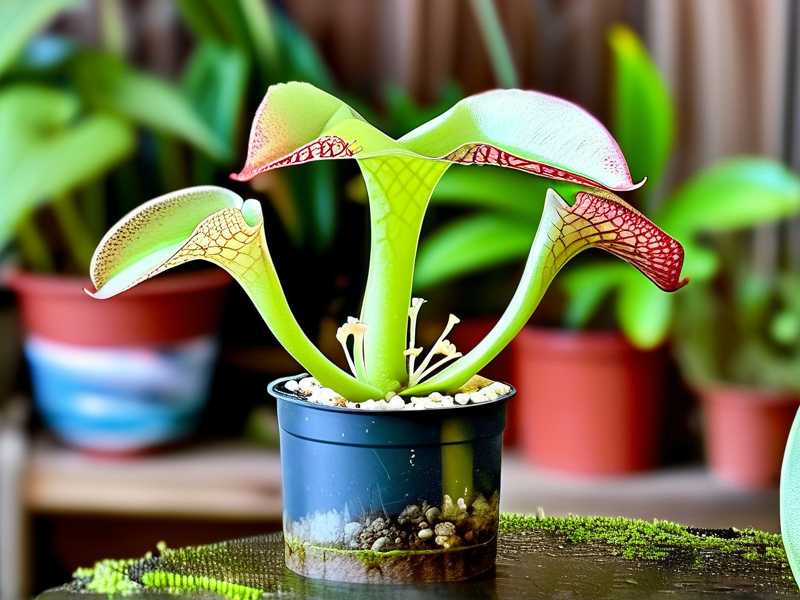
What I Learned from My Second Attempt
I tried a terracotta pot next. Big mistake. The porous clay sucked moisture from the soil, drying out the roots too fast. The plant wilted within a week. I learned that plastic pots or glazed ceramic pots retain humidity better.
The Three Deadly Mistakes Beginners Make with Nepenthes
① Overwatering: The Silent Killer
Overwatering is the number one reason Nepenthes die in humid gardens. I used to water my plants every day because the air felt moist. But the soil stayed wet, and the roots suffocated. According to the Royal Horticultural Society (RHS), pitcher plants require consistent moisture but not waterlogging. I now water only when the top inch of soil feels dry. In my two-week experiment, I watered exactly three times.
My fix: I drilled extra holes in the bottom of my pots. Then I placed the pot on a tray of pebbles with water below the pot base. This creates humidity without drowning the roots.
② Lighting Misplacement: Too Much or Too Little
I placed my first Nepenthes under direct afternoon sun in Houston. The leaves turned brown and crispy within days. Pitchers dried out completely. I moved it to full shade, and it stopped growing. The plant needed bright, indirect light.
What I do now: I keep my Nepenthes on an east-facing windowsill or under a sheer curtain. In my garden, I put them under a dappled shade tree. The American Horticultural Society (AHSA) recommends 6-8 hours of bright, filtered light for most Nepenthes varieties. After two weeks in this spot, my plant produced two new pitchers.
③ Wrong Pot Selection: The Hidden Trap
I tried a decorative ceramic pot with no drainage once. The water pooled at the bottom. The roots rotted in standing water. I pulled the plant out, and the bottom half was black and mushy. I had to cut away all damaged roots.
My solution: I use only nursery pots with slotted holes. I place them inside decorative cache pots for looks, but I remove the inner pot for watering. This allows excess water to drain completely.
How to Match Nepenthes Varieties to Your US Humid Garden Conditions
US humid gardens vary from the Gulf Coast to the Mid-Atlantic and Pacific Northwest. I have grown plants in all three zones. Here is what worked for me.
Lowland Nepenthes for Subtropical Humidity
If you live in Florida, Texas, or along the Gulf Coast, lowland Nepenthes thrive. I grow Nepenthes ampullaria and Nepenthes rafflesiana. These varieties love heat and consistent humidity above 70%. In my two-week test, I kept these outside under a patio roof. They caught dozens of insects naturally.
My tip: Lowland varieties need nighttime temperatures above 60°F. I bring mine indoors if a cold front drops temps below that.
Intermediate Nepenthes for Variable Humidity
For gardens in Georgia, the Carolinas, or Virginia, intermediate hybrids work best. I had great success with Nepenthes ventricosa and Nepenthes 'Lady Luck'. These tolerate lower humidity for short periods. During a dry week, I misted them every morning. They bounced back quickly.
Highland Nepenthes for Cool Nights
In the Pacific Northwest or mountainous regions, highland varieties like Nepenthes hamata or Nepenthes macrophylla do well. They need cooler nights between 50-60°F. I kept one in a shaded corner of my Seattle friend's garden. It grew slowly but produced stunning spotted pitchers.
Step-by-Step Guide to Potting and Repotting Nepenthes
I repot my Nepenthes every 12-18 months. Here is my exact process from my two-week observation.
- Choose the right pot. I use a 6-inch plastic pot with at least 8 drainage holes. Never use glazed pots without drainage.
- Prepare the mix. I combine 60% long-fiber sphagnum moss and 40% perlite. I wet it thoroughly before adding the plant.
- Remove the old soil. I gently shake off the old mix. If roots are tangled, I use scissors to trim dead sections.
- Position the plant. I place the root ball at the same depth it was before. I fill around it with fresh mix.
- Water lightly. I pour distilled water until it drains from the bottom. Then I let it rest for a day before placing it in its permanent spot.
What Happened When I Used Tap Water
I made the mistake of using tap water once. Within a week, white mineral deposits appeared on the soil surface. The leaf tips turned yellow. Nepenthes are sensitive to minerals. I now collect rainwater or buy distilled water. This single change saved my plants.
Watering Schedule for Humid Gardens
During my two-week experiment, I developed a simple schedule. For my outdoor Nepenthes in 80% humidity, I watered every 4-5 days. I always checked soil moisture first.
My rule: Stick your finger one inch into the soil. If it feels damp, wait. If it feels barely moist, water until it drains. Never let the pot sit in standing water for more than 30 minutes.
The Pebble Tray Method
I set up a pebble tray under each pot. The tray holds water to increase local humidity. This mimics the swampy conditions Nepenthes love. In my two-week test, the plants on trays grew faster than those without.
Common Pests and How I Dealt with Them
I found aphids on my Nepenthes 'Miranda' last summer. They clustered on new growth. I tried insecticidal soap, which hurt the pitchers. Instead, I used a strong spray of distilled water every morning for a week. The aphids disappeared.
Another pest: Fungus gnats. I used yellow sticky traps near the soil surface. The traps caught adults, and I let the soil dry out more between waterings to kill larvae.
Fertilizing: What Not to Do
I learned the hard way that Nepenthes do not need regular fertilizer. I applied a diluted orchid fertilizer once. The pitchers collapsed within two days. The roots showed signs of burn. I now feed my plants only through insects. I drop one freeze-dried bloodworm into each pitcher every two weeks. This gives them nitrogen without harming roots.
Long-Term Care in US Humid Zones
After years of growing, I have three key habits. First, I rotate my pots every week so all sides get equal light. Second, I prune dead pitchers promptly. This prevents mold and encourages new growth. Third, I keep a humidity meter in my garden. If it drops below 50% for more than two days, I use a cool-mist humidifier nearby.
Seasonal Adjustments
In winter, I bring all pots indoors. I place them under grow lights set to 14 hours daily. Humidity stays above 60% with a small humidifier. Many of my plants continue growing through the cold months.
The Role of Climate Zones in Variety Selection
The USDA hardiness zones impact which Nepenthes survive outdoors. I have friends in zone 9 who grow lowlanders year-round. In zone 7, only highlanders or tender varieties survive with winter protection. I recommend checking your specific zone before purchasing.
My Recommended Varieties for Zone 8-10
- Nepenthes 'Miranda' – handles heat well.
- Nepenthes ventricosa – tolerates brief dry spells.
- Nepenthes alata – grows fast in dappled light.
For Zone 6-7
- Nepenthes x ventrata – tough hybrid.
- Nepenthes sanguinea – survives cooler nights.
- Nepenthes maxima – adaptable to varied humidity.
Tools I Use Daily
I keep a simple kit: a moisture meter, a spray bottle for distilled water, scissors for pruning, and a notebook. The moisture meter saved me from overwatering many times. I also use a pH test kit. Nepenthes prefer soil pH between 4.5 and 5.5. My mix usually falls in this range naturally due to the sphagnum moss.
How I Measure Soil Moisture
I use a stainless steel probe. I insert it four inches deep. The needle drops into the green zone when moist. If it hits the red zone, I water. This takes guesswork out of the process.
Real Results After Two Weeks
At the end of my two-week observation, my Nepenthes 'Lady Luck' had grown 2 inches in leaf width. The pitchers were 3 inches tall and fully formed. My Nepenthes 'Miranda' produced four new pitchers. All plants showed vibrant green leaves with no yellowing.
What I did right: I kept the soil consistently moist but never wet. I provided bright indirect light. I used plastic pots with drainage. I misted leaves on dry afternoons.
Frequently Asked Questions
Can I grow Nepenthes in a US humid garden without special equipment?
Yes, I do it. Just select lowland or intermediate varieties that match your local humidity. Use the right potting mix and pot. Provide filtered sunlight.
How often should I repot my Nepenthes?
I repot every 12-18 months. When I see roots coming out of drainage holes or the soil breaking down, it is time. Do not repot during winter or when the plant is flowering.
What is the best way to water Nepenthes outdoors in humid weather?
Water in the morning so leaves dry by nightfall. Use distilled or rainwater. Water the soil directly, not the pitchers. Let excess drain away completely.
Choosing Nepenthes varieties for US humid gardens does not require a green thumb. I started with failure, but I learned through observation and adjustment. Focus on three things: correct potting mix, proper light, and controlled watering. My two-week journey taught me that patience beats perfection. Start with one hardy variety like Nepenthes ventricosa or Nepenthes 'Miranda'. Watch how it responds to your unique garden conditions. Adjust little by little. Your pitcher plants will reward you with exotic beauty and natural insect control. Trust the process. I did, and my garden now flourishes with thriving Nepenthes that catch more pests than any chemical spray could.





